
Hear from Our Customers
When your drains are backing up or your yard’s got a soggy spot that won’t dry, the last thing you need is someone telling you it’ll cost thousands to fix—without even knowing what the problem is. A sewer line video inspection changes that conversation entirely.
We send a high-resolution camera through your pipes and show you what’s happening in real time. Tree roots growing through a joint. A collapsed section 30 feet from your house. Grease buildup that’s been building for years. Whatever it is, you see it on screen, and we can tell you exactly where it is and what it’ll take to address it.
That means you’re not paying to dig up half your yard hoping we find the issue. You’re making decisions based on actual information. And if the problem’s minor, you’ll know that too. No upselling. No exaggeration. Just a clear picture of what’s going on underground and what your options are from there.
We’ve spent over a decade working with septic systems and sewer lines across Long Island, and Brookhaven properties come with their own quirks. Older cesspools made from cinder blocks. Clay pipes that shift with the soil. Tree roots that find every crack in a line that’s been in the ground since the ’70s.
We’re not new to this. We know what fails first in Suffolk County systems, and we know how to find it without tearing up your driveway or landscaping. Licensed, insured, and available when you actually need us—not three days later when the problem’s worse.
If something’s wrong, we’ll tell you. If it’s fine, we’ll tell you that too. That’s how we’ve built our reputation here.
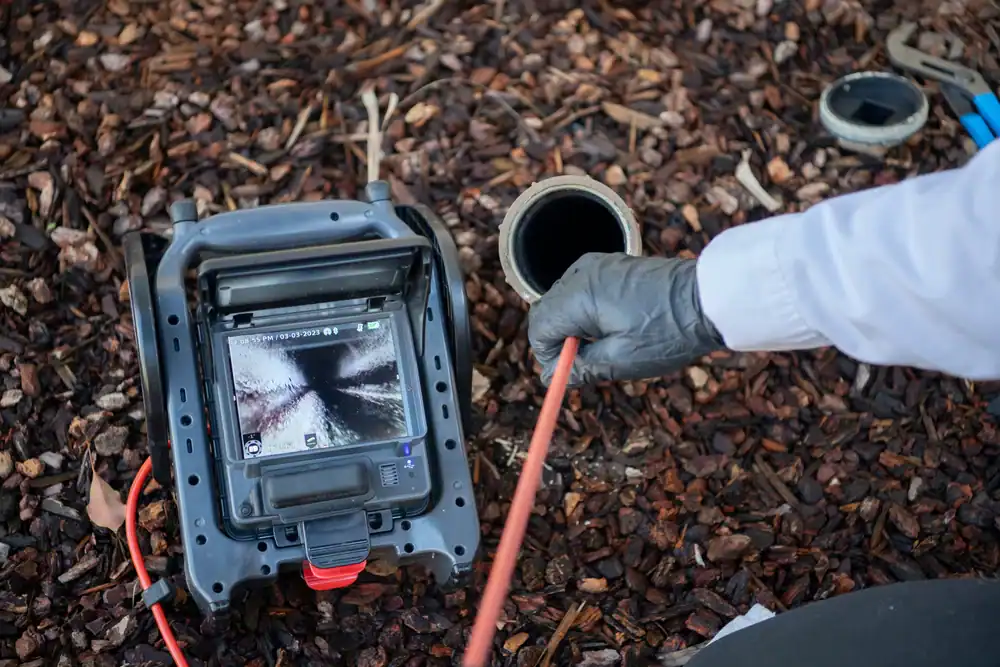
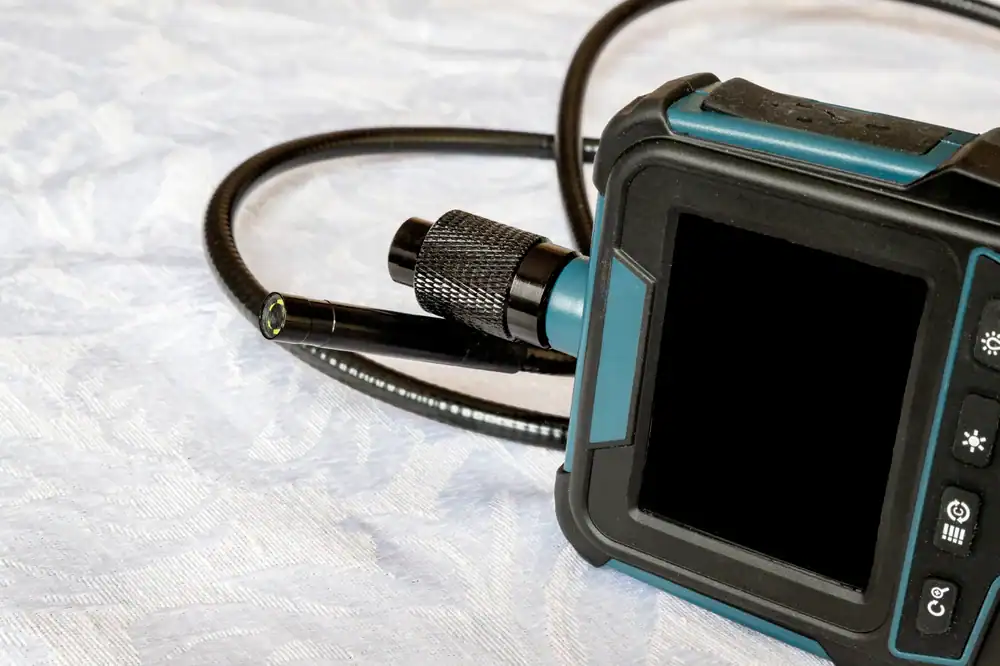
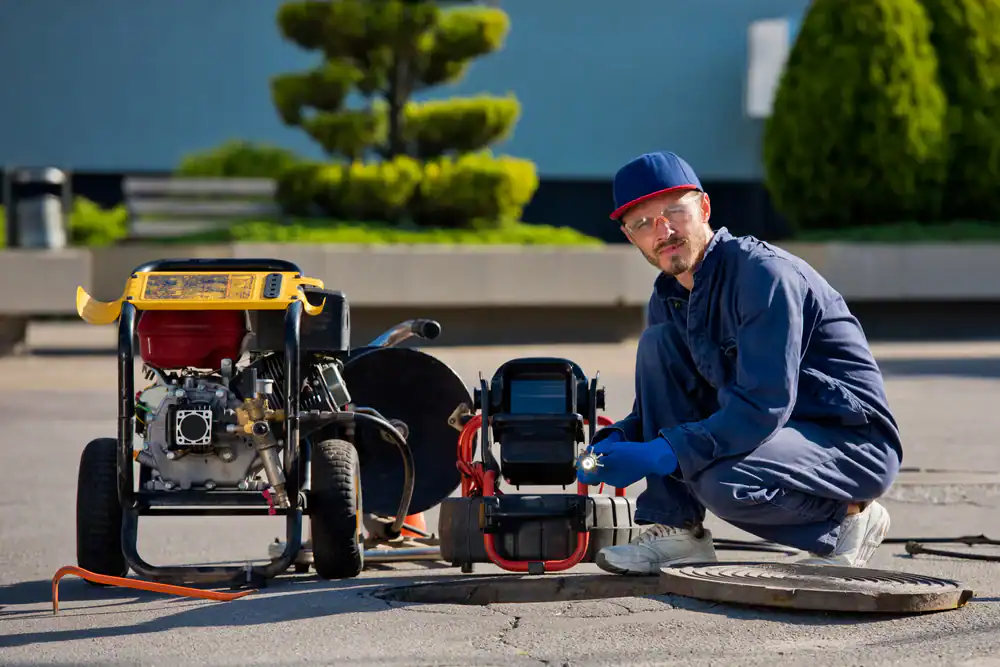
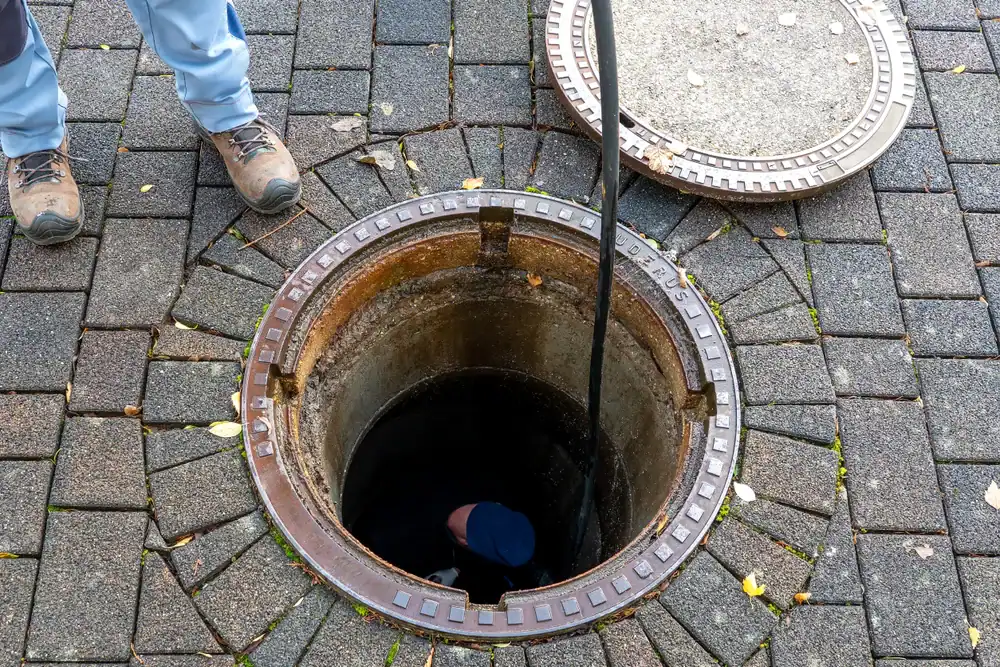
We start by locating the cleanout or access point closest to where you’re having issues. That’s usually a cap in your yard or basement. From there, we feed a flexible cable with a waterproof camera on the end into your sewer line or drain pipe.
As the camera moves through, we’re watching a live feed on a monitor. The camera records everything—cracks, blockages, root intrusion, corrosion, whatever’s in there. We can pause, zoom in, and mark the exact distance from the access point so we know precisely where the problem sits.
Once we’ve covered the section in question, we review the footage with you. You’re not taking our word for it—you’re seeing the same thing we are. Then we talk through what it means and what makes sense to do next. If you want a copy of the footage on a USB drive for your records or to share with another contractor, we’ll give you that too.
The whole process usually takes a couple of hours, and your yard stays intact. No trenches. No torn-up grass. Just answers.
Ready to get started?
A camera inspection gives you a full visual record of your pipe’s condition. That includes identifying blockages, locating underground pipe leaks, checking for structural damage, and spotting early-stage problems like hairline cracks or root penetration before they turn into full failures.
In Brookhaven, that’s especially useful if you’re dealing with an older system. A lot of homes here were built before updated septic regulations kicked in, and many still have original clay or cast iron lines that degrade over time. A camera inspection shows you where those weak points are so you can plan repairs on your terms—not during an emergency when a contractor’s charging double and you’ve got sewage in your basement.
You also get digital footage and reporting. That’s valuable if you’re buying or selling a home, filing an insurance claim, or just want documentation of your system’s condition for future reference. It’s proof of what’s actually there, which matters when someone’s trying to sell you a repair you might not need yet.
And if we do find something that needs attention, we’ll walk you through your options. Sometimes it’s a simple cleanout. Sometimes it’s a targeted repair. Either way, you’ll know what you’re paying for and why.
Most camera inspections in the Brookhaven area run between $200 and $400, depending on the length of the line and how accessible your system is. That’s a fraction of what you’d spend on an emergency repair or digging up the wrong section of your yard.
If you’re already scheduling another service with us—like a pump-out or a cleanout—we can often bundle the inspection and save you some money. The goal is to give you useful information without making it a financial burden.
And if the inspection leads to a repair that we end up doing, we’ll credit the inspection cost toward the work. It’s worth asking about when you call.
A sewer line video inspection can identify just about anything that’s affecting flow or structure inside your pipes. That includes tree root intrusion, which is one of the most common issues we see in Brookhaven. Roots work their way into joints or cracks and create blockages that get worse over time.
We also find collapsed or bellied pipes, where a section has shifted or settled and now holds water and waste instead of draining properly. Grease buildup, foreign objects, corrosion, and offset joints all show up clearly on camera.
In older systems, we’ll often spot cracks or deterioration that hasn’t caused a full failure yet but will eventually. Catching that early means you can plan a repair during the dry season when the ground’s easier to work with and costs are lower—instead of waiting until it’s a crisis in the middle of winter.
If you’re having recurring backups, slow drains that don’t respond to snaking, or wet spots in your yard that shouldn’t be there, a camera inspection isn’t overkill—it’s the fastest way to figure out what’s actually wrong. Guessing costs more in the long run.
It’s also smart if you’re buying a home in Brookhaven, especially an older one. A lot of properties here still have cesspools or outdated septic systems, and a camera inspection will show you what you’re inheriting before you close. That can save you from a $10,000 surprise six months after you move in.
And if you’re selling, having a recent inspection on hand shows buyers that the system’s been maintained and there are no hidden problems. That builds confidence and can speed up the transaction. It’s a small upfront cost that often pays for itself in negotiating power or avoided repairs.
Most inspections take between one and three hours, depending on how much of the system we’re checking and whether there are any access issues. If your cleanout’s easy to reach and the line’s in decent shape, we’re usually done in under two hours.
If we’re dealing with a more complex system—multiple lines, a longer run from the house to the street, or a blockage that’s slowing the camera down—it might take a bit longer. But we’re not tearing anything apart or digging, so the time commitment is minimal compared to traditional diagnostics.
You’re welcome to watch the process and ask questions as we go. A lot of homeowners like seeing what’s happening in real time because it makes the whole thing less of a mystery. And once we’re done, you’ll have a clear answer and a plan, not just a bill and a shrug.
No. The camera system is designed to move through your pipes without causing any harm. The cable is flexible, and the camera head is smooth and waterproof. It’s built specifically for navigating bends, joints, and varying pipe diameters without scraping or cracking anything.
If your pipes are already in bad shape—say, severely corroded or on the verge of collapse—the camera will show us that, but it won’t make the problem worse. We’re just documenting what’s there.
The inspection itself is completely non-invasive. We’re not cutting, drilling, or excavating. We use an existing access point, run the camera through, and pull it back out. Your system is in the same condition after the inspection as it was before—except now you know what’s going on inside it.
Yes, but with some limitations. A camera can show us cracks, gaps, or damaged sections where leaks are likely happening. We’ll see water seeping in from the outside or soil intruding into the pipe, which are clear signs of a breach.
What the camera can’t do is detect a leak that’s only visible from the outside of the pipe or measure exactly how much water is escaping. For that, we might combine the camera inspection with other diagnostics, like a pressure test or dye test, depending on what we find.
In Brookhaven, underground pipe leaks are often caused by shifting soil, tree roots, or aging materials. The camera gives us a starting point—we can see where the damage is and how severe it looks. From there, we can recommend the right fix, whether that’s a spot repair, a pipe lining, or a full replacement of the damaged section.
Other Services we provide in Brookhaven