
Hear from Our Customers
Your drains empty the way they should. No more slow backups in the shower or sink. No more worrying every time someone flushes.
A proper line change fixes the root problem, not just the symptom. If your pipe pitch is wrong, we correct it. If your connection to the cesspool is compromised, we rebuild it. If the line collapsed under your driveway, we excavate and replace it at the right depth with the right materials.
You’re not just buying a repair. You’re buying decades of reliability. Most sewer line replacements last 50+ years when installed correctly. That means you handle this once and move on with your life.
We’ve been handling cesspool and sewer line work across Suffolk County for years. We know the local codes, the soil conditions, and what actually holds up long-term in Centereach, NY.
We’re licensed, insured, and familiar with every step of the permitting and inspection process. That’s not marketing talk—it’s just what’s required to do this work legally and safely on Long Island.
You’re hiring people who’ve seen every version of this problem. Galvanized pipes that corroded from the inside out. Lines installed with the wrong slope that never drained right. Cesspools that shifted and disconnected from the house line. We’ve fixed all of it.
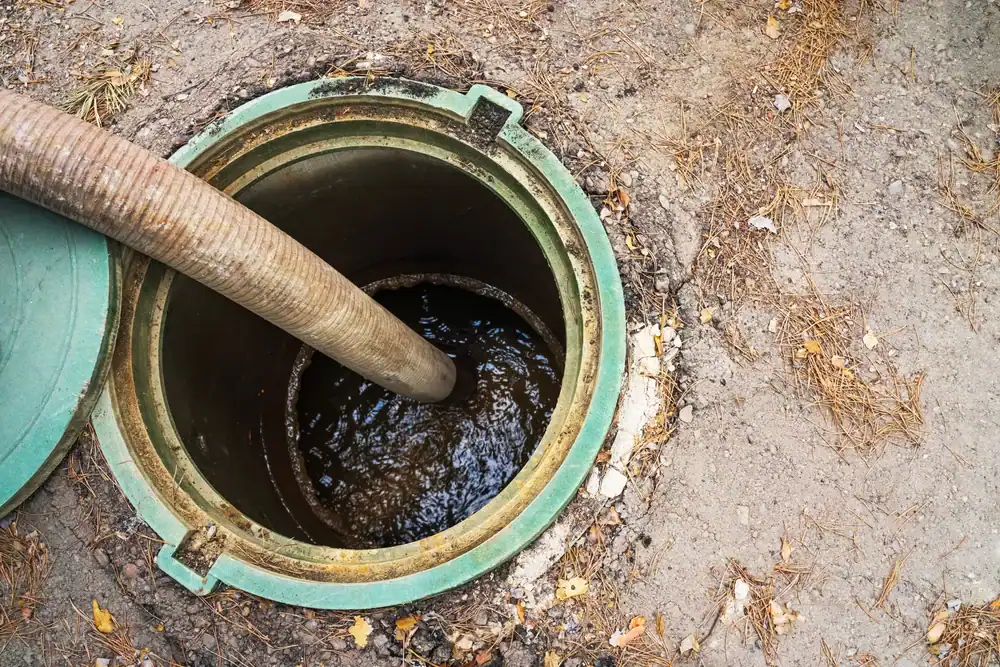
First, we locate your cesspool electronically and trace your existing sewer line. We’re not guessing where to dig. We map it, measure it, and plan the excavation route before we touch a shovel.
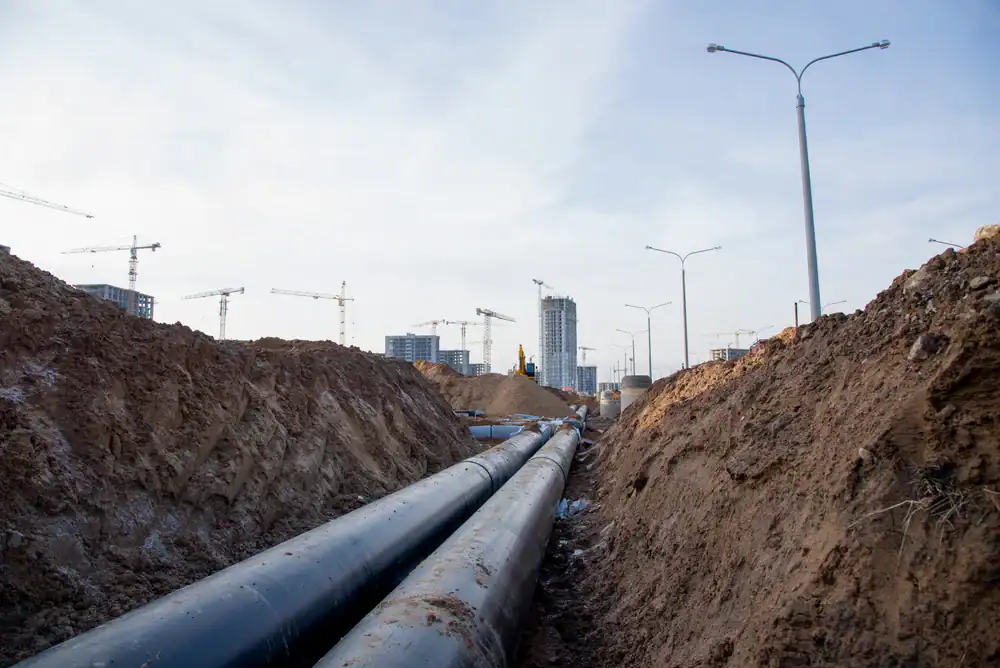
Then we trench. Depending on your property, that means excavating 18 to 36 inches deep—sometimes more if we’re connecting to a cesspool or dealing with a steep grade. We use the right equipment for the job, not whatever’s convenient.
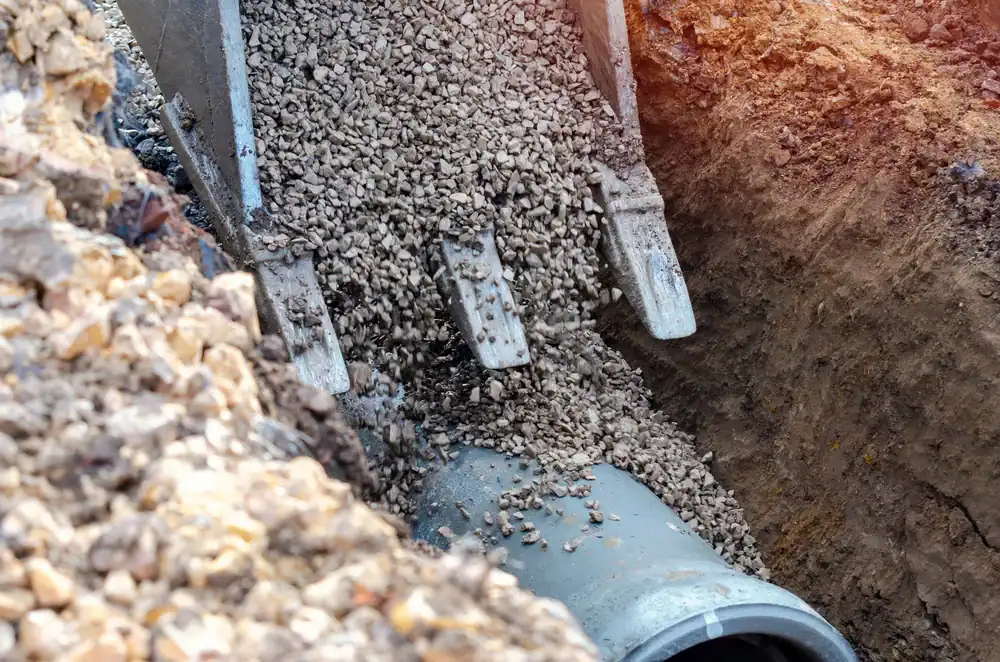
Once the trench is open, we install the new line with proper pitch and slope. That’s the part most people get wrong. If your pipe doesn’t slope at least 1/4 inch per foot, it won’t drain. We verify the grade, compact the trench base, and make sure the connection to your cesspool is solid and sealed.
After the line is in, we backfill, compact, and restore your property. Then the town inspector comes out, checks our work, and signs off. You get a copy of the permit and inspection report.
Ready to get started?
You get a full sewer line replacement from your house to your cesspool. That includes locating the cesspool, excavating the trench, removing the old pipe, installing the new line at the correct depth and slope, and connecting it properly to your cesspool inlet.
We handle the permit application and coordinate the inspection. In Centereach, NY and across Suffolk County, that means working with the local township and making sure everything meets New York State Health Department codes.
Here’s what matters for Long Island homeowners: about a million people in this area use cesspools or septic systems. The infrastructure is old. Many of the original lines were installed in the 1950s and 60s when subdivisions like Dawn Estates and Eastwood Village were first built. Those galvanized pipes are failing now, and when they fail, they fail fast.
If your line is back-pitched or sagging, we fix that too. Repair doesn’t always work for slope issues. Sometimes you need a full replacement to get the grade right.
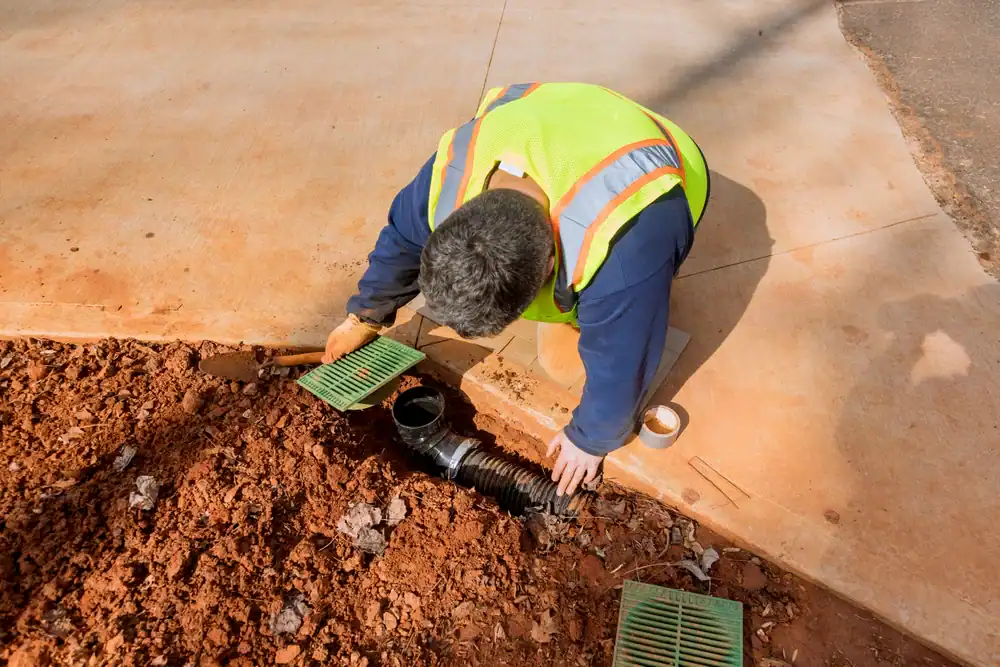
If your pipe is cracked in one spot and the rest of the line is solid, a repair might work. But if the pipe is old galvanized steel, if it’s collapsing in multiple places, or if the slope is wrong, you’re better off replacing the whole thing.
Here’s the reality: once galvanized pipes start failing, the deterioration speeds up. You might fix one section, then another fails three months later. You end up paying for multiple repairs when one replacement would’ve handled it.
We’ll inspect your line and tell you what makes sense. If a repair will actually solve the problem, we’ll say so. If it’s just going to buy you six months, we’ll tell you that too.
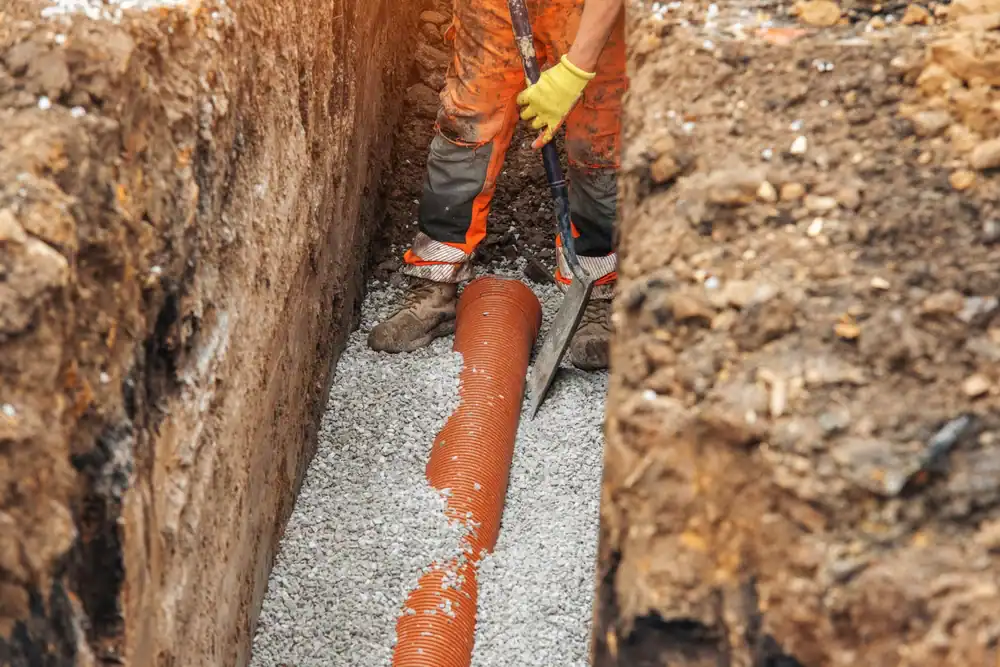
We dig a trench from your house to your cesspool, usually 18 to 36 inches deep depending on the line and local frost depth requirements. The trench needs to be wide enough to work in—typically about 24 inches.
We use an excavator for most jobs. It’s faster, cleaner, and more precise than digging by hand. We mark utilities before we dig, set up safety barriers, and make sure the trench base is properly prepared before we lay the new pipe.
After the pipe is in and inspected, we backfill the trench in layers and compact it so your yard doesn’t sink later. Most of the time, your lawn recovers within a season. If we have to cross a driveway or paved area, we cut it clean, do the work, and patch it back.
Most residential line changes take one to three days depending on the distance, soil conditions, and whether we’re dealing with obstacles like tree roots or ledge rock.
Day one is usually excavation and old pipe removal. Day two is installation, grading, and backfill. Day three is inspection and final restoration if needed.
You’ll have limited water use during the work—basically, no drains or toilets while the line is open. We move as fast as we can without cutting corners. The goal is to get your system back online and pass inspection the first time.
It depends on the length of the run, the depth we need to dig, and what we’re working around. A straightforward 50-foot line change might run a few thousand dollars. A longer run with difficult access or ledge rock can cost more.
We don’t give ballpark prices over the phone because every property is different. We’ll come out, assess your situation, and give you a written estimate that includes everything—labor, materials, permits, and inspection.
One thing to know: Suffolk County offers grants up to $10,000 for cesspool-related work, and there’s an additional $5,000 available for low to moderate income homeowners. If you’re planning to upgrade or connect to sewer in the future, that funding can offset a big chunk of the cost.
Yes, but it usually requires replacing the section that’s back-pitched. You can’t just adjust a pipe that’s already in the ground—it’s either sloped correctly or it’s not.
If your line was installed without enough grade, waste doesn’t flow. It sits in the pipe, causes slow drains, and eventually leads to backups. The fix is to re-excavate that section and reinstall it at the correct slope—at least 1/4 inch per foot, sometimes more depending on the distance.
We’ve seen plenty of lines in Centereach, NY that were installed flat or even sloping the wrong direction. It’s more common than you’d think, especially in older neighborhoods. Once we correct the pitch, the problem goes away for good.
Yes. Any work involving your cesspool or sewer line requires a permit from the local township and needs to meet New York State Health Department regulations.
We handle the permit application for you. We submit the plans, coordinate the inspection, and make sure everything is done to code. The inspector comes out after the line is installed but before we backfill, checks the grade and connections, and signs off if everything’s right.
Don’t skip the permit. If you sell your house later and there’s no record of permitted work, it can hold up the sale or cost you during the inspection. Do it once, do it right, and keep the paperwork.
Other Services we provide in Centereach