
Hear from Our Customers
Your drains empty fast. Your toilets flush without hesitation. You stop wondering if today’s the day something backs up into your basement.
That’s what proper line changes give you. Not just new pipes—actual peace of mind. When the sewer line to cesspool connection is done right, with correct pipe pitch and slope, wastewater moves the way it should. Gravity does the work. You forget the system exists.
Most line failures happen because the original install was rushed or the pitch was wrong from day one. A proper main waste line replacement fixes that. You’re looking at 50+ years of reliability if the trenching and excavation are handled by someone who knows island soil conditions and doesn’t cut corners on backfill or compaction.
We’ve spent years working in Fishers Island’s unique conditions. We know the soil. We know the water table. We know what happens when you try to trench through clay in July versus October.
We’re licensed and insured, which matters more than it sounds like it does. If something goes wrong during excavation—a collapsed trench, a damaged utility line, equipment failure—you’re covered. Our crew has done hundreds of line changes, not their first one on your property.
We’re not the cheapest option on Long Island, and that’s intentional. You’re paying for equipment that doesn’t fail mid-job, technicians who’ve seen every type of pipe failure, and a company that’ll be here in five years if something needs adjustment.
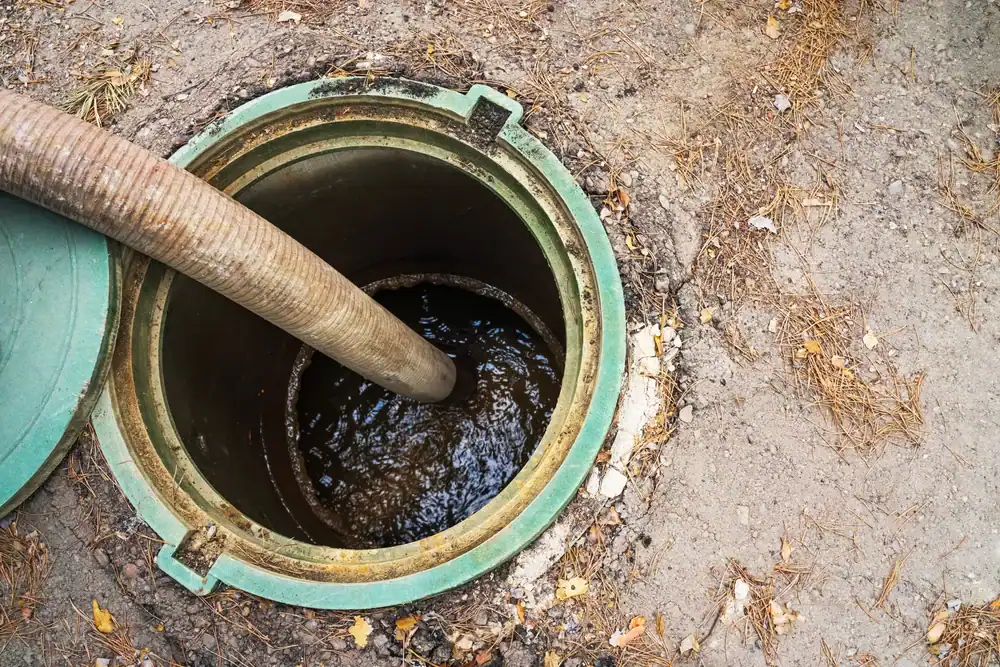
First, we run a video camera inspection through your existing line. This shows us exactly where the failure is, what caused it, and whether you need a full replacement or a targeted repair. No assumptions.
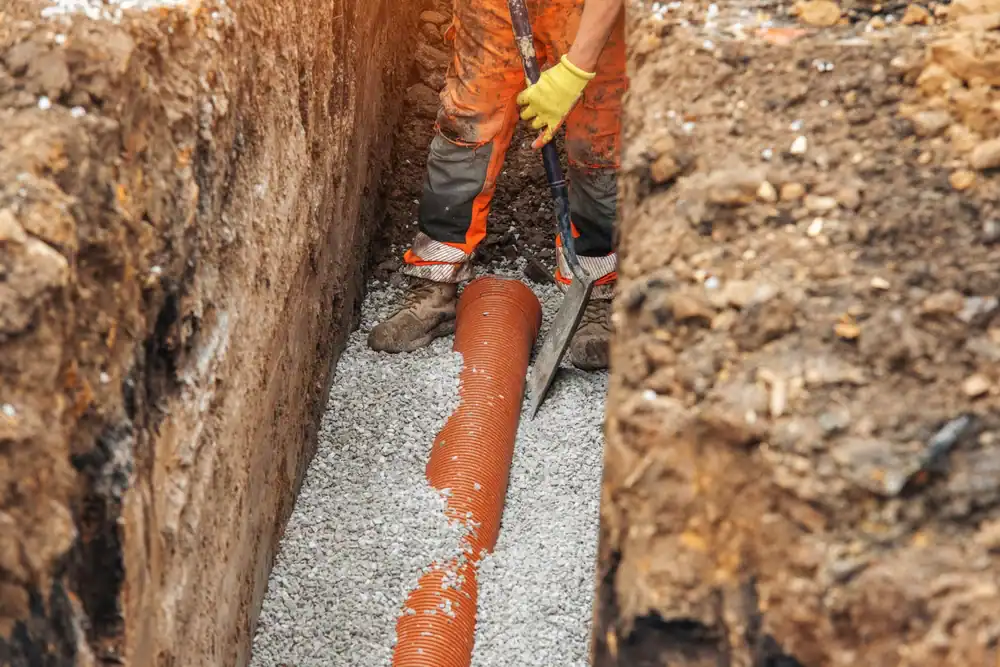
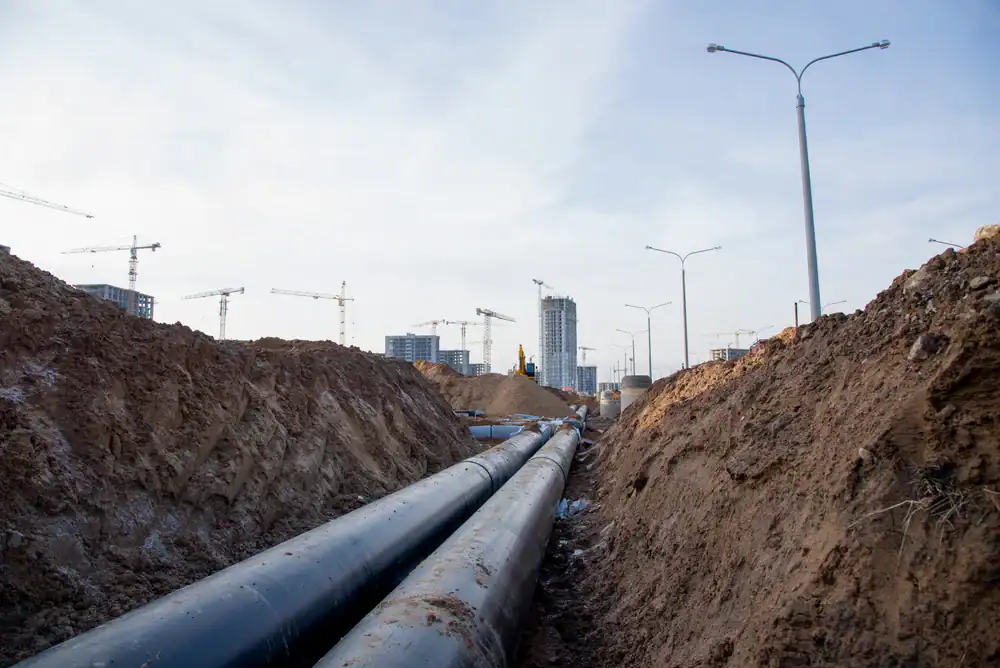
Next comes trenching and excavation. We dig down to your existing sewer line, expose the damaged section, and map out the new route if needed. Depth matters here—your new line needs proper cover for freeze protection and vehicle loads if it runs under a driveway. Slope matters even more. Every foot of pipe needs to drop at least 1/4 inch to maintain flow. Too flat and waste sits in the line. Too steep and liquids outrun solids.
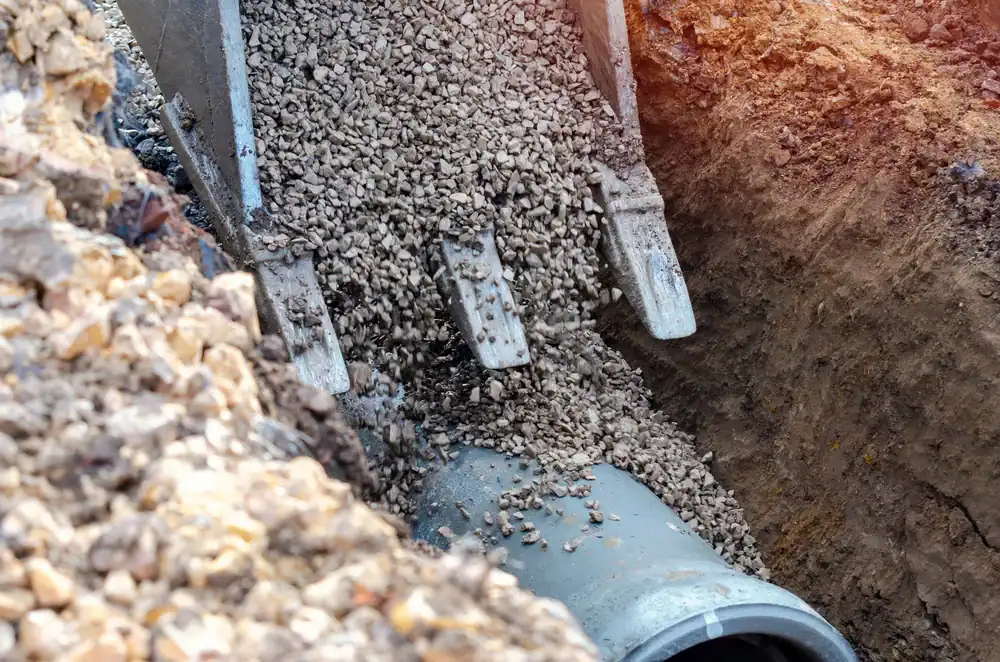
We install the new main waste line with proper bedding material underneath and around the pipe. This isn’t optional—it prevents settling and future breaks. The sewer line to cesspool connection gets rebuilt with the right fittings and sealed correctly so you don’t get groundwater infiltration or root intrusion.
Last step is backfill and compaction. We don’t just push dirt back in the trench. Proper compaction prevents your yard from turning into a ditch six months later when everything settles.
Ready to get started?
You get a video camera inspection before and after the work. The first one diagnoses the problem. The second one proves the new line is installed correctly and there’s nothing left inside that’ll cause issues later.
You get proper trenching with safety measures in place—shoring if the trench is deep, barricades if it’s near traffic, and coordination with utility companies so we don’t hit electric or water lines. On Fishers Island, access can be tight and equipment has to come over on the ferry. We plan for that.
You get the right pipe material for your situation. PVC for most residential applications. Cast iron if you need it for specific code requirements. ABS in some cases. The choice depends on what you’re connecting to, soil conditions, and what your local inspector will approve.
You get proper slope throughout the entire run. This isn’t something you can see once the trench is filled, but it’s the difference between a system that works for 50 years and one that backs up every few years. We use laser levels and grade stakes—not eyeballs.
And you get a system that meets current Suffolk County requirements. As of 2019, cesspool replacements require nitrogen-reducing systems. If your line change involves any work on the cesspool itself, we make sure you’re compliant so you don’t fail inspection or get flagged during a property sale.
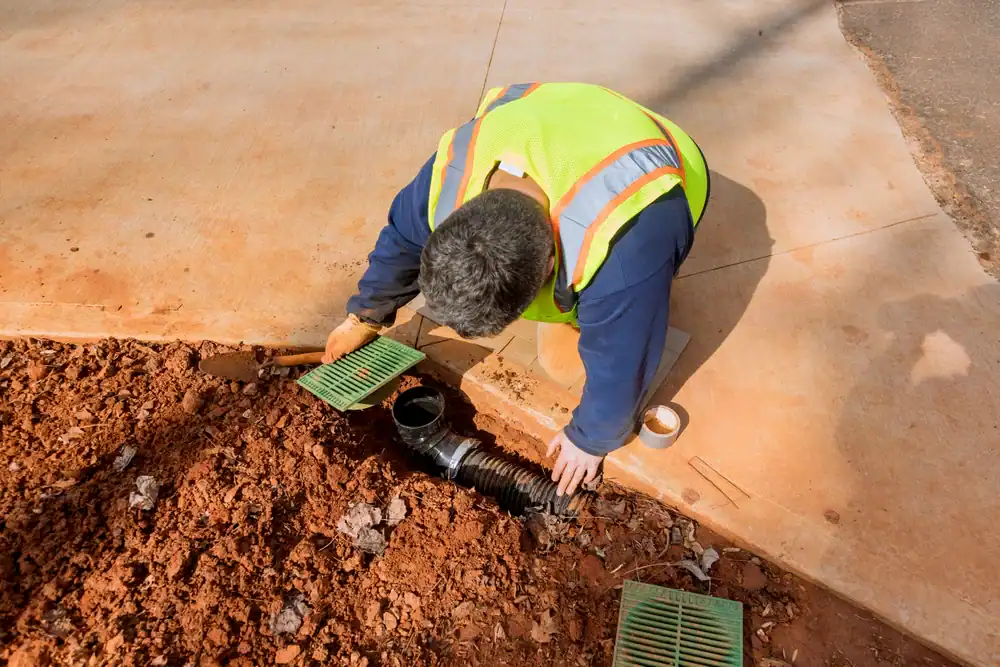
Most residential line changes take one to three days depending on distance and conditions. A straightforward 50-foot run from your house to the cesspool might be done in a day if the ground is cooperative and we don’t hit ledge or groundwater.
Longer runs, difficult soil, or jobs that require working around landscaping or structures take more time. If we’re replacing a line that runs under a paved driveway, add time for saw-cutting, removal, and repaving. Weather matters too—heavy rain turns trenches into mud pits and we’re not doing quality work in those conditions.
Island logistics add a variable. If we need a specific piece of equipment or material that’s not already here, it’s coming over on the ferry. We plan for that, but it’s why we don’t give you a quote over the phone without seeing the site first.
Wrong slope is the most common cause. If your line doesn’t drop at least 1/4 inch per foot, waste moves too slowly and solids settle in the pipe. Over time this builds up and you get a full blockage. Sometimes the line was installed flat from the beginning. Sometimes settling or ground movement changed the pitch years later.
Root intrusion is the second big one. Tree roots find any crack or loose joint in your sewer line and grow into it. Once they’re inside, they catch everything flowing through and create a dam. You’ll notice this as slow drains that gradually get worse, not a sudden backup.
Crushed or collapsed pipes happen when the original backfill wasn’t compacted right, or when heavy equipment drove over a line that didn’t have enough cover. Age is a factor too—old clay or Orangeburg pipes deteriorate and collapse on their own after 50-70 years.
Yes. Any work on your sewer line or cesspool system requires a permit from Suffolk County Department of Health Services. This isn’t optional and it’s not something you want to skip.
The permit process involves submitting plans that show the existing system, the proposed changes, pipe sizes, slopes, and distances from property lines and wells. An inspector will come out after the trench is open but before you backfill to verify everything meets code. They check pipe material, slope, bedding, and connections.
If your work involves the cesspool itself—not just the line leading to it—you’re also dealing with the 2019 regulations that require nitrogen-reducing systems. That adds complexity and cost, but it’s not negotiable. Properties that don’t comply get flagged during sales and you’ll be doing the work anyway, just under time pressure.
We handle the permit application and coordinate inspections. You don’t need to figure out what forms to file or what the inspector wants to see.
Trenching costs depend on distance, depth, and what’s in the way. A simple 50-foot trench in open yard space might run $2,000-$4,000 just for excavation. That includes digging, shoring if needed, and backfill.
Add pipe material, fittings, labor for installation, permits, and inspection fees and you’re looking at $8,000-$15,000 for a typical residential main waste line replacement. Longer runs, difficult access, ledge that requires hammering or blasting, or work under pavement pushes that number higher.
On Fishers Island specifically, you’re paying for ferry transport of equipment and materials. A large excavator doesn’t just drive here—it’s a planned trip with logistics costs built in. That’s reality, not a markup.
If your line change is part of a larger cesspool replacement that requires a nitrogen-reducing system, total project costs jump to $15,000-$30,000. Suffolk County offers grants that cover a significant portion of that, but you need to apply and qualify.
Sometimes we can repair a section instead of replacing the whole line. If the video inspection shows one localized problem—a single cracked joint, a small root intrusion, a crushed section under a settled area—we can excavate just that spot and fix it.
Spot repairs make sense when the rest of the line is in good shape, the pipe material is still solid, and the overall slope is correct. You’re looking at a fraction of the cost and disruption compared to full replacement.
But if the inspection shows multiple problem areas, widespread root intrusion, or a line that was never sloped correctly, repair doesn’t solve anything. You’re just buying a little time before the next section fails. At that point, full main waste line replacement is the smarter move. You do it once, it’s done right, and you’re not dealing with this again in three years.
We’ll tell you honestly what makes sense after we see what’s actually happening inside your pipes. There’s no point recommending a $12,000 replacement if a $2,500 repair fixes your problem.
Ledge is bedrock that’s too hard to excavate with a standard bucket. On Fishers Island, it’s not uncommon—especially in certain areas where glacial activity left rock close to the surface. When we hit it, work stops and we assess options.
Option one is hydraulic hammering. We bring in a hammer attachment that breaks up the ledge enough to get through. This adds time and cost but it’s usually the most straightforward solution for residential work.
Option two is rerouting the line if possible. Sometimes we can adjust the path to avoid the ledge entirely without compromising slope or adding excessive distance. This depends on your property layout and where the cesspool sits.
Option three, rarely needed for sewer lines, is blasting. This requires permits, a licensed blaster, and significant additional cost. We avoid this unless there’s absolutely no other way.
The key is we don’t know ledge is there until we start digging—it doesn’t always show up on surveys or previous work in the area. That’s why line change quotes often include language about unforeseen conditions. We’re not trying to leave room to inflate the price. We’re acknowledging that what’s underground is sometimes a surprise.
Other Services we provide in Fishers Island