
Hear from Our Customers
Your drains empty the way they should. No backups during dinner. No sewage smell when you walk outside. No wet spots forming over your cesspool area that make you wonder what’s happening underground.
That’s what proper pipe pitch and slope give you. When your main waste line has the right grade—typically a quarter inch per foot—gravity does its job and waste moves where it needs to go. Too flat and things slow down. Too steep and liquids outrun solids, leaving buildup behind.
The difference between a line that works and one that fails often comes down to inches. Getting those inches right the first time means you’re not digging up your yard again in two years because someone eyeballed the slope or didn’t account for settling.
We’ve been handling line changes across Long Island for over a decade, built on four generations of family knowledge in cesspool and septic work. That means when you call, you’re talking to people who’ve seen what works and what fails in Greenlawn’s soil conditions.
We’re licensed, insured, and available 24/7 because line failures don’t wait for business hours. Most of our work comes from referrals—homeowners who had a good experience and told their neighbors. That’s how it’s been since we started, and it’s how we plan to keep it.
Greenlawn homes, especially older ones, sit on systems that were installed decades ago. We know how those systems were built, what they were connected to, and what typically goes wrong as they age.
First, we locate your existing line and assess what’s failing. That might be root infiltration, settling, or just old cast iron that’s corroded through. We mark utilities, pull permits with the local health department, and map out the excavation route that causes the least disruption to your property.
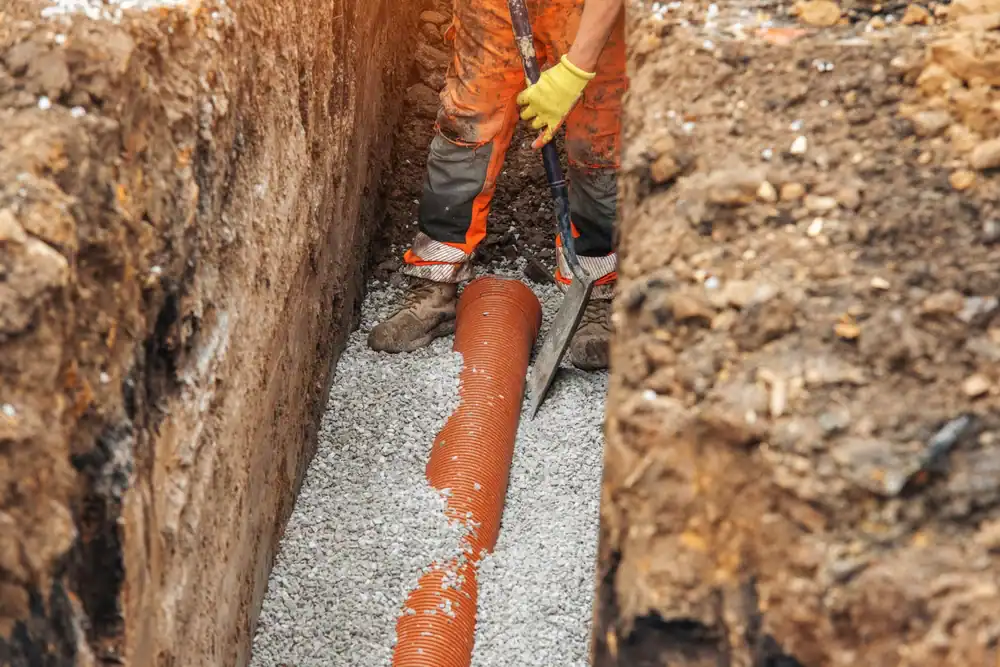
Then comes trenching and excavation. We dig down to expose the failed section, whether that’s a few feet or the entire run from your house to the cesspool. The trench needs to be wide enough to work in and deep enough to hit proper burial depth—usually at least 18 inches of cover, sometimes more depending on code.
We remove the old pipe and install new—typically Schedule 40 PVC for durability. Every joint gets properly glued and inspected. We set the grade with a laser level to ensure that quarter-inch-per-foot slope is consistent from end to end. No humps, no sags, no spots where waste can hang up.
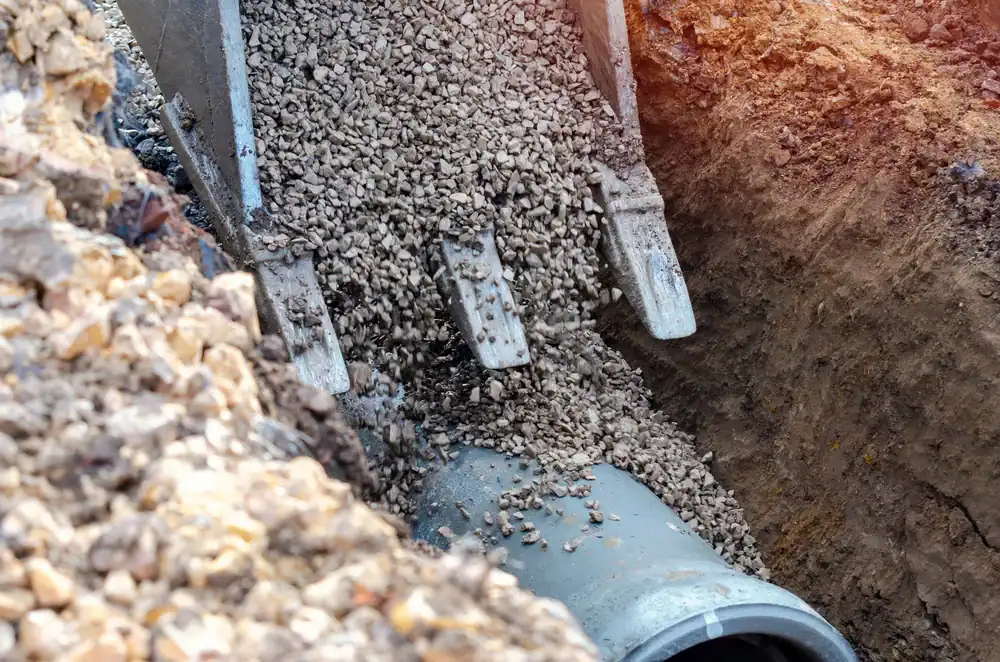
Once the line is in and inspected, we backfill carefully. The pipe needs solid support underneath and along its length. We compact in layers to prevent future settling that could throw off your slope. Then we restore your yard as close to original condition as possible.
Ready to get started?
You get a complete permit package handled from start to finish. Suffolk County requires specific documentation for excavation work, and the health department needs to sign off on cesspool connections. We file everything, schedule inspections, and make sure you’re compliant with local codes.
You also get materials that last. Schedule 40 PVC is standard for a reason—it doesn’t corrode, roots can’t penetrate solid sections, and it holds up under Long Island’s freeze-thaw cycles. We don’t cut corners with thinner-wall pipe that’ll fail in five years.
Greenlawn’s soil tends to be sandy in some areas and clay-heavy in others. That affects how we backfill and compact around your new line. Sandy soil drains well but can shift. Clay holds position but doesn’t drain, which means we need to account for potential frost heave. Every property is a little different, and we adjust our approach based on what we’re working with.
If your system needs it, we can also address connection points at both ends—where the line meets your house foundation and where it enters the cesspool. Those transition points are common failure spots, especially in older systems where settling has created gaps or misalignment.
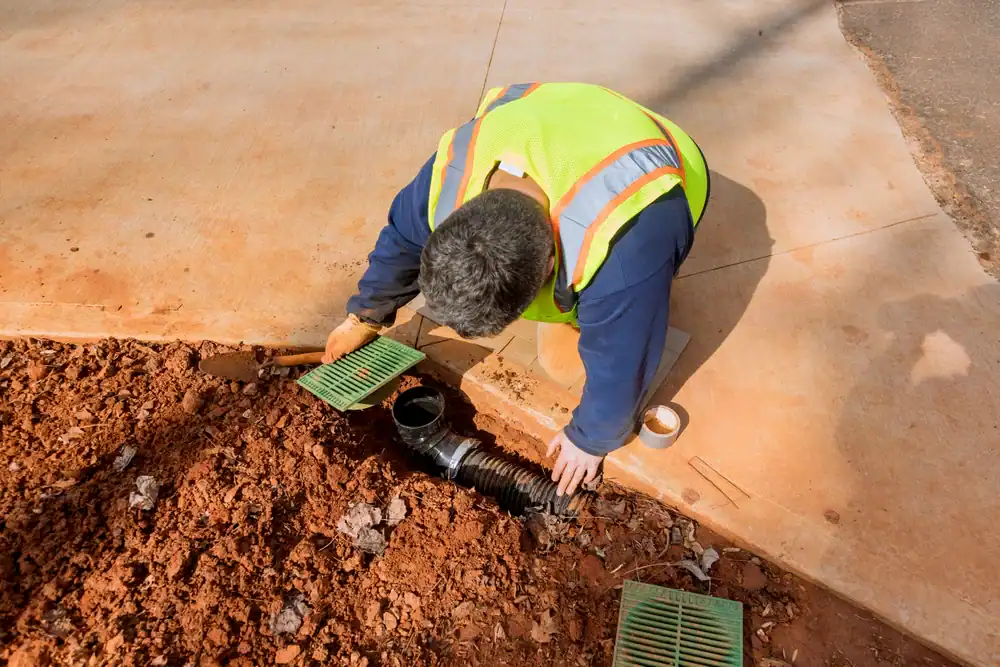
If you’re dealing with a single crack or a small section of damaged pipe, a spot repair might handle it. But if you’ve got multiple problem areas, recurring backups, or a line that’s more than 40 years old, replacing the whole run usually makes more sense.
Here’s why: old cast iron and clay pipes don’t fail in just one spot. Once you start seeing problems, it means the whole line is near the end of its lifespan. You can patch it now and dig again next year when another section goes, or you can replace it once and be done.
Root infiltration is another sign you need a full replacement. If roots have found their way into your line, they’re not going away. They’ll keep growing back into any cracks or joints, and cutting them out is just temporary. New PVC pipe with properly sealed joints stops that problem for good.
Ground movement is the biggest culprit. Long Island goes through freeze-thaw cycles every winter, and that makes soil expand and contract. Over years, that movement causes pipes to settle, shift, or separate at joints—especially where the line connects to your cesspool.
Tree roots are the other major cause. Roots grow toward water sources, and your sewer line is exactly that. Once they find a crack or loose joint, they work their way in and expand as they grow. Eventually they create a complete blockage or break the pipe apart.
Age and material breakdown matter too. Cast iron corrodes from the inside out. Clay pipe becomes brittle and cracks. Even concrete cesspools can develop cracks over time that affect how the inlet pipe connects. If your system was installed in the 1960s or earlier, you’re working with materials that weren’t designed to last 60-plus years.
Most residential line changes take one to three days of actual work, depending on distance and site conditions. A straightforward 50-foot run with easy access might be done in a day. A longer run with obstacles, ledge rock, or tight access can stretch to three days or more.
But the timeline also includes permit processing. Suffolk County’s health department typically takes one to three weeks to review and approve cesspool-related permits. We handle that paperwork for you, but it does mean you need to plan ahead if your situation isn’t an emergency.
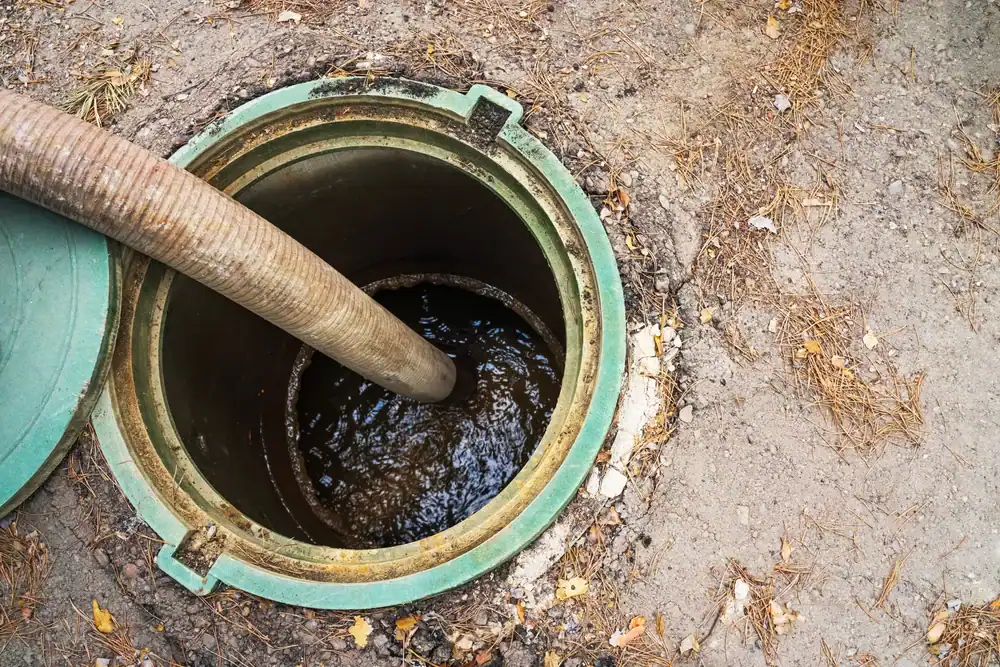
For emergency failures where sewage is backing up into your home, we can often start stabilization work immediately—pumping your cesspool, clearing immediate blockages—while permits process. Then we schedule the full line replacement once approvals come through. That keeps you functional while we do things by the book.
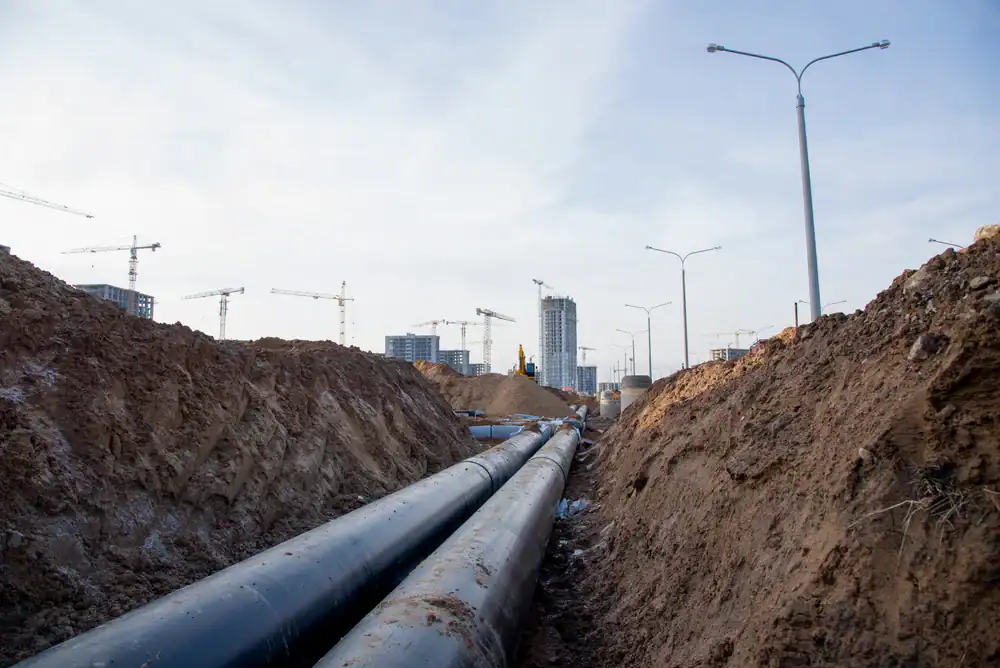
We only dig where the line runs, which is typically a trench from your house to your cesspool. The width is usually two to three feet—enough room to work safely—and we follow the straightest practical path between the two points.
If your cesspool is 50 feet from your house, that’s roughly 50 feet of trench. If it’s 100 feet, that’s what we’re digging. We can’t avoid excavation for a traditional line change because we need access to remove old pipe and install new pipe with proper bedding and support.
That said, we do our best to minimize impact. We’ll route around mature trees when possible, avoid gardens or hardscaping if there’s an alternate path, and restore disturbed areas once the work is complete. Grass grows back. The goal is a working sewer line, not a permanent scar across your property.
Standard pitch for a sewer line is one-quarter inch of drop per foot of horizontal run. That’s roughly a 2% grade. It’s enough slope that gravity moves waste along consistently without requiring water pressure, but not so steep that liquids race ahead and leave solids behind.
Too little slope and you get slow drainage. Waste doesn’t move efficiently, solids settle in the pipe, and you end up with recurring clogs. You might not notice it immediately, but over time buildup accumulates and you’re dealing with backups.
Too much slope creates a different problem. Liquids flow fast but solids don’t keep up. They get left behind and dry out, creating blockages that are even harder to clear. The right pitch keeps everything moving together at a steady pace from your house to your cesspool. We use a laser level during installation to hit that grade consistently along the entire run.
Yes. We file all required permits with Suffolk County and the local health department, schedule inspections, and handle any follow-up paperwork. You don’t need to make calls or track down forms.
Cesspool work in New York requires health department approval because it involves wastewater management. The permit process includes submitting site plans, showing setback distances from property lines and wells, and demonstrating that your new line meets code for depth, material, and slope.
Once the line is installed, an inspector comes out to verify everything before we backfill. They check pipe material, joint connections, grade, and depth. We’ve been through this process hundreds of times, so we know exactly what inspectors look for and how to pass on the first visit. That keeps your project moving and gets you back to normal as quickly as possible.
Other Services we provide in Greenlawn