
Hear from Our Customers
Your toilets flush completely. Your washing machine drains without backing up into the basement. You’re not watching water levels or timing showers around laundry days anymore.
That’s what happens when your main waste line actually works. The pipe pitch and slope are correct, so waste moves the way it should. The connection from your house to your cesspool is solid, not cracked or separated or slowly collapsing.
You’re not dealing with emergency calls every few months because someone patched the problem instead of fixing it. The line is buried at the right depth, properly bedded, and built to handle what your household puts through it. You can use your plumbing like it’s supposed to work.
We’ve been working in Manorville and throughout Suffolk County for years. We know what Long Island’s sandy soil does to buried pipes. We know how deep the frost line sits and what kind of bedding material actually holds up here.
We’re licensed, insured, and local. That means we’re around after the job is done if something comes up. We handle the permits, we know the inspectors, and we don’t disappear once we’re paid.
You’re hiring people who’ve dug trenches in your neighborhood before and know what to expect when we hit the ground.
We start with a camera inspection so you can see what’s actually wrong. No guessing. You’ll see the crack, the separation, the root intrusion, whatever it is. Then we give you an upfront price before any digging starts.
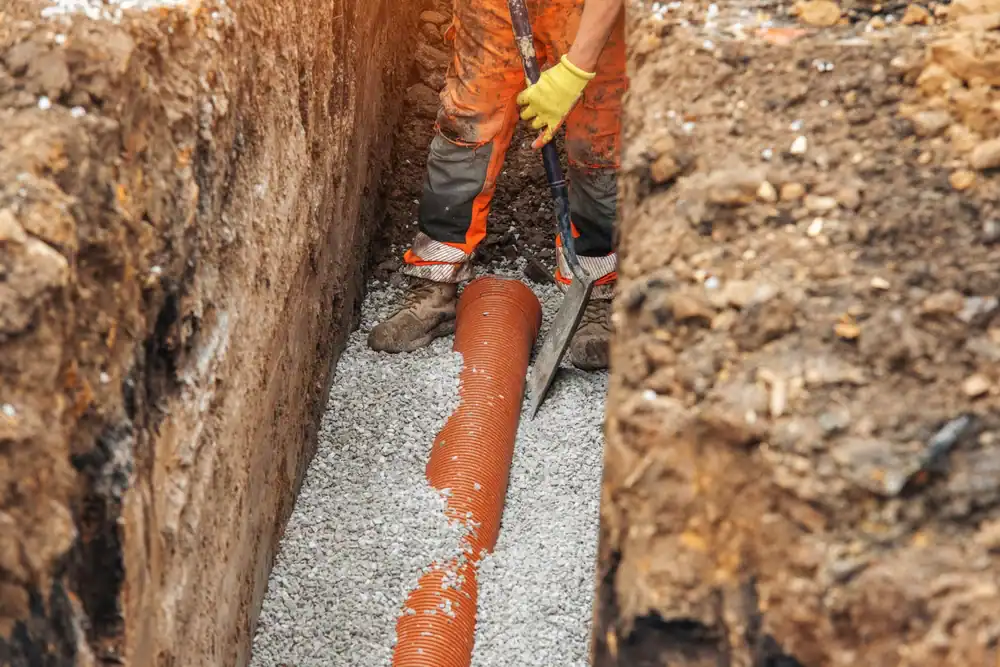
Once you approve the work, we locate your existing line and map out the excavation. We dig carefully to avoid damaging anything else on your property. The old pipe comes out, and we inspect the cesspool connection point to make sure it’s still solid.
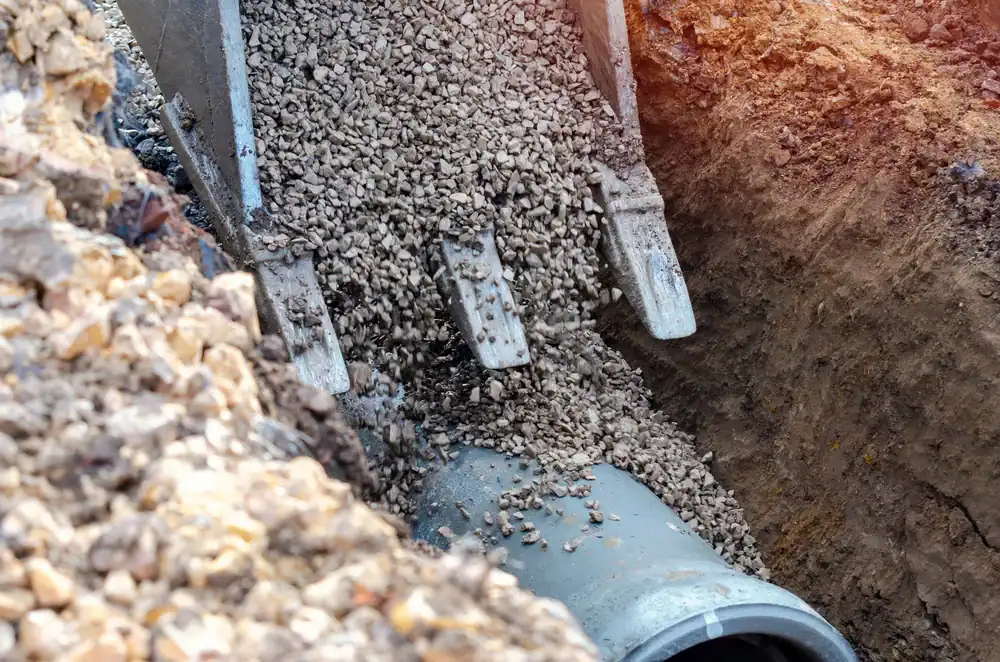
The new line goes in with the correct pipe pitch and slope so waste flows properly. We use quality materials and bed everything correctly in the trench. After backfill and compaction, we clean up the site. You get photos of the work and the inspection report for your records.
Ready to get started?
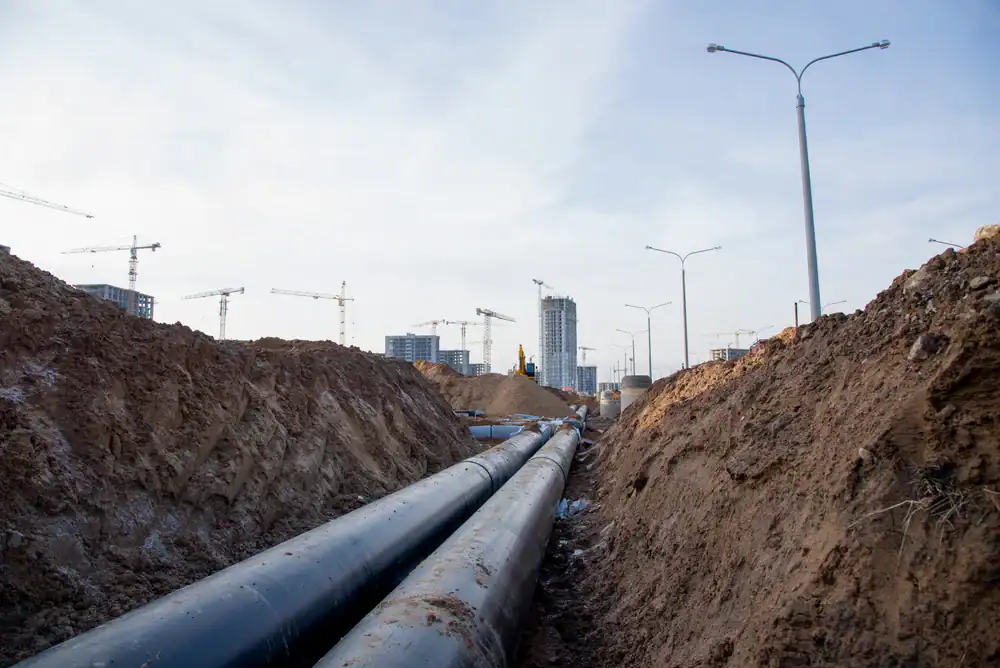
A complete line change means removing the failed section and installing new pipe from your house to your cesspool. That includes trenching and excavation, hauling out the old material, and proper backfill once the new line is in.
In Manorville, most residential line changes run between 30 and 100 feet depending on where your cesspool sits. The sandy soil here makes digging easier than clay, but it also means bedding and compaction matter more. We make sure the trench is stable and the pipe won’t shift over time.
You also get permit handling. Suffolk County requires permits for this work, and we take care of the paperwork and inspections. Most line changes here take one to two days depending on length and site conditions. We’ll tell you the timeline upfront so you can plan around it.
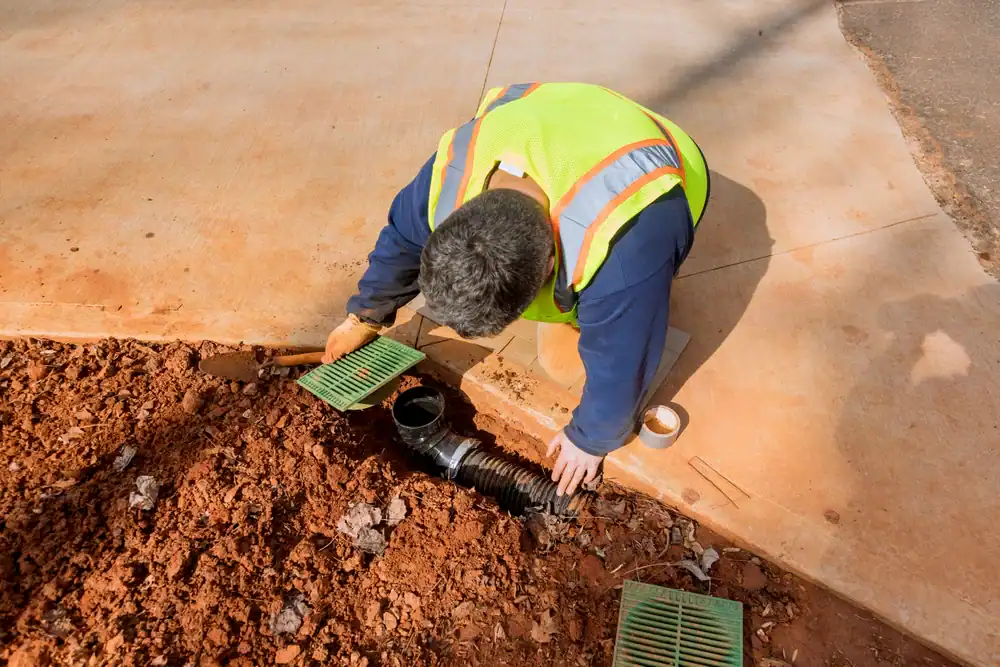
If your pipe has a single crack or a small separated joint, a spot repair might work. But if you’re dealing with multiple problem areas, root damage throughout the line, or old orangeburg or clay pipe that’s deteriorating, a full line change makes more sense.
We use a camera to show you what’s happening inside the pipe. You’ll see exactly where the damage is and how much of the line is affected. If 30% or more of your line has issues, replacing the whole thing usually costs less in the long run than patching it in sections.
Old pipe doesn’t get better. If one section failed, the rest is often close behind. A full replacement means you’re done worrying about that line for decades.
The most common issue here is settling and separation. Manorville’s sandy soil shifts more than clay or hardpack, and pipes can separate at the joints over time. You’ll see this especially in older homes where the original installation didn’t account for soil movement.
Root intrusion is another big one. Trees and shrubs send roots toward water sources, and your sewer line is a perfect target. Even small cracks let roots in, and once they’re inside, they expand and break the pipe apart.
Age and material also matter. Orangeburg pipe and older clay pipe break down after 40 to 50 years. If your house was built in the 70s or earlier and you’ve never replaced the line, you’re probably due. Cast iron can corrode from the inside, and even some early PVC installations used fittings that don’t hold up long-term.
Most residential line changes in Manorville run between $3,000 and $8,000 depending on length, depth, and site conditions. A straightforward 50-foot replacement with easy access costs less than a 100-foot line that runs under a driveway or through landscaping.
We give you a firm price after the camera inspection. You’ll know what the job costs before we start digging. That price includes excavation, the new pipe, proper bedding and backfill, permits, and cleanup.
Emergency work costs more because it’s happening outside normal hours and you need it done immediately. Scheduled replacements are always less expensive than waiting until your system fails and you’re dealing with sewage backup. If you’re seeing slow drains or frequent backups, don’t wait for an emergency.
It depends on where your line runs. We map out the route during the inspection and look for the path that causes the least disruption. If your line runs under grass or garden beds, restoration is straightforward. If it goes under a driveway or patio, we’ll need to cut and remove that section, then repave or replace it after the line is in.
In some cases, we can route a new line around obstacles if your property layout allows it. That’s not always possible, but we look for options before defaulting to the most invasive approach.
We’ll walk you through what needs to happen on your specific property before you commit to anything. You’ll know what gets dug up, how we’ll restore it, and what the final cost includes. No surprises on day three of the job.
Most residential line changes in Manorville take one to two days once we start digging. The camera inspection and estimate happen first, usually within a day or two of your call. Permit approval adds a few days to a week depending on the county’s workload.
Once permits are in hand and we schedule your job, the actual work moves quickly. Day one is excavation and removal of the old line. Day two is installation, backfill, compaction, and cleanup. Longer runs or complicated site conditions might stretch into a third day.
You can use your plumbing during most of the work, but there will be a few hours when the line is disconnected and you’ll need to avoid running water. We’ll tell you exactly when that happens so you can plan around it. By the time we leave, your system is fully functional and you’re back to normal.
Sometimes we uncover issues that weren’t visible on the camera—like a damaged cesspool inlet, a crushed distribution box, or unexpected groundwater problems. If that happens, we stop and show you what we found before doing anything extra.
You’ll get a clear explanation of the problem and what it costs to fix it. Some things need to be addressed immediately because they affect the line change work. Other issues can wait if you want to handle them later.
We don’t add work without your approval. If we find something, you decide whether to fix it now or deal with it separately. Most people appreciate knowing what’s actually happening underground, even if it means adjusting the plan.
Other Services we provide in Manorville