
Hear from Our Customers
Your drains clear completely. Water flows where it’s supposed to go. The soggy patches in your yard disappear, and that smell you’ve been ignoring finally goes away for good.
A proper line change means your main waste line gets the pitch and slope it needs to move wastewater efficiently from your home to your cesspool. No more slow drains backing up during dinner parties. No more calling someone out every few months because the same section keeps clogging.
When the connection between your house and cesspool fails, it’s not something you patch. The line either works or it doesn’t. If tree roots have crushed the pipe, if settling has created belly sections where waste pools, or if decades-old clay pipes have finally crumbled, you’re looking at replacement. That’s what a line change is—removing the failed section and installing new pipe that’s properly bedded, sloped, and connected so your system actually functions the way it was designed to.
We’ve handled line changes across Nissequogue for over a decade. We know the soil conditions here, the common failure points in older properties, and what Suffolk County requires for permits and inspections.
Most homes in Nissequogue sit on properties where the original cesspool systems were installed 40, 50, sometimes 60 years ago. The pipes weren’t always laid with the right slope. Tree roots find their way in. Ground settles. We’ve seen it all, and we know how to fix it without tearing up more of your property than necessary.
You’re not getting a crew that learned about cesspools last month. You’re getting licensed professionals who do this work daily and understand what’s at stake when your main waste line fails.
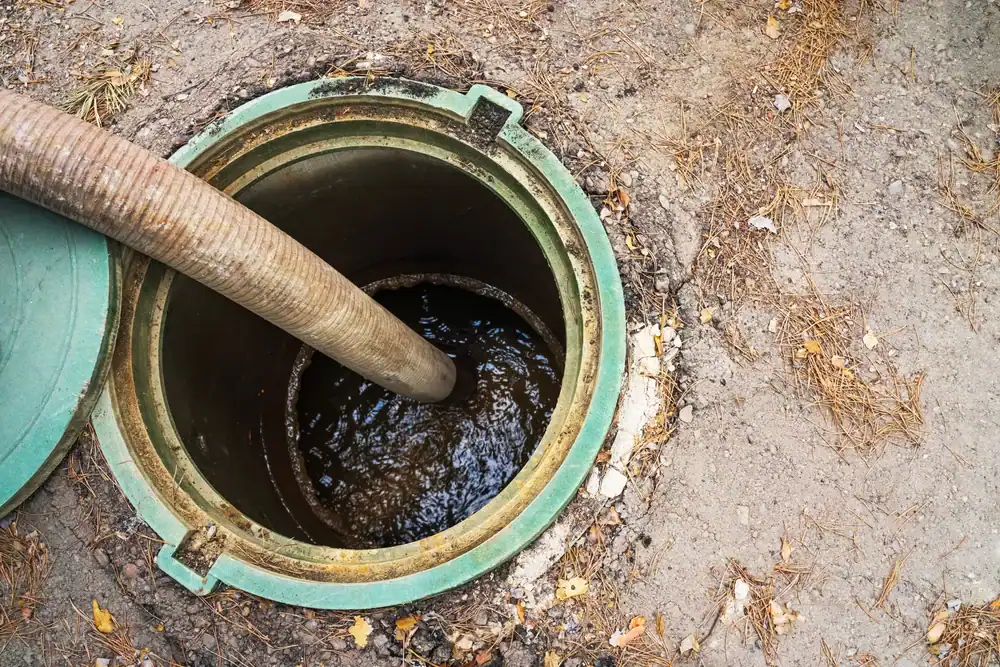
First, we locate the exact problem. We use camera inspections to see inside your pipes and pinpoint where the failure is—whether it’s a crushed section, root intrusion, or complete collapse. That tells us how much line needs replacing and what we’re dealing with underground.
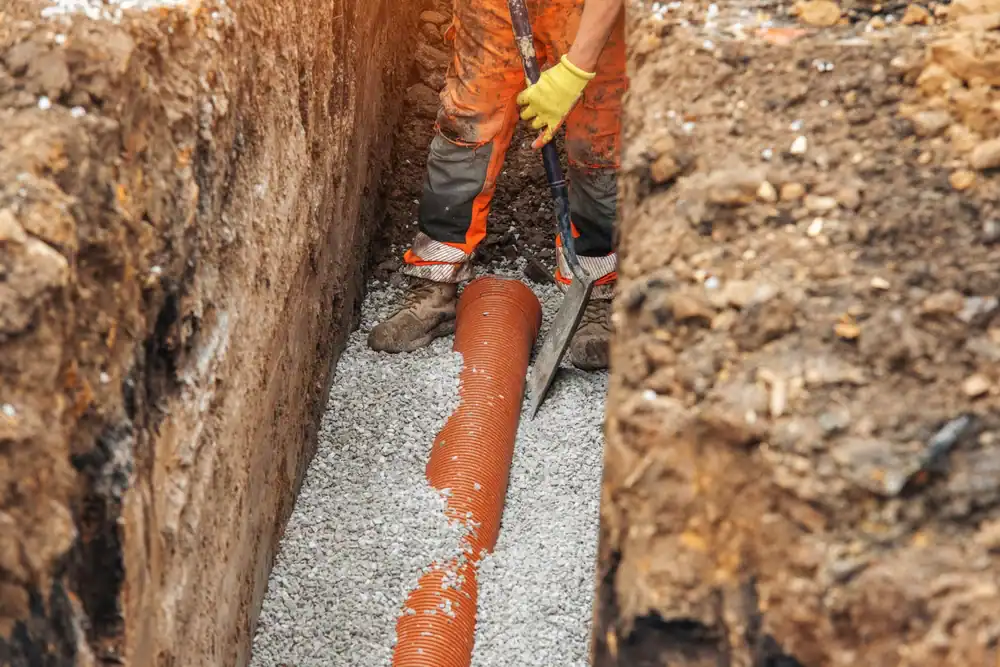
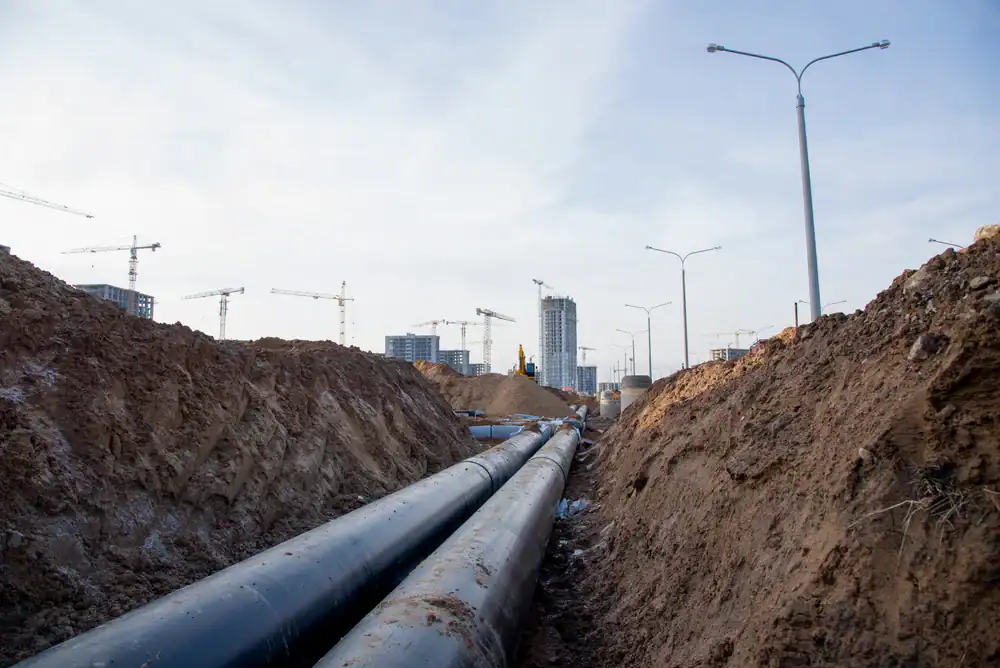
Next comes excavation. We trench from your house to the cesspool, or just the damaged section if that’s all that needs work. The goal is to expose the failed pipe so we can remove it and prepare the trench properly. This means getting the bottom of the trench flat and stable so the new pipe sits correctly.
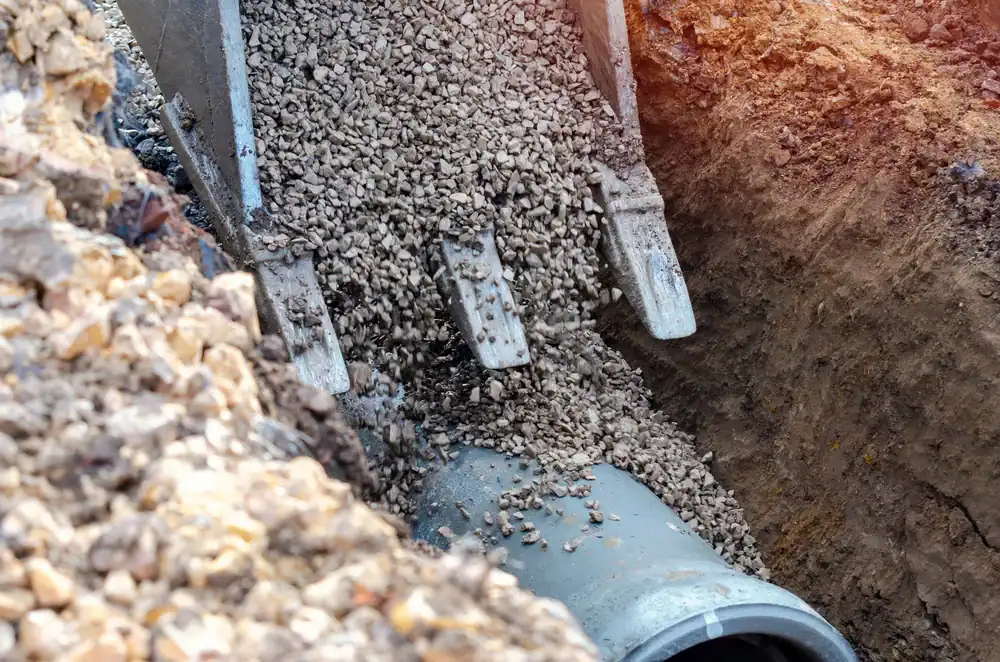
Then we install the new line. We use proper pipe material rated for underground waste lines, and we lay it at the correct pitch—typically a quarter inch per foot—so gravity does its job. The pipe gets bedded in clean material, and all connections are sealed properly at both ends.
Finally, we test everything before backfilling. We want to see that water flows correctly and there are no leaks at the connections. Once it passes inspection, we backfill the trench, compact it, and restore your property as close to original condition as possible.
Ready to get started?
You get the full scope of work needed to replace a failed waste line. That includes locating your existing cesspool and pipes, excavating the trench, removing the old pipe, installing new pipe with proper slope, making watertight connections at your house and cesspool, and backfilling once everything’s tested.
In Nissequogue, we’re also dealing with Suffolk County regulations that have gotten stricter about cesspool systems. If your system is old enough to need a line change, there’s a chance you’ll eventually face requirements to upgrade to an advanced treatment system. We can walk you through what that means and whether it makes sense to address it now or later. Some homeowners qualify for grants up to $25,000 for system upgrades, which can offset costs significantly if you’re looking at a full replacement.
The other thing that matters here is understanding your property. Nissequogue homes often have mature landscaping, long driveways, and property features you don’t want destroyed by careless excavation. We plan the trench route to minimize impact, and we take care to protect what’s already there. If there’s a way to avoid your prize azaleas or stay clear of underground utilities, we find it.
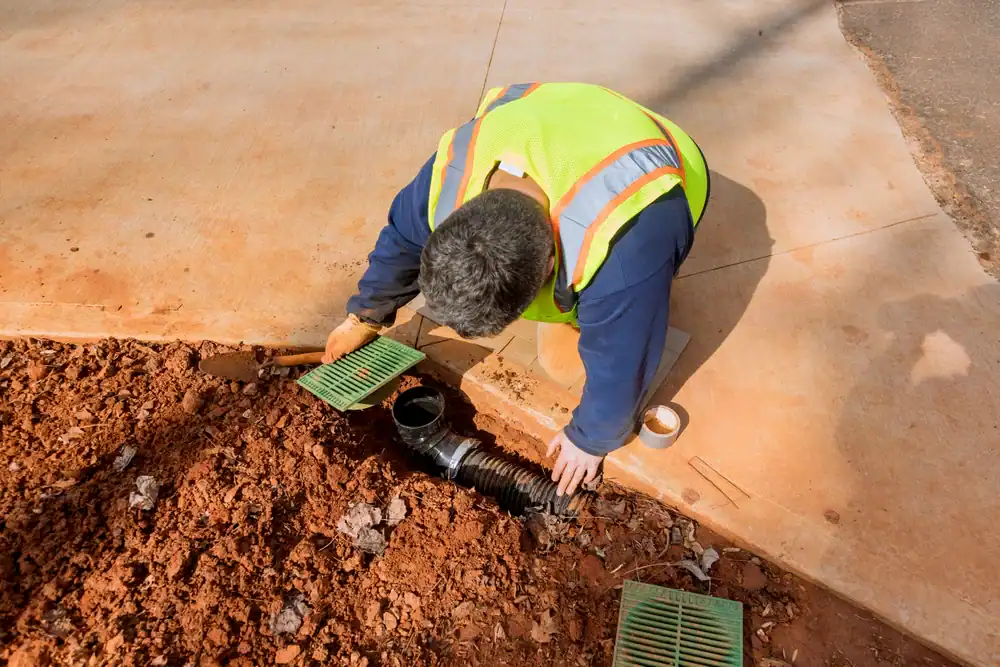
If your main waste line has a small crack or a single joint that’s leaking, sometimes a spot repair works. But if the pipe has collapsed, if roots have crushed a section, or if the line has lost its slope because of ground settling, you’re looking at replacement.
The way to know for sure is a camera inspection. We run a video camera through your line and see exactly what’s happening inside. If we’re looking at 10 feet of crushed clay pipe or a line that’s completely off-grade, patching one spot won’t fix the underlying problem. You’ll just be calling someone back in six months when another section fails.
Most of the time, if your system is old enough that one section has failed catastrophically, the rest of the line isn’t far behind. Replacing the whole run between your house and cesspool gives you a system that works correctly and won’t nickel-and-dime you with repeated service calls.
Tree roots are the most common culprit. Roots seek out moisture, and even a tiny crack in your waste line is enough to invite them in. Once they’re inside, they grow and expand until they completely block or crush the pipe.
Ground settling is another big one. Your house and cesspool shift at different rates over decades. That movement can pull connections apart or create low spots in the line where waste pools instead of flowing. Once you have standing water in the pipe, solids settle out and you get chronic blockages.
Old pipe material also just fails with age. Clay pipes crack and crumble. Cast iron corrodes. Even older PVC can become brittle if it wasn’t rated for underground use. In Nissequogue, where many homes were built 50+ years ago, you’re often dealing with original pipes that have simply reached the end of their lifespan. There’s no maintenance schedule that prevents that—eventually, the material gives out.
Most residential line changes take one to three days depending on distance, soil conditions, and what we find once we start digging. If we’re replacing 50 feet of pipe in cooperative soil with no obstacles, that’s typically a one-day job. If we’re going 100+ feet through rocky soil or around landscaping features, it takes longer.
The actual work breaks down into phases. Excavation usually takes the longest because we’re moving earth and exposing the old line carefully. Installing the new pipe goes relatively quickly once the trench is ready. Testing and backfilling add a few hours at the end.
Weather can affect timing, especially if we get heavy rain during excavation. You can’t properly compact backfill in soaking wet conditions, so sometimes we have to pause and come back. We’ll give you a realistic timeline once we see your specific situation, and we’ll keep you updated if anything changes during the job.
We only trench the path between your house and cesspool, and we keep that trench as narrow as possible while still giving us room to work safely. Typical trench width is about two feet. Length depends on where your cesspool sits relative to your house—could be 30 feet, could be 100 feet.
Before we dig, we locate underground utilities and plan the route to avoid obstacles where possible. If your cesspool is straight out from your house with clear access, the trench follows that direct path. If there are features we need to work around, we route accordingly and talk through options with you first.
Once we backfill and grade, you’ll have a strip of disturbed soil that needs time to settle before you can replant or restore landscaping. We can’t make it invisible immediately, but we do our best to leave your property in restorable condition. Some homeowners use it as an opportunity to redo landscaping they’d been thinking about anyway.
Not while we’re actively working on the connections. Once we disconnect the old pipe from your house, anything you send down the drain has nowhere to go. That means no toilets, no showers, no washing machine, no dishwasher until we have the new line connected and tested.
For most jobs, the actual disconnection period is measured in hours, not days. We expose everything, prep the new pipe, and then make the final connections as quickly as possible to get your plumbing back in service. If we’re doing a multi-day job, we typically reconnect you temporarily at the end of each day so you can use your plumbing overnight.
We’ll talk through timing before we start so you can plan accordingly. Some families arrange to be out of the house during the work day. Others just adjust their schedule—shower in the morning before we arrive, avoid laundry until we’re done for the day. It’s inconvenient, but it’s temporary, and it’s a lot better than living with a failed waste line that backs up into your house.
Cost depends on distance, depth, soil conditions, and what else we encounter during excavation. A straightforward 50-foot line replacement might run $3,000 to $6,000. Longer runs, difficult access, or rocky soil that requires more labor and equipment can push costs higher.
If we find that your cesspool itself is failing or that you need to upgrade to meet current Suffolk County regulations, that’s a separate conversation. A full cesspool replacement runs $8,000 to $15,000, and if you’re required to install an advanced treatment system, you’re looking at $15,000 to $30,000. The good news is that Suffolk County and New York State offer grants up to $25,000 combined for qualifying upgrades, which can significantly offset those costs.
We give you a clear estimate after we assess your specific situation. No hidden fees, no surprise charges for things we should have anticipated. You’ll know what the job costs before we start digging, and if we run into something unexpected underground, we stop and talk to you before proceeding. Your property, your budget, your call.
Other Services we provide in Nissequogue