
Hear from Our Customers
A failing waste line doesn’t announce itself until sewage backs up into your basement or your yard turns into a swamp. By then, you’re not just paying for pipe replacement—you’re paying for emergency pumping, water damage cleanup, and maybe even a hotel while your house becomes livable again.
Line changes fix the problem before it becomes a crisis. We’re talking about replacing the pipes that carry waste from your home to your cesspool or septic system. When those lines crack, collapse, or lose their slope, everything stops draining the way it should.
The cost difference is significant. A scheduled line replacement in North Sea typically runs $1,500 to $4,000 depending on distance and access. An emergency repair after a backup? You’re looking at $5,000 to $12,000 once you factor in pumping, cleanup, and the premium you pay for after-hours service.
You get working drains again. No more slow toilets, gurgling sinks, or that smell you can’t quite locate. Your system moves waste efficiently, and you’re not wondering when the next backup will hit.
We’ve been handling line changes and cesspool maintenance across Suffolk County for years. We’re local, which means we understand the soil conditions here, the water table issues that come with being this close to the coast, and the specific regulations that apply to North Sea properties.
Most homes in this area were built with cesspools, not septic systems. That means your waste lines are often older, and they’re connected to systems that require specific knowledge to service correctly. Since the 2019 Suffolk County cesspool ban, we’ve also been helping homeowners navigate what happens when a failing line is part of a larger system that needs upgrading.
You’re not getting a national franchise that sends different techs every time. You’re getting a team that knows your neighborhood, has worked on systems like yours, and can give you straight answers about what needs to happen.
First, we locate the problem. That means inspecting your existing lines to find where they’ve failed—whether it’s a crack, a collapse, or a section that’s lost its pitch and isn’t draining properly anymore. We’re looking at the route from your house to your cesspool and identifying what needs to be replaced.
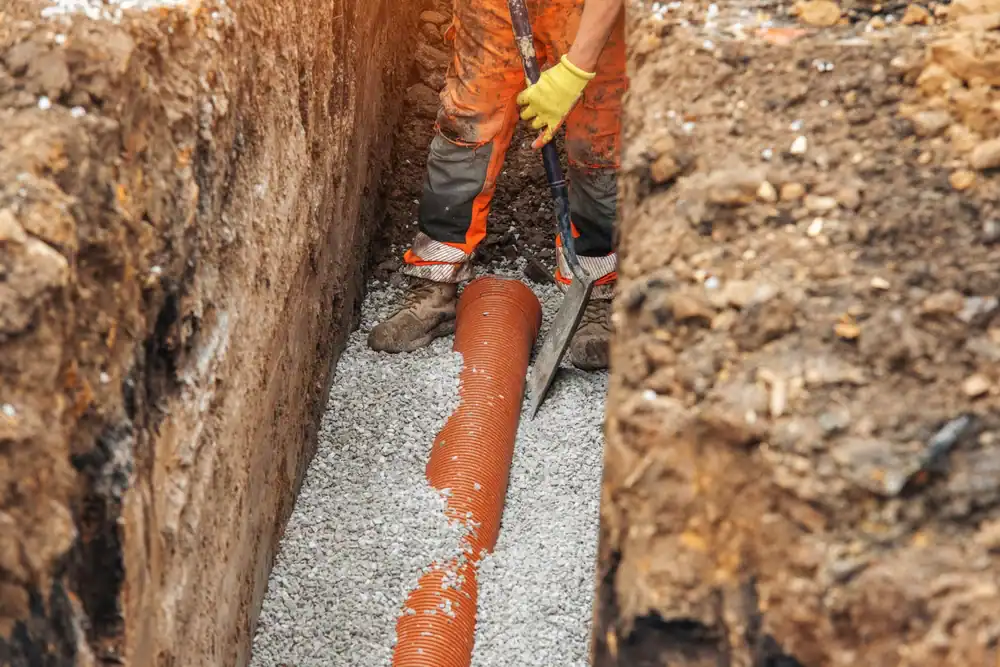
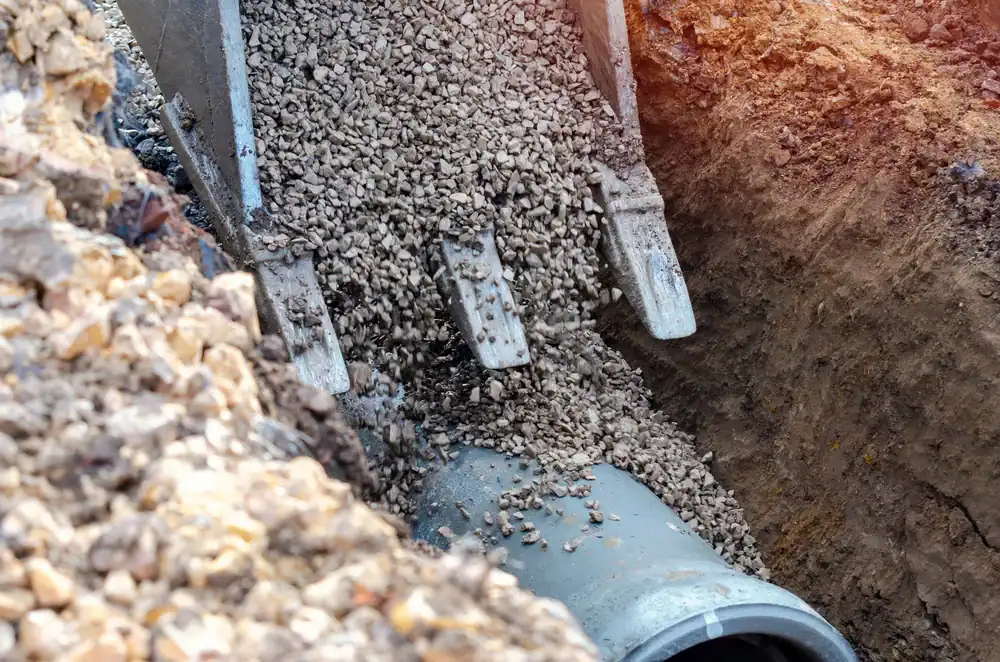
Next comes trenching and excavation. We dig down to expose the failed section, which means opening up your yard along the line’s path. The depth varies depending on your system, but we’re typically going down three to four feet. We use equipment sized for the job—nothing bigger than necessary, because we’re trying to minimize how much of your property gets torn up.
Then we install the new pipe. This isn’t just about swapping old for new. Pipe pitch and slope matter. Your waste line needs to drop at least a quarter inch per foot to drain properly. Too flat and waste sits in the pipe. Too steep and liquid runs ahead of solids, which causes its own problems. We set the grade correctly so everything flows the way it should.
Finally, we connect everything—your house to the new line, the new line to your cesspool. We backfill the trench, compact the soil, and test the system to make sure it’s draining. You’ll have some restoration work to do on your lawn, but the line itself is done and working.
Ready to get started?
You’re getting new pipe between your home and your cesspool. That includes the excavation work, the pipe itself, proper slope installation, and reconnection at both ends. If we find tree roots in the old line or soil conditions that caused the original failure, we address those too.
In North Sea, the most common issue we see is older clay or cast iron pipes that have cracked or separated at the joints. Roots get in, soil shifts, and suddenly your line isn’t a line anymore—it’s a broken channel that’s leaking waste into your yard and not moving it to your cesspool. Replacing that section stops the leak and restores proper flow.
You also get compliance with current Suffolk County requirements. Since 2019, any work on cesspool systems has to meet updated standards. If your line change is part of a larger system issue, we’ll walk you through what that means for your property. Some homeowners find out their cesspool needs to be replaced entirely, which means upgrading to an advanced treatment system. We don’t upsell that—it’s the law. But we’ll explain your options and what financial assistance is available, because Suffolk County and New York State are offering grants up to $30,000 for qualifying upgrades.
The goal is simple: waste leaves your house and reaches your cesspool without backing up, leaking, or failing. That’s what a working line does, and that’s what you’re paying for.
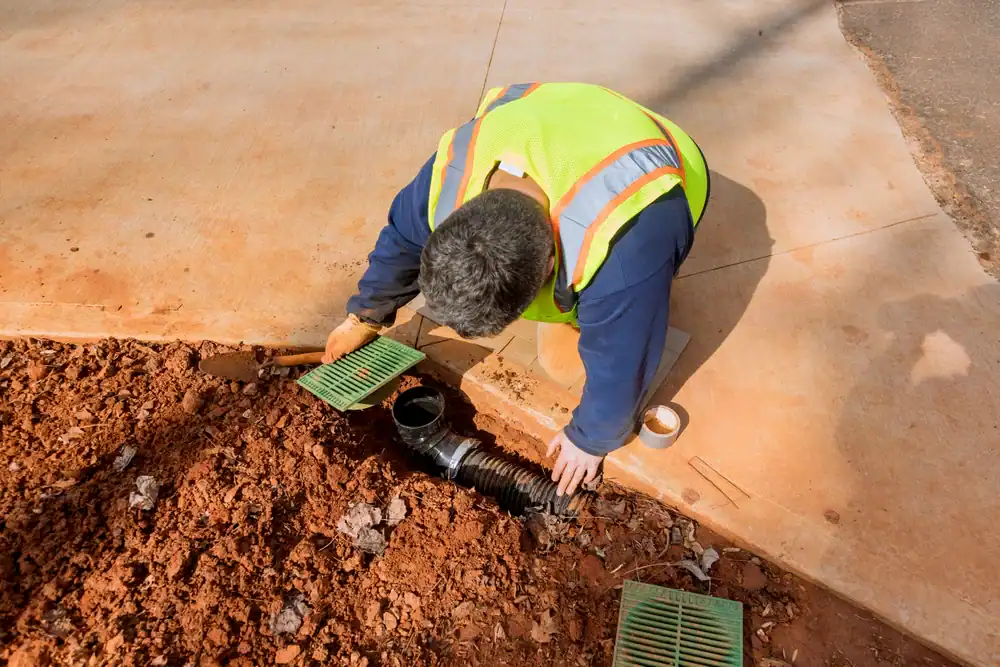
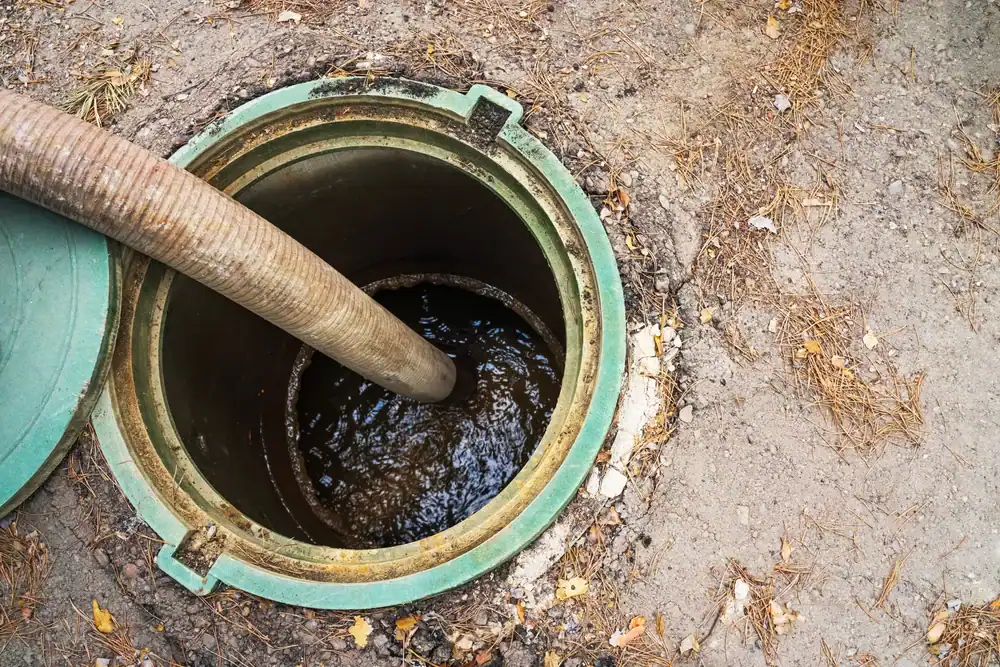
If your drains are slow, your toilets are backing up, or you’re seeing wet spots in your yard near the line, that’s usually a sign the pipe itself has failed. A pump-out clears your cesspool tank, but it doesn’t fix a broken or clogged line between your house and that tank.
Here’s the test: if you just had your cesspool pumped and you’re still having drainage problems, the issue is your line. If everything drains fine right after a pump-out but slows down over time, your cesspool is probably full and just needs regular maintenance.
We can run a camera through your line to see exactly what’s happening. That shows us cracks, collapses, root intrusion, or sections where the pipe has lost its slope. If the line is damaged, pumping your cesspool won’t solve anything—you need the pipe replaced.
Most line changes take one to two days depending on the distance from your house to your cesspool and how accessible the route is. If we’re replacing 50 feet of pipe in an open yard, that’s a one-day job. If we’re working around landscaping, driveways, or other obstacles, it might stretch into a second day.
The actual pipe installation doesn’t take long. Most of the time goes into excavation and making sure we’re hitting the right depth and slope. We’re not rushing it, because getting the grade wrong means you’ll have drainage problems with a brand new line.
Weather can affect timing too. Heavy rain turns excavation into a mess, and we’re not going to dig trenches that immediately fill with water. If your line change is urgent and weather’s an issue, we’ll talk through options—but generally, it’s better to wait a day for dry conditions than to do the job poorly.
Age is the biggest factor. Most waste lines in North Sea were installed decades ago using clay or cast iron pipe. Clay cracks over time, especially when soil shifts or freezes. Cast iron corrodes from the inside out. Both materials eventually fail—it’s not if, it’s when.
Tree roots are the other major culprit. Roots seek out water and nutrients, and your waste line provides both. Once a root finds a small crack or loose joint, it grows into the pipe and creates a blockage. You’ll notice drains getting slower over time, and eventually nothing moves at all.
Sometimes the line was never installed correctly. If the slope is wrong, waste doesn’t flow properly and you get buildup that eventually causes a backup. We see this with older DIY installations or work that wasn’t inspected. The pipe might be intact, but it’s not doing its job because the grade is off.
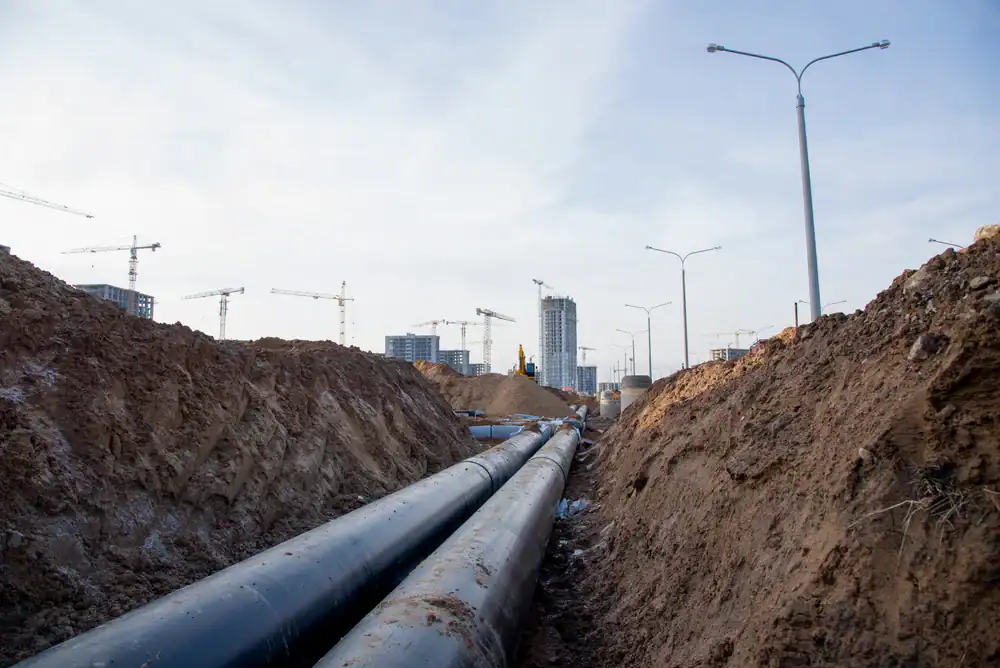
We only dig where the line runs, and only as wide as we need to access the pipe. That’s typically a trench about two feet wide running from your house to your cesspool. If your cesspool is 50 feet from your house, you’re looking at a 50-foot trench.
We use the smallest equipment that can do the job safely. For tight spaces or areas near landscaping, that might mean a mini excavator. For open runs, we’ll use a larger machine to move faster. Either way, we’re not tearing up more property than necessary.
Your lawn will need repair after we backfill and compact the trench. We’re not landscapers, so that restoration work is on you—but we’ll leave the area graded and ready for topsoil and seed. Most homeowners have grass growing back within a few weeks if they reseed right away.
If only one section has failed, we can replace just that section. We’re not going to tell you to replace 100 feet of pipe if only 20 feet is damaged. That said, if your line is old and one section has failed, there’s a decent chance other sections aren’t far behind.
We’ll inspect the entire line and give you an honest assessment. Sometimes it makes sense to replace the whole thing now rather than doing it in pieces over the next few years. You’re already paying for excavation and labor—extending the trench another 30 feet costs less than mobilizing a crew for a second job six months from now.
But that’s your call. We’ll show you what’s failed, what’s marginal, and what’s still in good shape. If you want to replace only the damaged section and take your chances with the rest, we’ll do that. If you want to replace everything and be done with it, we’ll do that too.
Sometimes a failing line is just a failing line. Other times, it’s a symptom of a cesspool that’s reached the end of its life. If we dig down and find that your cesspool itself is cracked, collapsed, or failing to absorb water, we’ll tell you.
Since 2019, you can’t replace a cesspool with another cesspool in Suffolk County. If your system needs replacement, you’re upgrading to a septic system or an advanced treatment system. That’s a bigger job with a bigger cost—typically $15,000 to $30,000 depending on your property and what system you need.
The good news is that financial assistance exists. Suffolk County and New York State are offering grants up to $30,000 for qualifying homeowners, plus low-interest financing options. We’ll walk you through what’s available and help you understand your next steps. You’re not making that decision on the spot—but you will need to address it, because a failed cesspool isn’t something you can ignore.
Other Services we provide in North Sea