
Hear from Our Customers

When your waste line is installed at the correct slope and made from the right material, the backups stop. Not temporarilyfor good. No more snaking it every few months, no more slow drains, no more smell in the yard that you can’t quite explain. The problem that’s been building underground quietly disappears.
For South Huntington homeowners specifically, that matters more than it might somewhere else. The homes here were built during the post-war suburban boomthe 1950s and early 1960sand the waste lines that came with them were made from Orangeburg pipe, clay tile, or early cast iron. Orangeburg was designed to last around 25 to 30 years. If your home was built in 1958, that pipe is now pushing 70 years old. Clay pipe from the same era is at or past the end of its reliable service life, especially with the mature oaks and maples that line every street in these neighborhoods pushing roots directly into the joints.
A properly installed PVC lineset at the right pitch, properly bedded in Long Island’s sandy soil, and backfilled correctlylasts 50 to 100 years or more. You do this once and you’re done. That’s the outcome. Not a patch, not another cleaning. Done.
We are a four-generation family business that has been doing this work across Long Island for nearly two decades. That means the people showing up at your property have institutional knowledge of what’s actually in the ground under South Huntington homesthe Orangeburg and clay pipe that was standard in every subdivision built off Route 110 and Jericho Turnpike in the 1950s and 1960s.
We’re not a national franchise reading from a script. We’ve been digging in Long Island’s sandy soil long enough to know that proper backfill and compaction aren’t optional herethey’re what keeps a new line at the right pitch five years from now. We know Suffolk County’s Article 6 requirements, we handle the permits, and we provide the documentation you’ll need if you ever sell a home in this market.
You get a straight answer about what’s failing, a written price before any work starts, and a crew that treats your property like it belongs to a neighborbecause it does.

It starts with a camera inspection. Before we recommend anything, we run a camera through the waste line so you can see exactly what’s happeningwhere the back-pitch is, where the roots have gotten in, where the Orangeburg has started to collapse. You’re not taking anyone’s word for it. You’re looking at the footage.
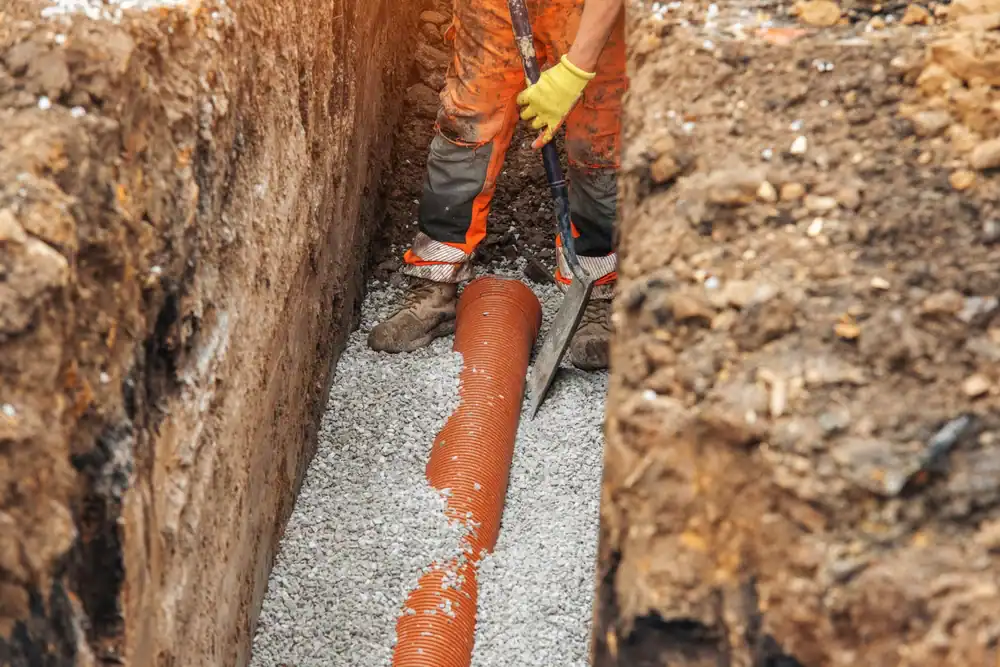
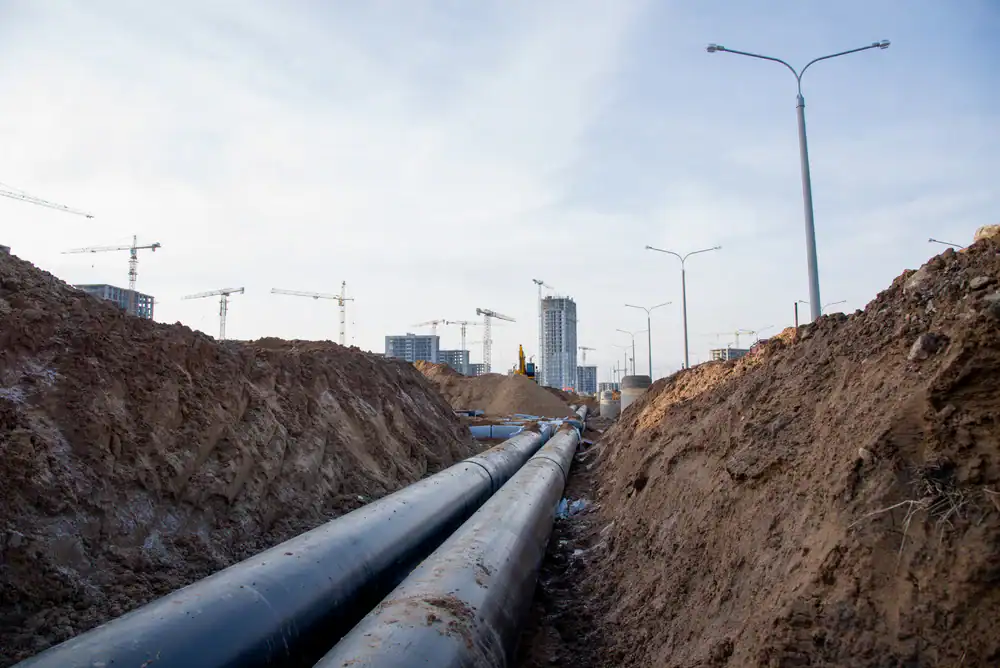
From there, we use electronic locating equipment to map the pipe path so the excavation is targeted. In South Huntington, where homeowners have invested in established landscaping over decades, that matters. The trench is typically 18 to 24 inches widejust wide enough to do the work properly. Most residential line changes here complete in a single day.
Once the old pipe is out, new PVC goes in at the correct slopea minimum of a quarter inch of drop per foot of run, which is a Suffolk County code requirement. The trench gets backfilled and compacted correctly, which is especially important in Long Island’s sandy soil where a poorly compacted trench can shift the pipe within a few years. We handle the Suffolk County permit, and when the job is done, you receive the documentation the county requires. If you’re planning to sell, that paperwork matters at closing.
Ready to get started?
Every line change starts with camera and electronic locatingnot an estimate based on symptoms. We diagnose the actual problem before recommending any work, which means you’re not paying for a replacement when a repair would do, and you’re not getting a repair when the pipe is too far gone to save.
The scope covers the full main waste line from the house to the cesspool connection: proper trenching, correct pipe pitch installation, cesspool connection sealing, backfill, compaction, and property restoration. If your home was built in the 1950s or 1960swhich describes most of South Huntingtonthere’s a good chance the existing pipe is Orangeburg, clay, or cast iron. We replace it with PVC, which handles root intrusion, ground movement, and Long Island’s freeze-thaw cycles in a way those older materials simply can’t anymore.
Suffolk County requires permits for this work, and we handle that process. You also receive full documentation after the jobthe compliance record that Suffolk County requires and that increasingly comes up during real estate transactions in this market. With South Huntington homes selling near $675,000, having a documented, properly installed waste line isn’t just good maintenanceit’s protection of your equity. If you’re in a situation where a failing line is connected to a larger system issue, we can also walk you through what Suffolk County grant programs may be available to offset costs.
The most common signs are recurring backups that keep coming back after cleaning, slow drains throughout the house, gurgling sounds in the toilet or sink, and a soft or soggy area in the yard above where the pipe runs. Any one of these on its own might be something elsebut if you’re seeing two or three of them together, the pipe is telling you something.
The only way to know for certain is a camera inspection. In South Huntington, where most homes were built in the 1950s and 1960s, the waste line is likely Orangeburg, clay, or cast ironall materials that are at or well past their designed service life. Orangeburg in particular was only built to last around 25 to 30 years. A camera inspection shows exactly what’s in the ground: whether the pipe has back-pitched, collapsed, or been invaded by roots from the mature trees in these neighborhoods. You see what the camera sees before any decision gets made.
A drain cleaningsnaking or hydro-jettingremoves whatever is blocking the pipe. Roots, grease buildup, debris. It clears the symptom. If the underlying pipe is back-pitched, partially collapsed, or structurally compromised, the blockage comes back. Usually faster each time.
A line change replaces the main waste line itselfthe pipe that runs from your house to the cesspool. When that pipe is installed at the correct slope and made from a material that can handle Long Island’s soil conditions and root pressure, the problem is resolved at the source. For homes in South Huntington built in the post-war era, the distinction matters a lot. Cleaning an Orangeburg or clay pipe that’s been in the ground for 60-plus years buys you weeks, maybe months. Replacing it with properly installed PVC pipe buys you the next 50 to 100 years.
Yes. South Huntington falls under Suffolk County jurisdiction, which means any work on the main waste line connecting your home to a cesspool or septic system requires a permit through the Suffolk County Department of Health Services. The work must also comply with Article 6 of the Suffolk County Sanitary Code, which sets the standards for pipe slope, materials, and installation.
We handle the permit process as part of the job. You don’t have to navigate the SCDHS paperwork yourself. After the work is complete, you receive the documentation Suffolk County requiresa record of what was replaced, when, and to what code. That documentation matters if you ever go through a county inspection or put your home on the market. In a community where homes are selling near $675,000, a properly documented waste line is worth having on file.
This is one of the most common concerns, and it’s a fair one. South Huntington homeowners have spent decades building out their propertiesestablished lawns, mature plantings, driveways, hardscape. The short answer is: the disruption is much more targeted than most people expect.
We use electronic locating equipment to map the exact path of the pipe before any digging begins. The trench is typically 18 to 24 inches widejust wide enough to do the work correctly. It follows the pipe path only, not the whole yard. Most residential line changes in South Huntington complete in a single day. The trench gets backfilled and compacted properlywhich is important in Long Island’s sandy soil, where loose backfill can shift the pipe over timeand you can reseed or replant right away. The trench settles within a few weeks. It’s not a construction project. It’s a targeted repair.
It comes down to timing. South Huntington’s residential neighborhoods were developed primarily in the 1950s and 1960s. The trees planted along those streets and in those yardsoaks, maples, and other large-root speciesare now 50 to 70 years old, with root systems that extend 20 to 30 feet or more in every direction. The waste lines installed in those same homes were made from clay tile or cast iron, both of which have joints that roots can infiltrate over time.
Root intrusion is the most common cause of sewer line failure in older Long Island communities. A drain cleaning can clear the roots temporarily, but as long as the old clay or cast iron pipe is in the ground, the roots will find their way back. PVC pipe, installed with properly sealed joints, resists root intrusion in a way that clay and cast iron simply cannot. Replacing the line eliminates the re-entry point, not just the roots that are currently in it.
There are, and most homeowners in South Huntington don’t know they exist. Suffolk County has grant programs that can offset significant portions of the cost for qualifying waste system workparticularly when a failing cesspool or septic system needs to be upgraded as part of the repair. The Suffolk Water Quality Restoration Act, signed in May 2024, expanded long-term funding for these programs. Combined state and county programs can reach up to $30,000 for eligible homeowners.
It’s worth noting that Suffolk County banned new cesspool installations effective July 1, 2019. If a line change reveals that the cesspool itself has failed and needs to be replacedwhich does happen in homes with 60-plus-year-old infrastructurethe replacement must be a conventional septic system or an I/A OWTS nitrogen-reducing system. That’s a larger project, but it’s also where the grant programs become most relevant. We can walk you through what’s available and handle the paperwork, so you’re not leaving money on the table because the process felt too complicated to navigate.
Other Services we provide in South Huntington