
Hear from Our Customers
Sewage backs up into your tub. Water pools in the yard. Every drain in the house moves slow. That’s not a simple clog you can snake out—that’s your main waste line telling you it’s done.
Most Westbury homes were built with cast iron or clay pipes that last 50-60 years before they crack, collapse, or settle into the ground. If your house is older than that, you’re not dealing with “if”—you’re dealing with “when.” The line running from your foundation to your cesspool is underground, out of sight, doing all the heavy lifting. Until it doesn’t.
A proper line change means digging down to the damaged section, pulling it out, and replacing it with modern PVC that’ll outlast you. It means checking the pipe pitch and slope so gravity does its job. It means backfilling with the right material so your new line doesn’t sink into soft soil six months later. And it means restoring your lawn, driveway, or landscaping so you’d never know we were there.
You don’t get that from a quick patch job or a guy with a backhoe who doesn’t know local code.
We’ve been handling cesspool and sewer line work in Westbury and across Nassau County long enough to know what’s under your yard before we break ground. We know the soil. We know the code. We know what fails and why.
Most line failures we see come from improper slope during the original install, ground settling, or root intrusion from mature trees. Westbury properties—especially older homes near the village center—often have clay pipes that were fine in 1960 but are crumbling now. We’ve replaced hundreds of them.
We’re licensed, insured, and we pull permits when required. Our crews show up with the right equipment, do the work without shortcuts, and clean up when we’re done. You’re not getting an estimate from someone who Googles “how to replace a sewer line” on the way to your house.
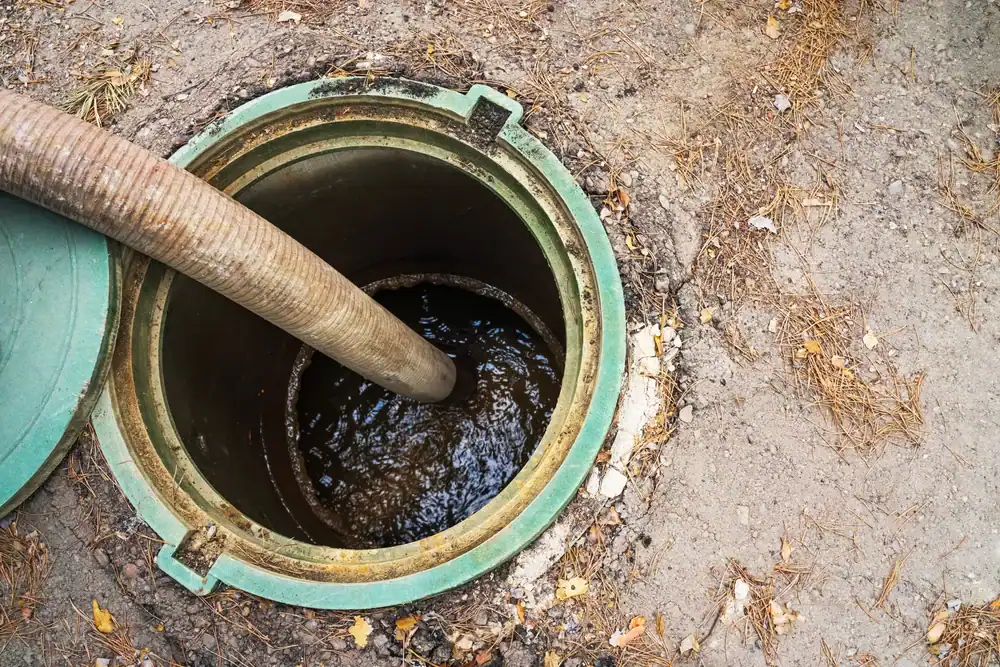
First, we locate your existing line. Most Westbury cesspools sit 10-15 feet from the house, in line with your main vent stack. We use that to map the route and figure out where the problem is—whether it’s a belly in the line, a collapse, or a connection that’s separated at the cesspool inlet.
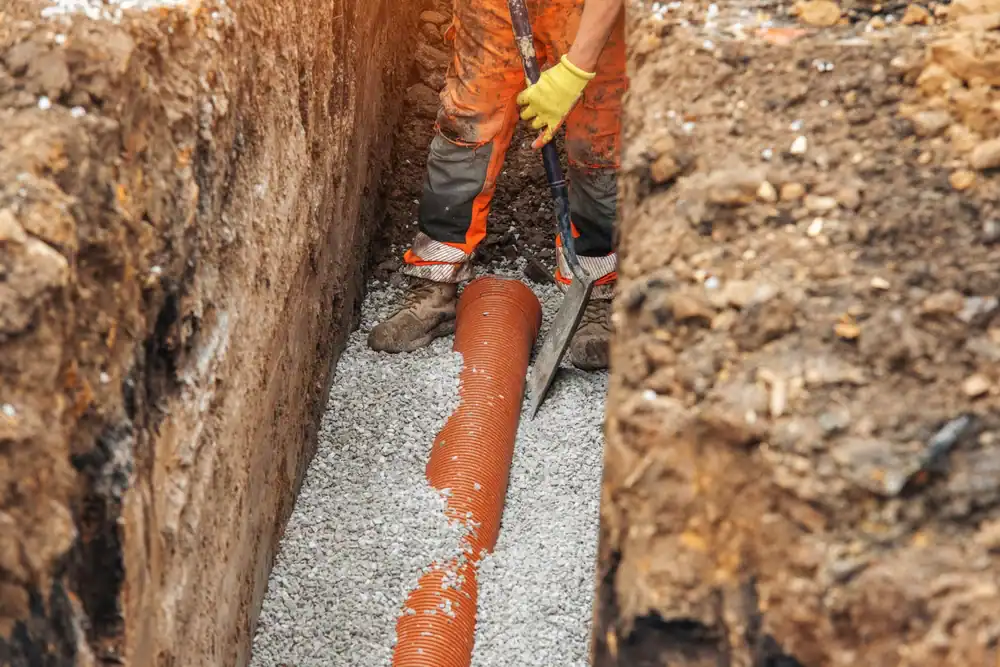
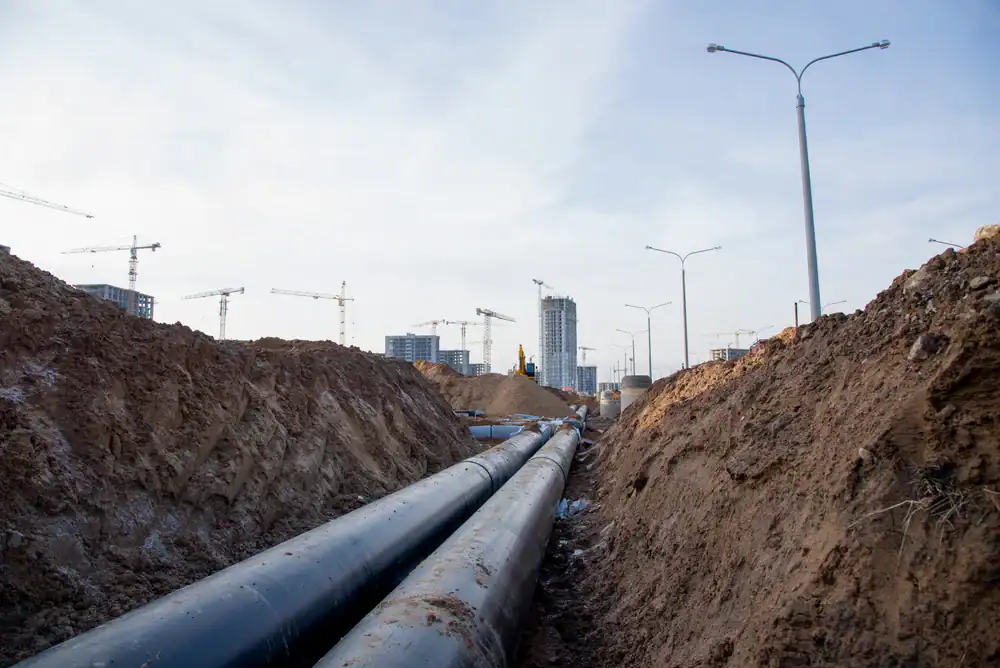
Then we dig. Trenching and excavation are done carefully to avoid damaging anything else—gas lines, water mains, sprinkler systems. We expose the damaged section, inspect the rest of the line for soft spots, and remove what needs to go. If your cesspool inlet is damaged, we address that too. No point in connecting a new pipe to a busted receiver.
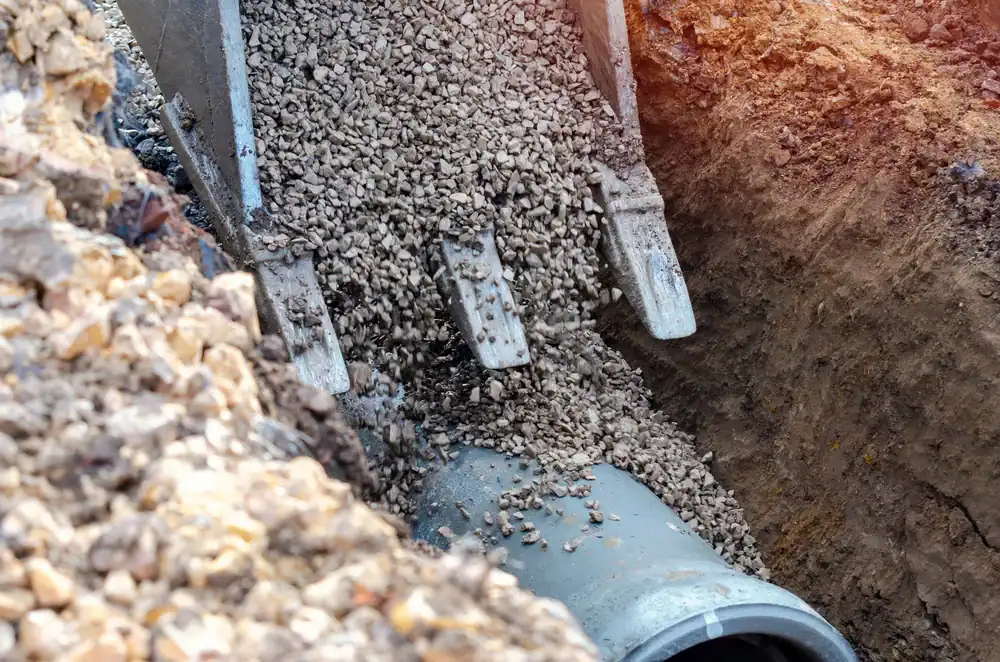
The new line goes in with proper bedding—sand and gravel underneath to support the pipe and prevent settling. Slope matters. Your sewer line needs to drop at least 1/4 inch per foot to move waste by gravity. Too flat and it clogs. Too steep and water outruns solids. We set it right.
Once the line is in and backfilled, we test it. Then we restore your property. Grass gets seeded or sodded. Pavement gets patched. You shouldn’t be able to tell we were there a year from now.
Ready to get started?
You’re getting a full main waste line replacement, not a band-aid. That means excavation, removal of the old pipe, installation of new schedule 40 PVC, proper slope and bedding, connection to your cesspool or septic inlet, backfill, compaction, and site restoration. If we need to saw-cut asphalt or pull up pavers, that’s part of it.
We also handle permits and inspections if Nassau County requires them for your property. Some line changes need a permit depending on depth and proximity to the street. We know when that applies and we handle it.
Westbury’s water table and soil conditions mean we sometimes hit groundwater during excavation, especially in low-lying areas near the Southern State. We come prepared with pumps and shoring if needed. You don’t pay extra because we ran into something predictable.
If your line runs under a driveway, deck, or landscaping, we work around it or through it depending on what makes sense. Our goal is to fix the problem with the least amount of disruption. That said, if your driveway is already cracked and sinking, we’ll tell you. Better to know now than after we backfill.
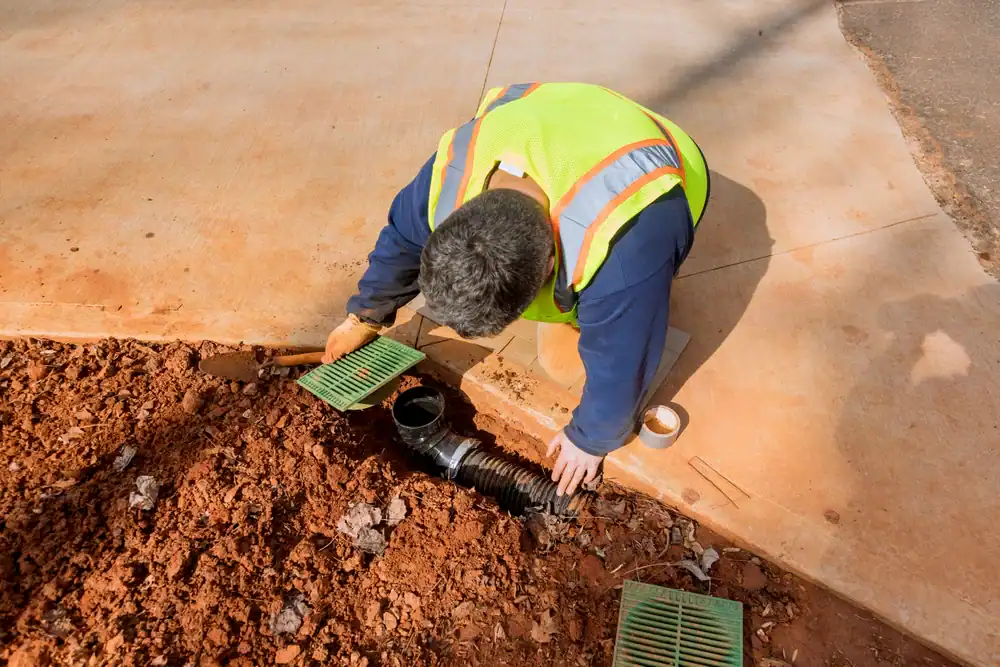
If your line has a single crack or a small separated joint and the rest of the pipe is solid, a spot repair might work. But if you’ve got cast iron that’s rusting through, clay that’s crumbling, or a line that’s settled and lost its slope, you’re replacing it.
Here’s the test: if we dig down and find one problem, then find another ten feet away, and another after that, you’re not repairing your way out of it. Old pipe fails in sections because the whole line is aging at the same rate. Fixing one spot just means you’ll be calling us back in six months when the next section goes.
Most of the line changes we do in Westbury are on homes built before 1980. If that’s you and you’re having chronic backups or slow drains throughout the house, it’s probably time. We’ll camera the line if you want certainty before we dig, but most homeowners can tell from the symptoms.
Gravity moves your waste from the house to the cesspool. For that to work, the pipe has to slope downward at a consistent grade—typically 1/4 inch per foot, sometimes more depending on the run length and diameter.
If the line is too flat, waste moves slow and solids settle in the pipe. You get clogs. If it’s too steep, water rushes ahead and leaves solids behind. Same result. And if the line has a belly—a sag or low spot where the pipe dips down then back up—waste gets stuck there and you’re dealing with constant backups.
We see bad pitch all the time in Westbury, especially on older installs where the ground settled or the original crew didn’t use proper bedding. Fixing it means pulling the line and reinstalling it at the right grade with compacted base material underneath. It’s not optional. Your line won’t work right without it.
Most residential line changes in Westbury take one to two days depending on the length of the run, how deep we’re digging, and what’s in the way. If it’s a straight shot from your foundation to the cesspool with no obstacles, we’re usually done in a day.
If we’re going under a driveway, through landscaping, or dealing with a deep line, it takes longer. Same if we hit groundwater or need to shore up the trench. We’ll give you a realistic timeline after we see the site.
You’ll have limited water use during the work—showers and laundry are out, but you can usually flush toilets if we set up a temporary bypass. We’ll walk you through what to expect before we start so you’re not caught off guard. Most customers make it work without leaving the house.
If your line is accessible and the damage is localized, we dig only where we need to. Most trenches are 18-24 inches wide and we follow the path of the existing pipe. Your yard doesn’t get destroyed unless the line runs through the middle of it.
That said, we can’t replace a sewer line without excavation. Trenchless methods like pipe lining or pipe bursting work in some situations, but they’re not always an option for cesspool connections, especially if the pipe has collapsed or the slope is wrong. If your line needs to be re-graded or the cesspool inlet is damaged, we’re digging.
We do everything we can to minimize impact. We protect landscaping, mark utilities, and restore the area when we’re done. Grass grows back. Mulch gets replaced. If you’ve got irrigation lines or lighting in the trench path, we work around them or reconnect them after. You’re not going to love having a trench in your yard for a day, but you’ll forget it was there a month later.
Age is the biggest factor. Cast iron corrodes from the inside out. Clay cracks and separates at the joints. Orangeburg pipe—basically tar paper—disintegrates. If your house was built before 1980 and the line has never been replaced, it’s living on borrowed time.
Tree roots are the other major culprit. Roots seek out water and they’ll infiltrate any crack or joint in your sewer line. Once they’re in, they grow and block the pipe. We see this a lot in older Westbury neighborhoods with mature oaks and maples. The roots don’t care that your pipe is there—they’re just looking for moisture.
Ground settling is common too, especially in areas with softer soil or high water tables. If the pipe wasn’t bedded properly during the original install, it sinks over time and creates a belly. Water and waste pool in the low spot and you get chronic backups. The only fix is pulling the line and reinstalling it with the right base and slope.
It depends on the scope of work and where your property is located. Nassau County and the Town of Hempstead have specific requirements for underground utility work, especially if you’re connecting to a cesspool or septic system. Most residential line replacements need a permit if they involve work deeper than a certain depth or within the right-of-way.
We handle permit applications as part of the job. We know what the county requires, we pull the permit, and we schedule the inspection if needed. You don’t have to deal with it.
Skipping permits is a bad idea. If you sell your house and the buyer’s inspector finds unpermitted work, it can kill the deal or force you to rip it out and redo it with permits. It’s not worth the risk. We do it right the first time so you don’t have problems later.
Other Services we provide in Westbury