
Hear from Our Customers
You stop worrying about backups every time someone flushes. Your drains clear fast. You’re not calling plumbers at midnight because sewage is coming up through your basement floor.
A proper line change means your waste flows where it’s supposed to go—away from your house, at the right slope, without pooling or backing up. That’s what correct pipe pitch and slope actually does. It’s not complicated, but it has to be done right, and most homeowners in Wheatley Heights find out the hard way when it’s not.
When your sewer line to cesspool connection is installed correctly, you get decades of reliable service. No standing water in your yard. No foul smells near your foundation. No emergency calls on weekends. Just a system that works quietly in the background while you forget it exists.
We’ve been handling line changes and main waste line replacement across Wheatley Heights and Suffolk County long enough to know what works here. We’re licensed, insured, and we show up when we say we will.
Most homes in this area don’t have access to public sewers. That means your cesspool or septic system is everything. When a line fails, you can’t just wait it out. We understand that urgency, and we also understand Suffolk County’s regulations—which changed in 2019 and caught a lot of homeowners off guard.
You’re not getting a sales pitch from us. You’re getting straight answers about what your property needs, what it’ll cost, and how long it’ll take. We do the trenching and excavation, handle the permits, and make sure your new line is installed to last.
First, we come out and assess your current system. We’ll look at your existing line, check the distance to your cesspool or sewer connection, and evaluate your property’s slope and soil conditions. Rocky soil or clay can change the scope of the job, so we don’t guess—we dig a test hole if needed.
Next, we handle the permits. Suffolk County requires specific approvals for excavation and sewer line work, and we take care of that paperwork so you don’t have to chase down the health department. Once permits are in hand, we schedule the trenching and excavation. We use equipment that’s right-sized for residential properties, so we’re not tearing up half your yard unnecessarily.
During installation, we make sure your pipe pitch and slope are correct. Gravity does the work in these systems, but only if the line is angled properly. Too flat and waste pools. Too steep and solids separate from liquids. We set it right. After the line is in, we backfill, compact, and restore your property as close to original condition as possible. Then we test the system to make sure everything drains correctly before we call it done.
Ready to get started?
When we do a line change, you’re getting full trenching and excavation, new pipe installation, proper bedding material, and backfill. We also handle the sewer line to cesspool connection or tie-in to the municipal line if that’s available in your area of Wheatley Heights.
You’re also getting compliance with Suffolk County regulations. Since 2019, you can’t just replace a failed cesspool with another cesspool. If your system fails, you’re required to upgrade to a modern septic system or connect to a sewer line where available. We know those rules inside and out, and we make sure your installation meets current codes so you’re not dealing with violations or fines down the road.
We also include a 10-year guarantee on the installation. That’s not a warranty with fine print—it’s a straightforward promise that if something goes wrong with our work, we come back and fix it. Most line changes we install last 50+ years with zero maintenance, but if there’s an issue within that first decade, you’re covered.
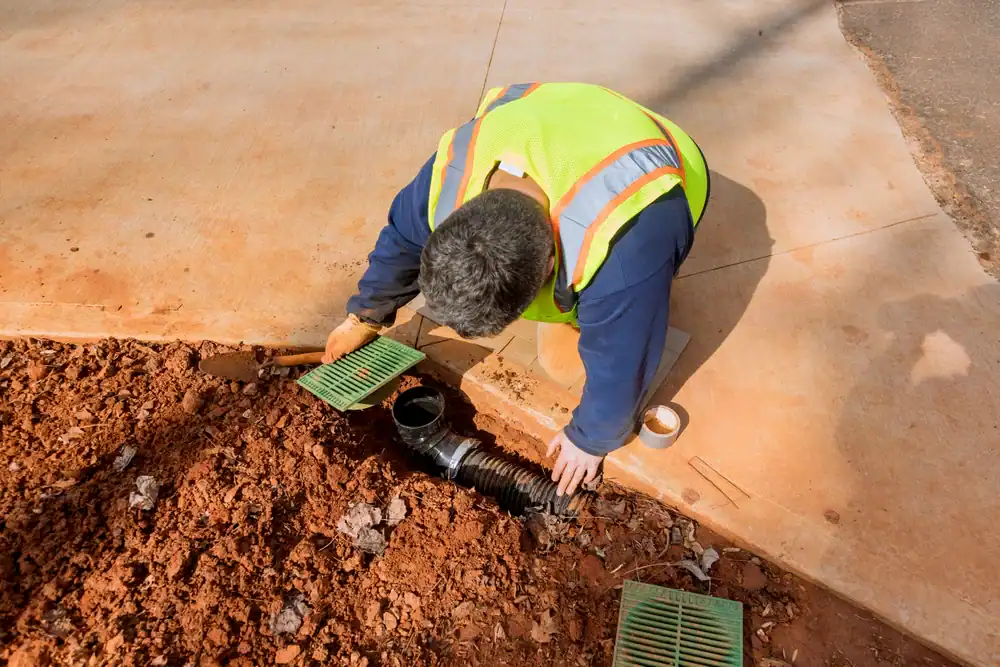
If your line has a small crack or a single problem spot, a repair might be enough. But if you’re dealing with repeated backups, slow drains throughout the house, or sewage surfacing in your yard, the whole line is probably compromised.
Older cesspools and sewer lines in Wheatley Heights were often installed 40, 50, even 60 years ago. The pipes degrade over time—especially if they’re clay or cast iron. Tree roots get in. The ground shifts. Once a line starts failing in multiple spots, patching it is just delaying the inevitable. A full line change costs more upfront, but it’s the last time you’ll deal with it for decades.
We can run a camera inspection if you’re not sure. That shows us exactly what’s happening inside the pipe, and we’ll tell you honestly whether a repair makes sense or if you’re better off replacing the whole thing.
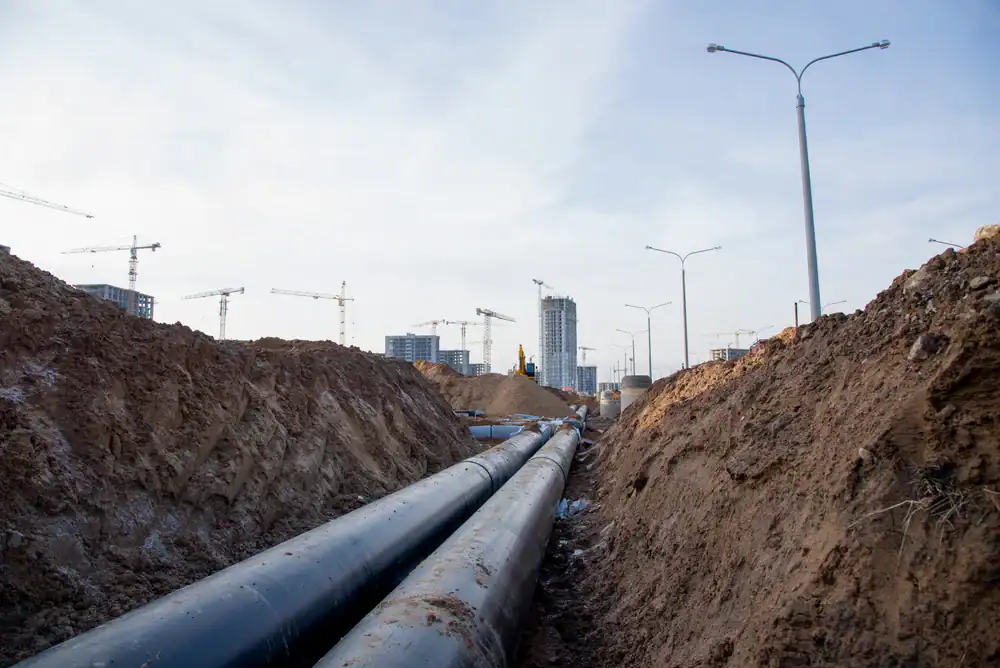
We dig a trench from your house to your cesspool or the main sewer connection point. The depth and width depend on local codes and how far down your existing line sits, but it’s typically 18 to 36 inches deep for residential properties.
Before we dig, we call 811 to mark underground utilities. Then we use a backhoe or excavator to open the trench. If your yard has landscaping, a driveway, or other obstacles in the way, we work around them as much as possible. Sometimes we can’t avoid going through a section of pavement or garden beds, but we’ll talk through that with you before we start.
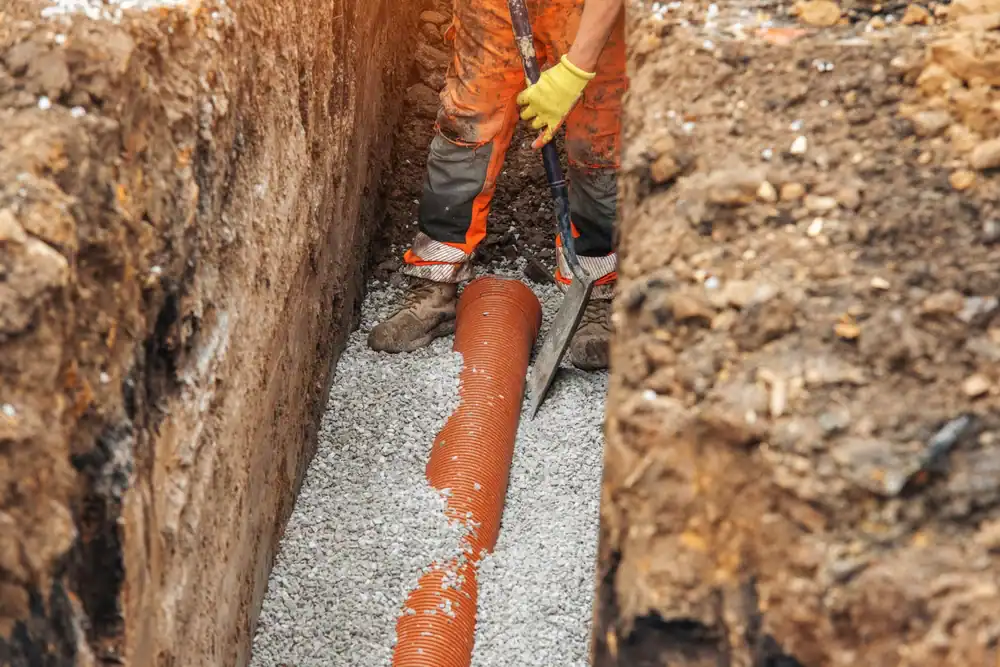
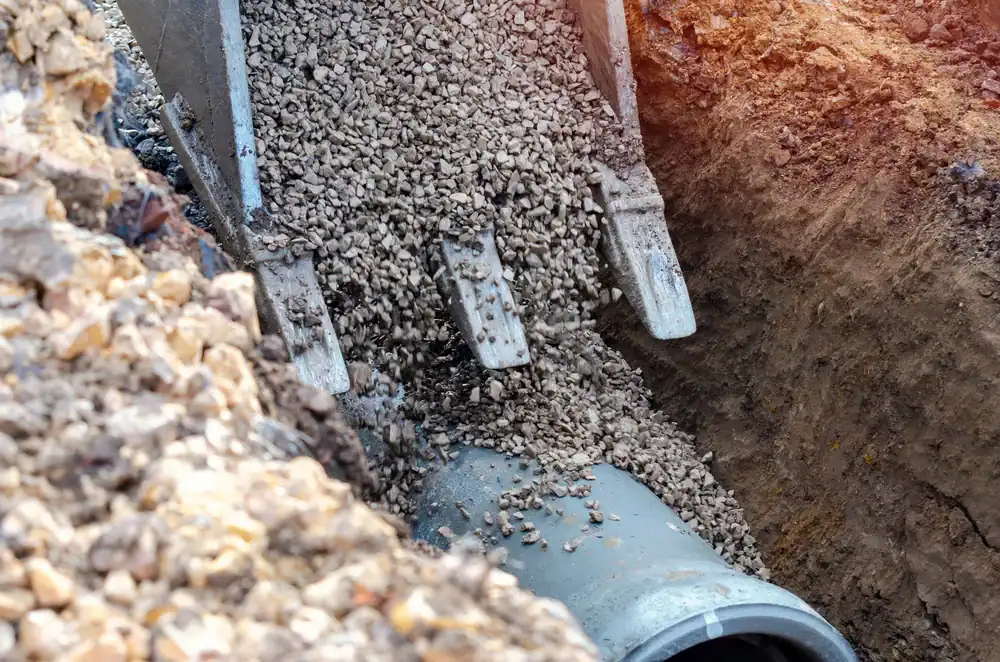
Once the trench is open, we lay the new pipe on a bed of gravel or sand to support it and ensure proper drainage. After the pipe is in and connected, we backfill the trench, compact the soil, and grade it so water doesn’t pool. If we had to dig through grass, we’ll reseed or lay sod depending on what you want. The goal is to leave your property looking as close to how we found it as possible.
Your sewer line relies on gravity to move waste from your house to your cesspool or the municipal sewer. If the slope is wrong, waste doesn’t flow properly. Too flat, and solids settle in the pipe and cause clogs. Too steep, and liquids run ahead of solids, leaving sludge behind that builds up over time.
The standard slope for residential sewer lines is about 1/4 inch per foot. That’s enough to keep everything moving without creating problems. It sounds simple, but getting that slope consistent over a long run—especially when you’re dealing with uneven terrain or obstacles underground—takes experience and the right equipment.
We use a laser level during installation to make sure the grade is correct from end to end. It’s one of those things that doesn’t look like much when it’s done, but it’s the difference between a system that works for 50 years and one that backs up every few months.
If there’s a municipal sewer line on your street, yes, you can connect to it—and in some cases, you’re required to. Suffolk County has been expanding sewer access in certain areas, and when that happens, homeowners are often mandated to hook up within a specific timeframe.
Connecting to the public sewer means you’re done with cesspool maintenance forever. No more pumping, no more worrying about system failure. But the connection process involves more than just running a pipe to the street. You need permits from the town and the county, and the work has to be inspected before you can use the line.
We handle that entire process. We’ll dig the trench from your house to the main line, install the lateral connection, coordinate inspections, and make sure everything is up to code. If there’s a fee from the municipality for tapping into the sewer, we’ll let you know upfront so there are no surprises.
Most residential line changes in Wheatley Heights take one to three days of actual work, depending on the distance, soil conditions, and whether we’re connecting to a cesspool or a municipal sewer. Permitting adds time on the front end—usually one to two weeks—but that’s just waiting for approvals, not active construction.
If your property has difficult access, rocky soil, or a long run from the house to the connection point, it might take an extra day. But we’re not dragging the job out. Once we start, we work straight through until it’s done. We know you can’t go weeks without a functioning sewer line, so we schedule the work in a way that minimizes disruption.
During the job, your water will still work, but you’ll need to limit use of sinks, toilets, and drains while we’re disconnected. We’ll walk you through exactly what to expect before we start so you can plan accordingly.
A failed sewer line isn’t something you can put off. If waste is backing up into your house or surfacing in your yard, it’s a health hazard and a violation of local codes. Suffolk County can issue fines if you don’t address it, and your homeowner’s insurance might not cover damage caused by a system you knew was failing.
That said, we understand that a full line change is a significant expense. We’ll give you an upfront estimate so you know exactly what it costs, and we can talk through options if you need to phase the work or explore financing. Some towns and counties also offer assistance programs for sewer upgrades, especially if you’re connecting to a new municipal line.
What we won’t do is sell you a temporary fix that doesn’t solve the problem. If your line needs to be replaced, we’ll tell you that clearly. If a repair will actually hold, we’ll tell you that too. You’ll get honest information so you can make the right call for your property and your budget.
Other Services we provide in Wheatley Heights