
Hear from Our Customers
You can’t fix what you can’t see. That’s the problem with underground pipes—everyone’s got a theory about what’s wrong, but nobody wants to show you proof before they start digging up your yard.
A camera inspection changes that. You get real-time footage of your sewer line, cesspool connections, and drain pipes. Every crack, root intrusion, and clog shows up on screen with a foot counter that marks the exact location. No more accepting someone’s best guess about whether your line is broken or just needs cleaning.
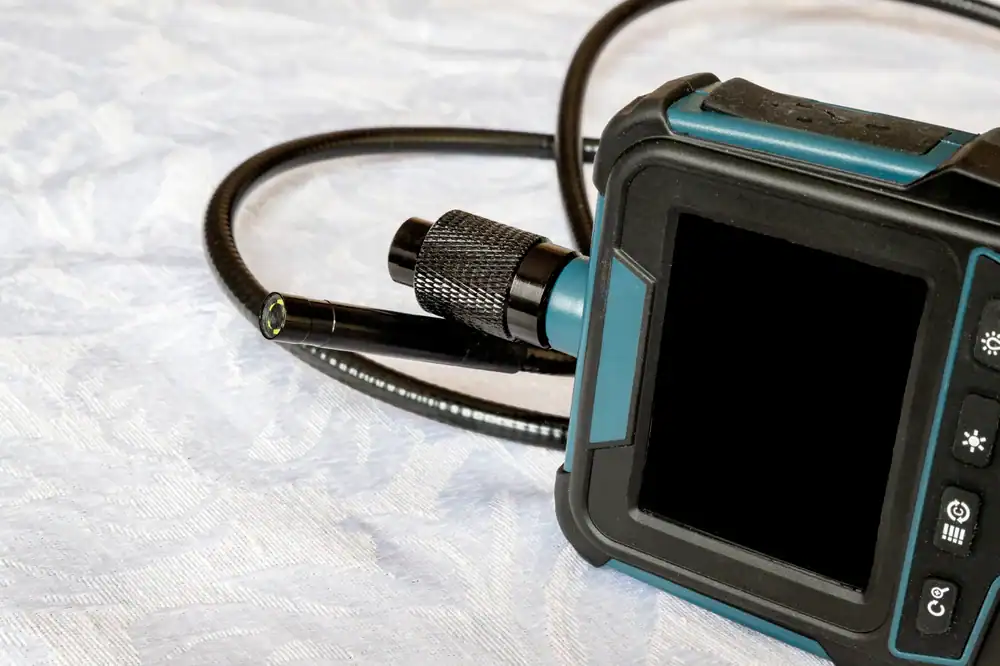
The camera goes where eyes can’t. We’re talking 300 feet of reach through pipes ranging from 2 inches to 36 inches in diameter. You see what we see, and you walk away with a USB copy of the entire inspection. That’s documentation you can show a contractor, a buyer, a bank, or keep for your own records.
We serve homeowners throughout Babylon and Suffolk County, where roughly 75% of properties rely on private septic systems and cesspools. That’s different from most of Nassau County, where municipal sewer connections handle the work. Out here, your wastewater system is your responsibility.
We’ve seen what happens when Babylon homeowners skip the camera inspection and go straight to repairs. They end up replacing entire lines that only needed a section fixed. Or they’re told roots destroyed everything when really it’s just a clog at the 40-foot mark.
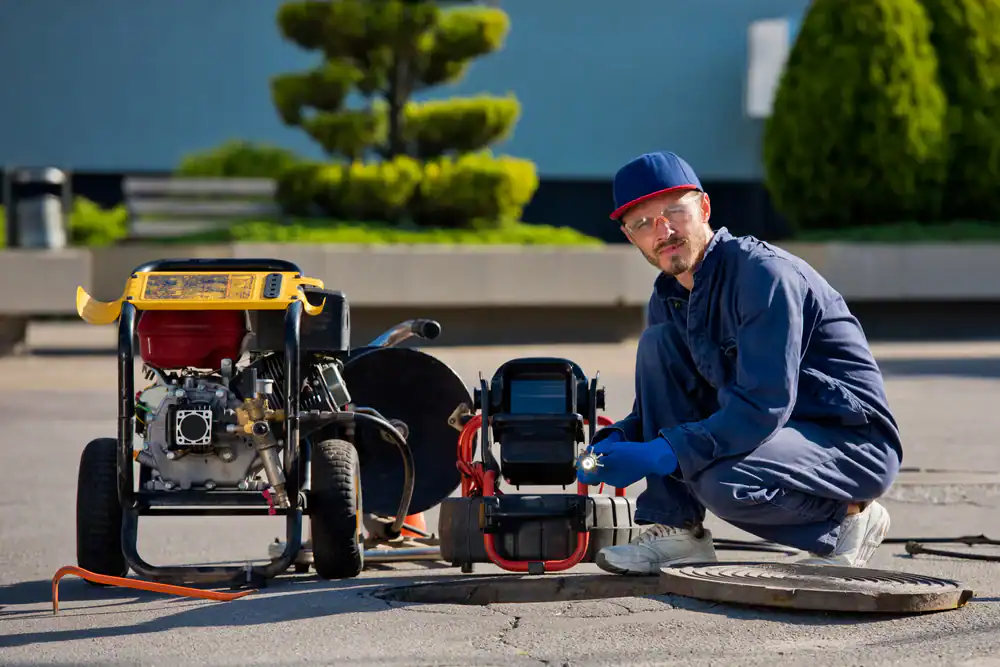
Our job is to give you the full picture before you spend a dime on repairs. We’re licensed, insured, and equipped with high-definition camera technology that actually works in the field conditions we deal with around here.
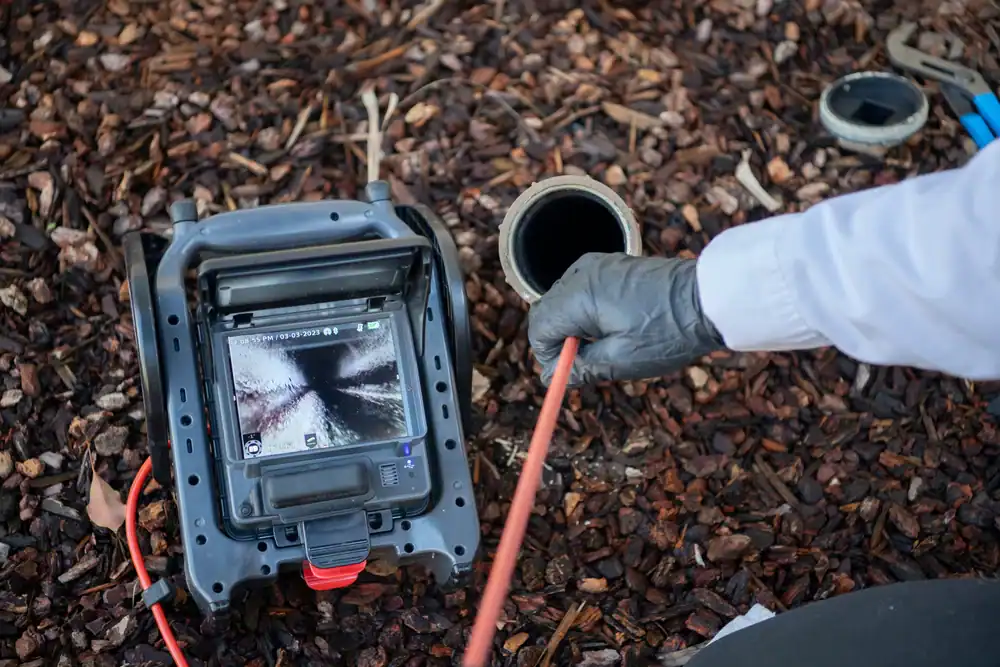
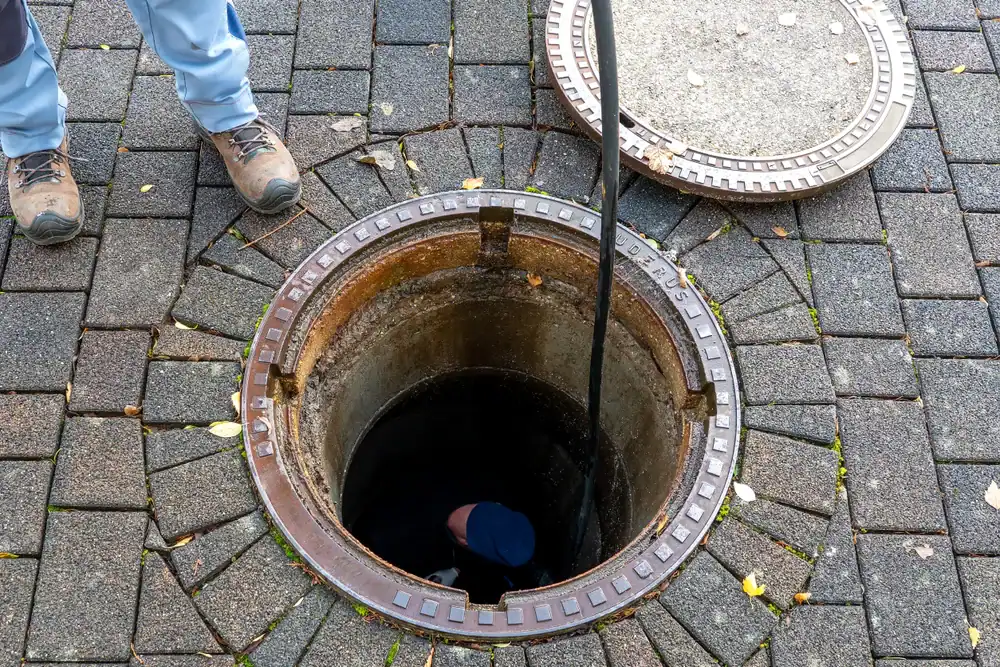
We start at an access point—usually a cleanout, drain opening, or the cesspool itself. The camera head attaches to a flexible cable with LED lights that illuminate everything as it moves through your pipes. You can watch the feed in real time if you want. Most people do.
As the camera travels, we’re looking for cracks, separations, root intrusions, grease buildup, and structural damage. The foot counter runs continuously, so when we spot a problem at 47 feet, that’s exactly where it is. No approximations.
The camera also has a transmitter that lets us mark the location from above ground using a receiver. That means if you need repairs later, the crew knows precisely where to dig without tearing up half your property. We document everything—screenshots of problem areas, full video footage, and a written report that includes GPS coordinates if needed.
You leave with a USB card containing the complete inspection video. That’s yours to keep, share with contractors for estimates, or submit to your bank if this is part of a real estate transaction. The whole process typically takes 30 to 90 minutes depending on how much line we’re inspecting.
Ready to get started?
Every camera inspection includes the video documentation, written report with findings, and precise location data for any issues we identify. You’re not getting a vague “yeah, there’s some problems” conversation. You’re getting footage with time stamps and measurements.
This matters in Babylon because of how Suffolk County regulations have changed. Since July 2019, you can’t just replace a failed cesspool with another cesspool. You have to upgrade to a modern septic system, which means you need documentation of what’s actually failing. Banks and mortgage companies want this proof too—most require cesspool certification before closing, and camera inspection footage satisfies that requirement.
The inspection covers your entire system from indoor plumbing connections out to where your line meets the municipal system or your cesspool. We’re checking for bellied pipes, offset joints, and any signs that your system is reaching the end of its functional life. In Suffolk County, where an estimated 10-20% of septic systems fail during their lifetime, catching problems early means you’re planning repairs on your timeline, not responding to a sewage backup emergency.
Real-time clog detection is part of the service. If we find a blockage, we can often tell you whether it’s something that needs hydro jetting, root removal, or if the pipe itself is damaged and needs replacement.
An inspection typically runs a few hundred dollars. Compare that to what happens without one: you might pay $15,000 for a full line replacement when the actual problem was a $2,500 repair at a single joint.
That’s not a hypothetical. It happens constantly in Babylon because contractors make more money on bigger jobs. They’re not necessarily lying—they just don’t know what’s down there, so they quote for worst-case scenarios.
The camera removes the mystery. You see a crack at the 52-foot mark, you fix that section. You see roots at multiple points throughout 200 feet of pipe, okay, now replacement makes sense. But you’re making that decision based on evidence, not someone’s hunch.
Slow drains mean something’s restricting flow. Could be grease buildup you can clear with hydro jetting. Could be roots that need cutting. Could be a bellied section of pipe where water pools and solids accumulate.
Without looking, you’re guessing. A plumber might snake your line, charge you $300, and have you call back in three months when it slows down again because the root mass grew back. Or they might tell you the whole line needs replacing when really you need a targeted repair.
The inspection shows you what’s causing the slowdown and where it’s happening. Then you can decide on the right fix—not the most expensive one or the temporary patch, but the actual solution that matches the actual problem.
At least you know what you’re dealing with. That video doesn’t expire. You can use it to get multiple repair estimates, plan for the work when your budget allows, or monitor the situation if it’s not an emergency yet.
Suffolk County homeowners can now get reimbursed for up to 75% of project costs (up to $25,000) for systems that reduce nitrogen and other contaminants. Nassau County offers similar grants up to $20,000. But you need documentation to apply, and camera inspection footage is exactly the kind of proof these programs require.
Knowing the problem also prevents you from getting blindsided. If you’re planning to sell in the next year or two, you can address issues before the buyer’s inspection finds them. If you’re buying, the camera inspection gives you negotiating power or lets you walk away from a property with serious underground problems.
Yes, and that’s one of the biggest advantages. We spot hairline cracks before they become full separations. We see root intrusions when they’re just starting to penetrate joints, not after they’ve completely blocked your line.
Early detection means smaller repairs. A crack you catch now might need a spot repair. That same crack in two years could mean a collapsed pipe and emergency excavation in the middle of winter when your yard is frozen and contractors charge premium rates.
This is especially relevant in Babylon where so many homes were built before 1990 and are still using original cesspool systems. Those systems are aging out. The camera shows you how much life is left so you can plan accordingly instead of dealing with a sewage backup on Thanksgiving weekend.
No. The camera is non-invasive. We’re feeding a flexible cable through existing openings in your system. There’s no digging, no breaking through walls, no tearing up landscaping just to look around.
That’s the whole point of fiber-optic video inspection technology. Before this existed, finding problems meant excavation. Contractors would dig test holes at their best guess locations, and if they guessed wrong, they’d dig another hole. Your yard ended up looking like a minefield.
Now the camera does the searching. If we find a problem and you decide to repair it, the excavation happens at the exact spot that needs work. One hole, right location, minimal property disruption. The inspection itself leaves zero trace.
Most banks require cesspool certification before they’ll finalize a mortgage on properties with private waste systems. That certification process includes verifying that your septic system or cesspool and all connecting pipes are functioning properly. Camera inspection provides the documentation lenders want to see.
Sellers benefit because you can address problems before listing or price the property accurately based on system condition. Buyers benefit because you’re not inheriting someone else’s underground disaster. The inspection protects both parties.
Suffolk County’s regulatory environment makes this even more important. With the 2019 changes that require cesspool-to-septic upgrades when systems fail, knowing what you’re buying matters. A camera inspection reveals whether you’re looking at a system with years of life left or one that’s going to need a $20,000+ upgrade in the near future.
Other Services we provide in Babylon