
Hear from Our Customers
You’re dealing with slow drains, sewage backing up into your home, or standing water around your cesspool. Maybe it’s the smell that won’t go away, or toilets that barely flush when you have guests over.
A proper line change fixes the root cause. Your waste flows where it should, at the right speed, without pooling or backing up. You stop worrying about what happens during the next heavy rain or holiday gathering.
The difference is in how the line is installed. Proper pitch and slope mean gravity does its job. Clean backfill and even pipe alignment mean the system lasts decades, not years. You get a system that works quietly in the background, the way it’s supposed to.
We’ve been handling cesspool and septic work in Suffolk County for nearly two decades, built on four generations of family expertise. We’re licensed through Suffolk County Consumer Affairs, fully insured, and we’ve seen every type of line failure Lindenhurst properties can throw at us.
The high water table here, the sandy soil, the older infrastructure in neighborhoods near the water—we know what breaks, why it breaks, and how to fix it so it doesn’t happen again. We’ve been the ones homeowners call when their regular plumber can’t figure it out or won’t touch cesspool connections.
When regulations changed in 2019 and Suffolk County started requiring septic tanks instead of cesspool replacements, we were already ahead of it. We handle the permits, the inspections, and the installation work that meets current code.
First, we assess the existing line and figure out where the failure is. Sometimes it’s a spot repair. Sometimes the whole run needs replacing. We tell you which one you’re looking at and why.
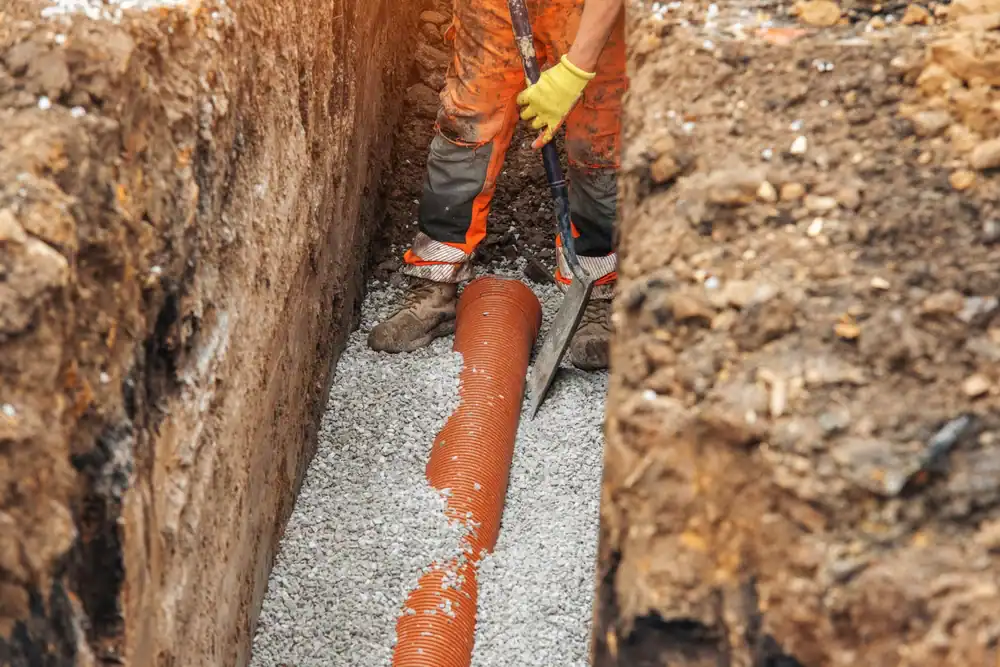
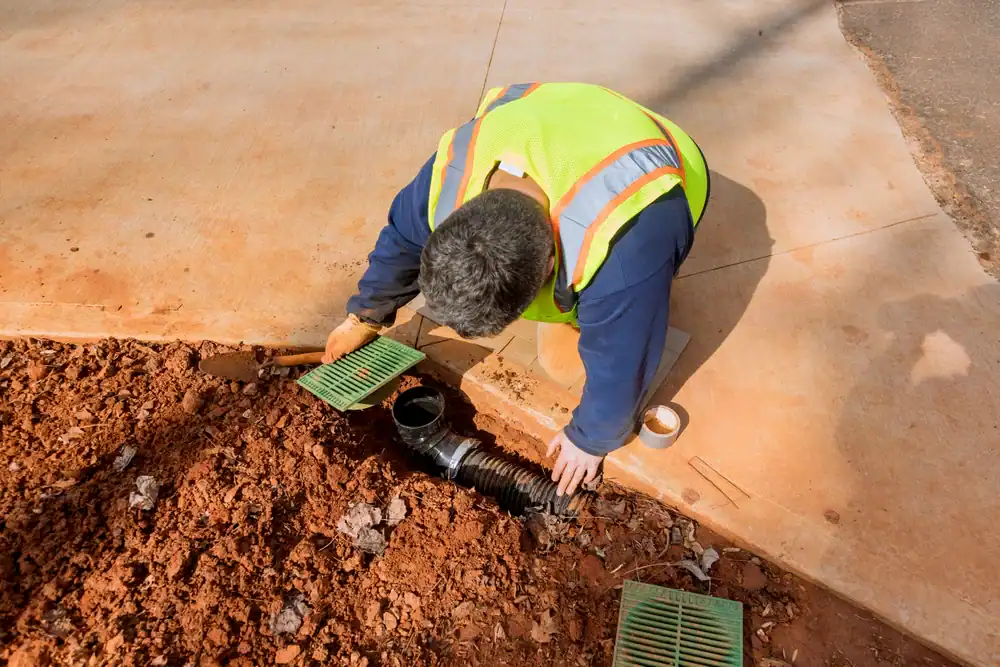
Next comes trenching and excavation. We dig down to expose the line, making sure we’re not tearing up more of your yard than necessary. The old pipe comes out, and we check the cesspool or septic tank connection point to make sure that’s still solid.
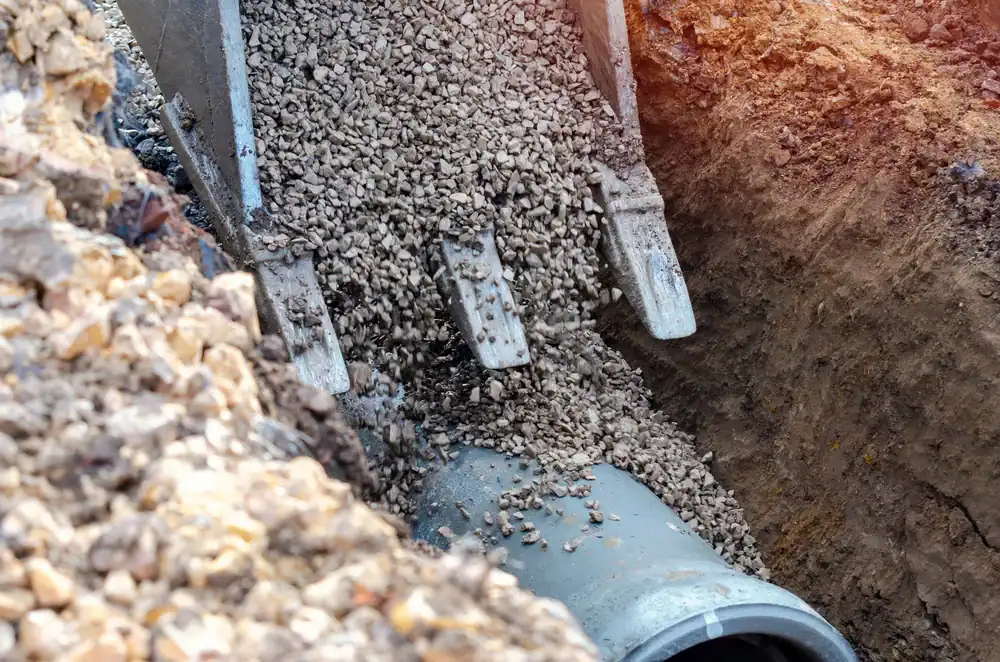
Then we install the new line with the right slope—minimum one percent grade so waste actually flows downhill. We backfill in six-inch layers, tamping as we go, so the ground doesn’t settle unevenly later and throw off your pitch. Every connection gets checked. Every joint gets inspected.
Once it’s in and covered, we test the flow. You should see drains clear faster, toilets flush normally, and no more gurgling sounds from your pipes.
Ready to get started?
You’re getting a full line replacement or repair, depending on what your system needs. That includes excavation, removal of the old pipe, installation of new pipe with proper pitch and slope, clean backfill, and connection to your cesspool or septic tank.
In Lindenhurst, we also handle the permit process with the local health department. Suffolk County has specific requirements for waste line work, especially since the 2019 regulation changes. If your cesspool is being replaced, it has to be swapped for a septic system now—not another cesspool. We make sure your line work is compliant from the start.
We also handle emergency line repairs when you’ve got sewage backing up and need someone there fast. Backups don’t wait for business hours, and neither do we. If tree roots have crushed your line, if the pipe has corroded through, or if settling ground has created a low spot where waste pools instead of draining—we’ve handled it before, and we’ll handle yours.
Lindenhurst’s tight lots and older homes mean access can be tricky. We work around driveways, decks, and landscaping to get the job done with minimal disruption.
If you’re seeing frequent backups in the same spot, that’s usually a localized problem—tree roots, a cracked section, or a joint that’s separated. A spot repair might handle it.
But if you’ve got slow drains throughout the house, multiple backups in different areas, or the line is old cast iron or clay that’s deteriorating, a full replacement makes more sense. Patching one section just means you’ll be calling someone back in six months when the next section fails.
We’ll camera the line if needed and show you exactly what’s happening underground. Then you can see whether you’re looking at a $1,500 repair or a $5,000 replacement—and why.
Gravity moves your waste from the house to the cesspool. If the pipe is too flat, waste sits in the line and doesn’t flow. If it’s too steep, liquid runs ahead and solids get left behind. Either way, you get clogs.
The minimum slope is one percent—that’s one inch of drop for every eight feet of pipe. Most installers aim for two percent to be safe. Get it wrong, and your system never works right, no matter how new the pipe is.
We use a laser level during installation to make sure the grade is consistent from end to end. No dips, no humps, no flat spots. It’s not complicated, but it has to be done right, and a lot of contractors skip this step.
Depends on where the line runs and what’s wrong with it. If it’s a single break or a root intrusion in one spot, we can trench just that section—usually a few feet wide and however long the damaged area is.
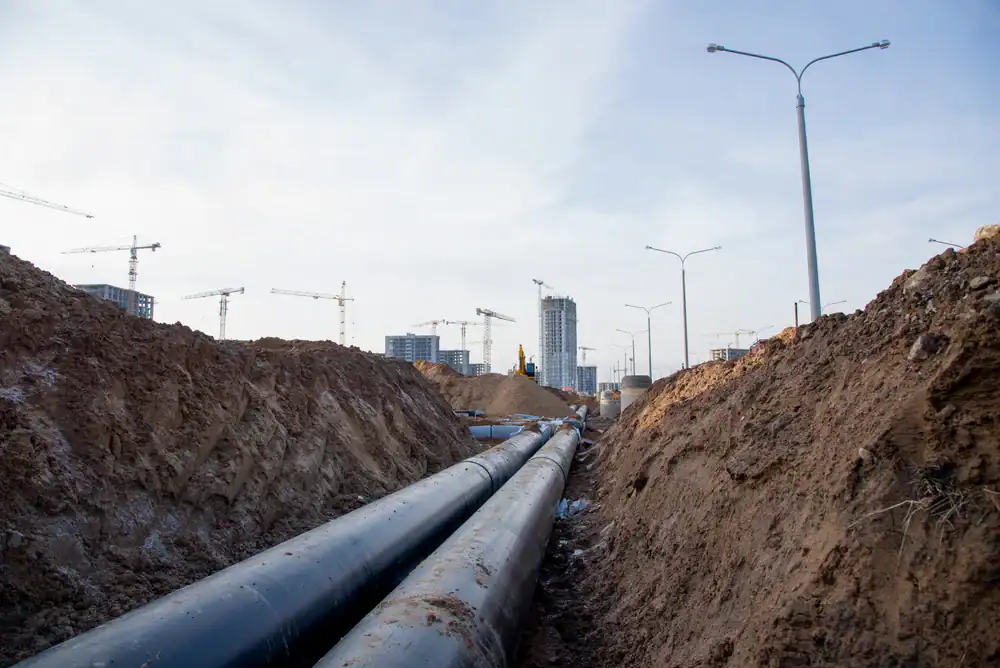
If the whole line needs replacing, we’re digging the full run from your house to the cesspool. But we’re not excavating your entire yard. We trench along the path of the existing line, pull the old pipe, drop in the new one, and backfill. Most of the time, your grass grows back within a season.
We also work around obstacles. If your driveway is in the way, we can bore underneath it instead of ripping it up. If you’ve got a deck or patio over part of the line, we’ll figure out access that doesn’t involve demolishing your hardscape.
Most line replacements take one to two days, depending on the length of the run and how much excavation is involved. If we hit rock or need to work around underground utilities, it might stretch to three days.
You can’t use your plumbing while we’re working. The line is disconnected, so anything you send down the drain has nowhere to go. We try to schedule the work so you’re not without plumbing for longer than necessary, and we’ll let you know ahead of time so you can plan around it.
If it’s an emergency repair and you need the system back online fast, we’ll prioritize getting at least one bathroom functional by the end of the first day. It’s not always possible, but we make it happen when we can.
Yes, you need a permit from the Suffolk County Department of Health Services for any waste line work that connects to a cesspool or septic system. It’s not optional, and if you skip it, you’ll have problems when you try to sell your house or if a neighbor reports unpermitted work.
We handle the permit application as part of the job. We submit the plans, coordinate the inspections, and make sure everything is signed off before we’re done. You don’t have to deal with the county yourself.
The permit process usually adds a week or two to the timeline, depending on how backed up the health department is. If it’s an emergency repair, we can sometimes get an expedited review, but that’s not guaranteed. Either way, we don’t leave you hanging—you’ll know where things stand at every step.
If your cesspool is failing—cracked, collapsed, or just too old to function—you can’t replace it with another cesspool anymore. Suffolk County banned that in 2019. You have to install a septic system instead.
That’s a bigger job than just a line change, but we handle both at the same time. The line work gets done as part of the septic installation, so you’re not paying for two separate excavation projects. We’ll walk you through what’s involved, what it costs, and how long it takes.
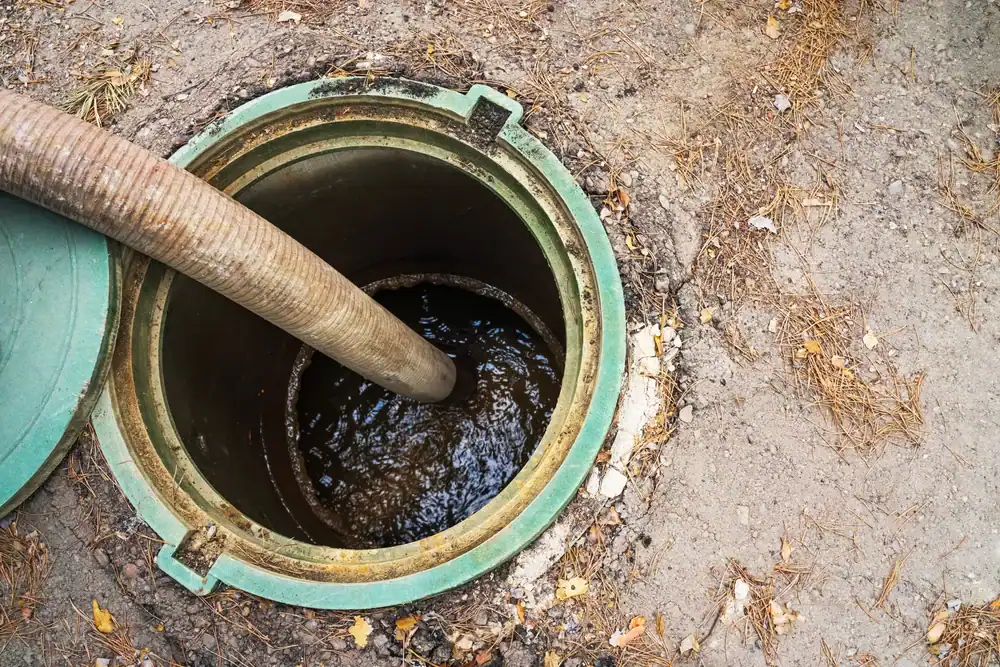
If your cesspool is still functional and you’re just replacing the line, we inspect the tank connection to make sure it’s solid. Sometimes the inlet baffle is cracked or the connection point is deteriorating. We fix that while we’re in there so you don’t have problems later.
Other Services we provide in Lindenhurst