
Hear from Our Customers
Most homeowners in Yaphank panic when they see sewage backing up into their basement or toilets that won’t flush. The assumption is always the same: the entire cesspool system has failed. That means you’re looking at $15,000 to $30,000 for a full replacement, especially with Suffolk County’s 2019 ban on new cesspool installations.
But here’s what actually happens most of the time. The cesspool itself is working just fine. The problem is the connecting pipe between your house and the tank—what we call the main waste line. If that pipe cracks, collapses, or shifts out of alignment, waste can’t flow properly. You get all the symptoms of system failure without the system actually failing.
This is especially common with older orangeburg pipes, which were installed throughout Suffolk County decades ago. They deteriorate over time, and when they go, the symptoms look catastrophic. But the fix is straightforward: a line change. You’re replacing a section of pipe, not an entire cesspool. That’s a few thousand dollars, not fifteen.
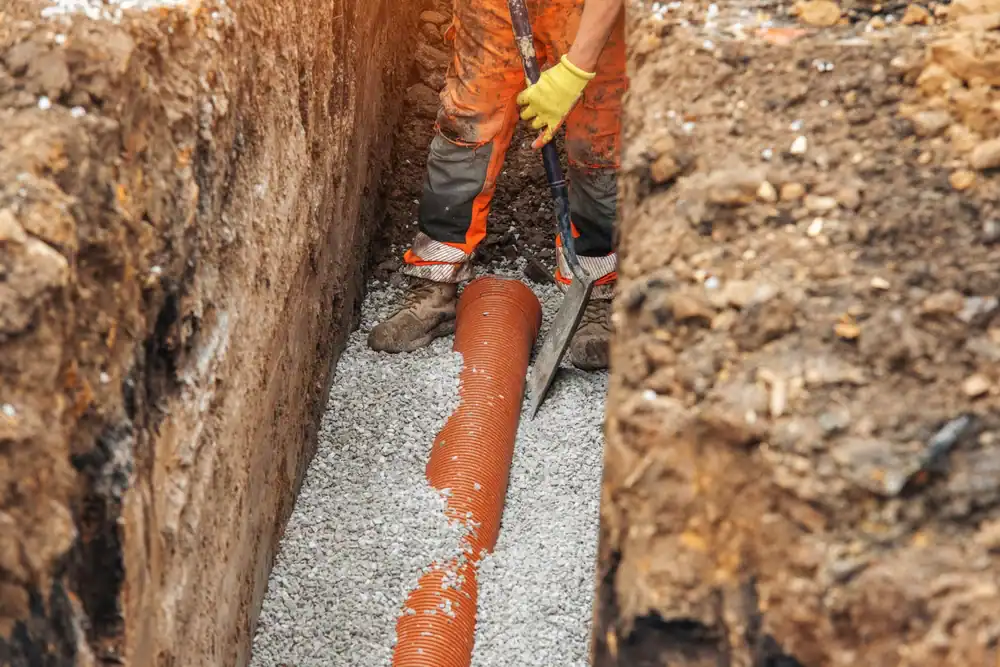
We’ve seen this scenario play out hundreds of times. A homeowner calls us convinced they need a new system. We run a camera inspection, locate the break in the connecting line, and show them exactly what’s wrong. Then we trench, replace the damaged section, verify the pitch and slope, backfill properly, and restore flow. The cesspool stays. The bank account stays intact.
We operate throughout Yaphank and the surrounding Suffolk County area. We’re licensed, insured, and available when you need us—including emergencies. Our team has handled line changes on properties with every type of soil condition, every vintage of pipe material, and every level of urgency you can imagine.
Yaphank sits above the sole-source aquifer that millions of Long Island residents depend on for drinking water. That means cesspool work here isn’t just about convenience—it’s about environmental responsibility. We take that seriously. Every trench we dig, every pipe we install, and every connection we make is done to protect both your property and the water supply beneath it.
You’re not hiring a national franchise or a contractor who dabbles in cesspool work on the side. You’re hiring a local team that knows Suffolk County regulations, understands the soil conditions in Yaphank, and has the equipment to handle trenching and excavation safely.
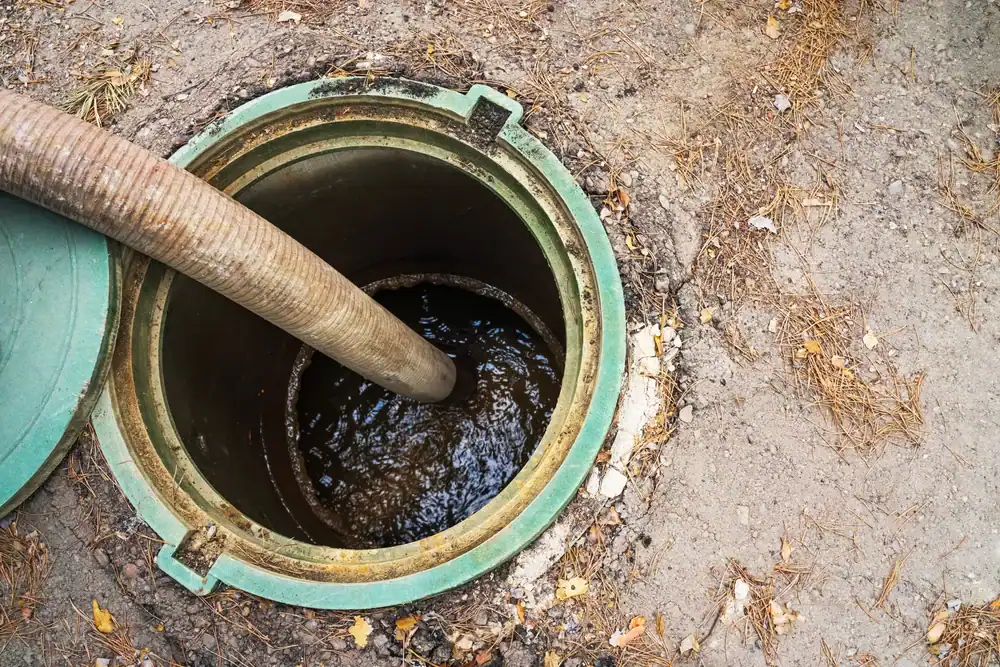
First, we locate your cesspool and map the connecting line. We use electronic locating equipment to pinpoint the tank without guessing or digging exploratory holes all over your yard. That saves time and keeps your property disruption to a minimum.
Next, we run a video camera inspection through the line. This shows us exactly where the problem is—whether it’s a crack, a collapse, root intrusion, or a section that’s shifted out of alignment. You’ll see the same footage we do. No guesswork, no upselling. Just a clear picture of what needs to be fixed.
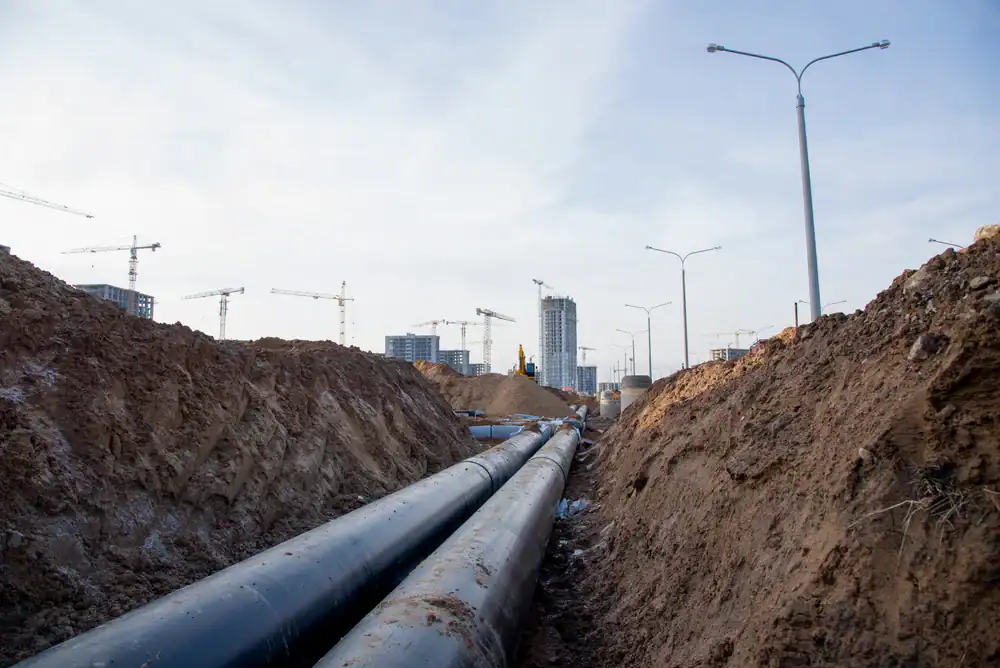
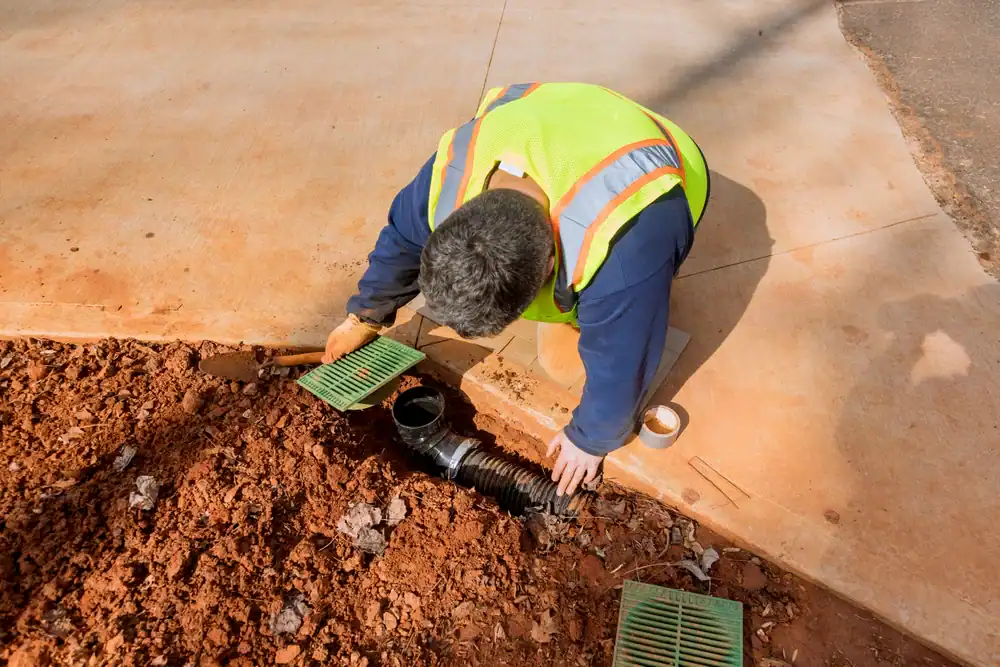
Once we’ve identified the damaged section, we trench down to access it. Depending on the depth and location, this might require excavation equipment. We’re careful to avoid utility lines and minimize disruption to landscaping. If the trench is deeper than five feet, we follow proper safety protocols—because trenching work can be dangerous if it’s not done right.
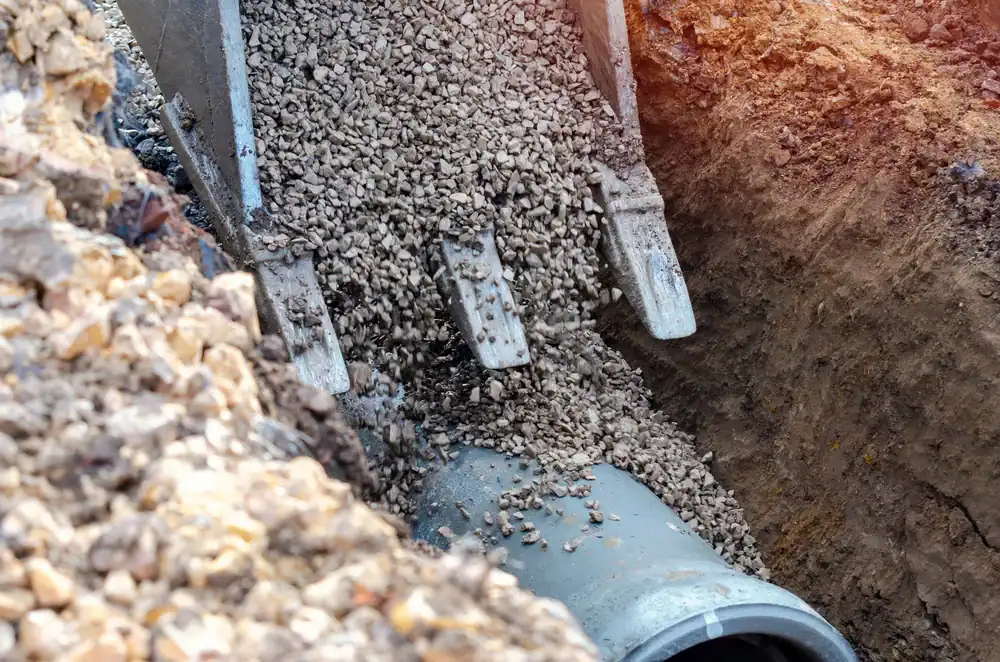
After we remove the damaged pipe, we install the replacement section using modern materials that resist cracking, root intrusion, and chemical damage. We verify the pitch and slope before backfilling—this is critical. If the slope isn’t right, waste won’t flow properly, and you’ll have problems again down the road. We backfill with graded stone and geotextile fabric to protect the new pipe and ensure long-term stability.
Finally, we test the system to confirm flow is restored. You’ll know the job is done right before we leave.
Ready to get started?
You get a full diagnostic inspection with video documentation of the problem. That means you’re not taking our word for it—you’re seeing the issue yourself. If the damage is limited to the connecting line, we’ll tell you. If there’s a larger system problem, we’ll tell you that too.
You get professional excavation that’s done safely and efficiently. We have the equipment to handle challenging soil conditions, and we know how to work around obstacles like tree roots, utility lines, and tight access points. Yaphank properties vary widely in layout and age, and we’ve worked on all of them.
You get proper installation with verified pitch and slope. This isn’t something you eyeball. We use levels and grading tools to ensure waste flows correctly from your house to the cesspool. If the slope is off by even a small margin, you’ll have drainage issues. We don’t cut corners here.
You also get compliance with Suffolk County regulations. If your property ever needs a system inspection—whether for a sale, a refinance, or a compliance check—you’ll have documentation showing the work was done by licensed professionals. That matters more than most homeowners realize until they’re in the middle of a real estate transaction.
And if something goes wrong after hours, you can reach us. Cesspool emergencies don’t wait for business hours, and neither do we.
The only way to know for sure is a camera inspection. Symptoms like slow drains, sewage backups, and standing water in your yard can indicate either a failed cesspool or a broken connecting line. The two problems look almost identical from the surface.
A camera inspection gives you a clear view of what’s happening inside the pipe. If we see cracks, collapses, or blockages in the main waste line but the cesspool itself is intact and functional, you need a line change. If the cesspool is full, collapsed, or no longer absorbing waste properly, that’s a different conversation.
Most homeowners assume the worst when they see a backup. That’s understandable—it’s a stressful situation. But in many cases, especially with older properties in Yaphank, the issue is a deteriorated orangeburg pipe or a section of line that’s shifted over time. Replacing that section solves the problem without the cost of a full system replacement.
Orangeburg pipes are made from wood fibers bound together with coal tar. They were widely used for sewer lines from the 1940s through the 1970s because they were cheap and easy to install. A lot of homes in Yaphank and throughout Suffolk County still have them.
The problem is that orangeburg pipes weren’t built to last. Over time, the material deteriorates. It softens, cracks, and eventually collapses under the weight of the soil above it. Tree roots can penetrate the weakened sections, and once that happens, the pipe is essentially done.
If your home was built before 1980 and you’ve never replaced the sewer line to your cesspool, there’s a good chance you have orangeburg pipe. It’s not a question of if it will fail—it’s when. The good news is that replacing it with modern PVC or other durable materials solves the problem permanently. You won’t have to worry about it again.
A line change typically costs a few thousand dollars, depending on the length of pipe that needs to be replaced, the depth of the trench, and site conditions like soil type and access. It’s a fraction of what you’d pay for a full system replacement.
Replacing an entire cesspool system in Suffolk County costs anywhere from $15,000 to $30,000 or more, especially if you’re required to install an advanced treatment system instead of a traditional cesspool. That’s the reality under the county’s 2019 installation ban. If your cesspool fails, you can’t just put in another cesspool—you have to upgrade to a more expensive system.
But if the cesspool itself is still functional and the only problem is a broken connecting line, you avoid that entire expense. You’re fixing the weak link in the chain, not replacing the whole chain. That’s why a proper diagnosis matters. Spending a few hundred dollars on a camera inspection can save you tens of thousands in unnecessary replacement costs.
Most line changes take one to two days, depending on the length of the trench, the depth of the pipe, and site conditions. If we’re replacing a short section of line in accessible soil, it’s a quicker job. If we’re dealing with a longer run, rocky soil, or tight access, it takes more time.
As for your yard, yes, there will be some disruption. We have to trench down to the damaged pipe, remove it, and install the replacement. That means digging. But we’re not tearing up your entire property. We trench only where necessary, and we’re careful to minimize the footprint.
After the new pipe is installed and backfilled, you can restore landscaping over the trench. Grass will grow back, and any surface damage is temporary. Most homeowners are surprised at how manageable the disruption is, especially compared to what they were expecting. We’re not here to wreck your yard—we’re here to fix your waste line and get out.
Absolutely. Tree roots are one of the most common causes of pipe failure in cesspool systems. Roots are drawn to moisture, and if there’s even a small crack or joint separation in your sewer line, they’ll find it. Once they get inside, they grow, expand, and eventually block or break the pipe.
This is especially common with older pipe materials like orangeburg or clay, which are more vulnerable to root intrusion. Even a small tree planted near the line decades ago can cause major problems today as the root system matures and spreads.
If roots are the issue, we’ll see them during the camera inspection. Sometimes we can clear them and repair the damaged section. Other times, the pipe is too compromised and needs to be replaced. Either way, the solution involves addressing both the roots and the pipe. Just cutting the roots without fixing the pipe doesn’t solve the problem—they’ll grow back.
Ignoring a backup doesn’t make it go away. It makes it worse. If your main waste line is cracked or collapsed, waste has nowhere to go. It backs up into your home, pools in your yard, or leaks into the surrounding soil. All of those outcomes are bad.
Sewage backups are a health hazard. They contain bacteria, parasites, and viruses that can cause serious illness. If waste is backing up into your basement or overflowing from drains, you’re exposing your family to contamination. That’s not something you wait on.
There’s also the environmental issue. If waste is leaking into the soil, it’s contributing to nitrogen pollution in the aquifer beneath your property. Suffolk County has over 400,000 cesspools and septic systems, and nitrogen pollution from failing systems is the largest single cause of degraded water quality on Long Island. You’re not just risking your own property—you’re affecting the water supply that everyone depends on. Get it fixed.
Other Services we provide in Yaphank