

Hear from Our Customers
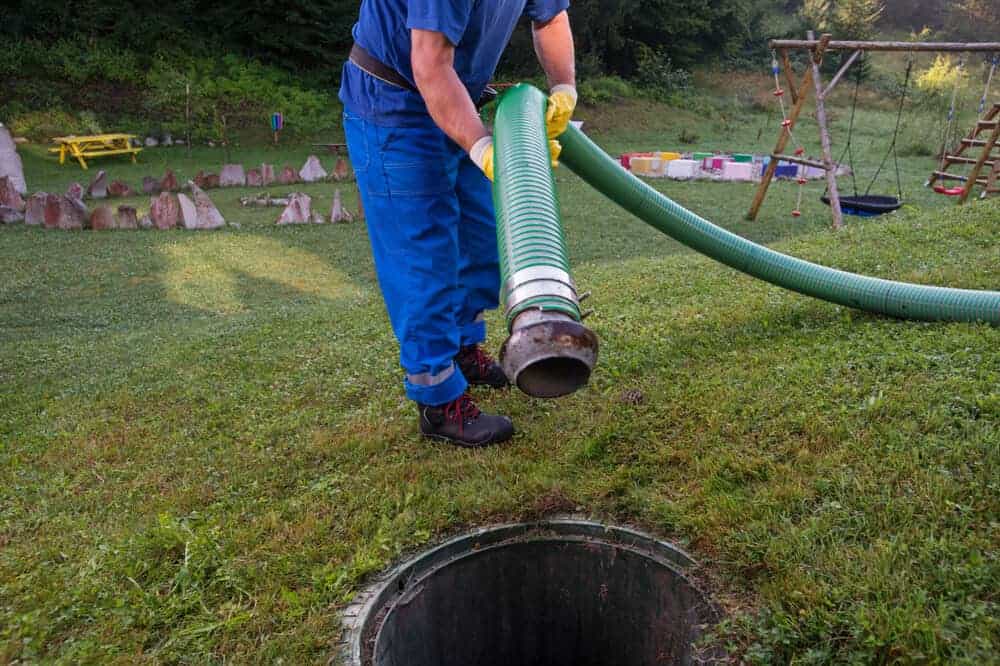
When a septic system runs the way it should, you stop thinking about it entirely. No slow drains, no odors creeping into the yard, no soggy patches of grass near the leach field. That’s the goaland it’s exactly what a thorough cleaning delivers, not just a pump-out that leaves compacted sludge behind on the tank walls and floor.
For Huntington Station homeowners specifically, that distinction matters more than it does in most places. The housing stock here skews oldermost homes were built between the late 1940s and early 1970s, when cesspools were the standard installation on Long Island. Those single-chamber systems need service every one to three years, not the three-to-five-year cycle that applies to modern septic tanks.
If you’ve moved into an older home on a street off Route 110 or Jericho Turnpike and don’t have a service record, there’s a real chance the system is running behind schedule. Long Island’s sandy, glacially deposited soil lets effluent move quickly through the ground without much natural filtration. Add the seasonal pressure from the North Shore’s high spring water table, and you have conditions that put more strain on the tank itself than most homeowners realize.
A system that looks fine from the outside can be months away from a backup. Regular cleaning is how you stay ahead of that.
Quality Cesspool is based in East Northport, just a few miles northeast of Huntington Station via Route 25A, and within the same Town of Huntington. This isn’t a company dispatching trucks from Nassau County or running a call center that couldn’t find your street on a map.
The technicians who show up know this area, understand the housing stock in Huntington Station’s neighborhoods, and have been working Long Island’s specific conditions for close to two decades. The business itself goes back four generations of family experience. That kind of continuity means something in this industryit means there’s a reputation to protect, and that the people doing the work are accountable in a way that a franchise or rotating crew simply isn’t.
We hold the Suffolk County Liquid Waste License required under Chapter 563, Article VIIthe legal credential for septic and cesspool service in Suffolk Countyand carry full liability and workers’ compensation insurance. Every job comes with written documentation of what was done and what was found, which is useful for your own records and valuable if you’re ever selling the home in Huntington Station’s active real estate market.
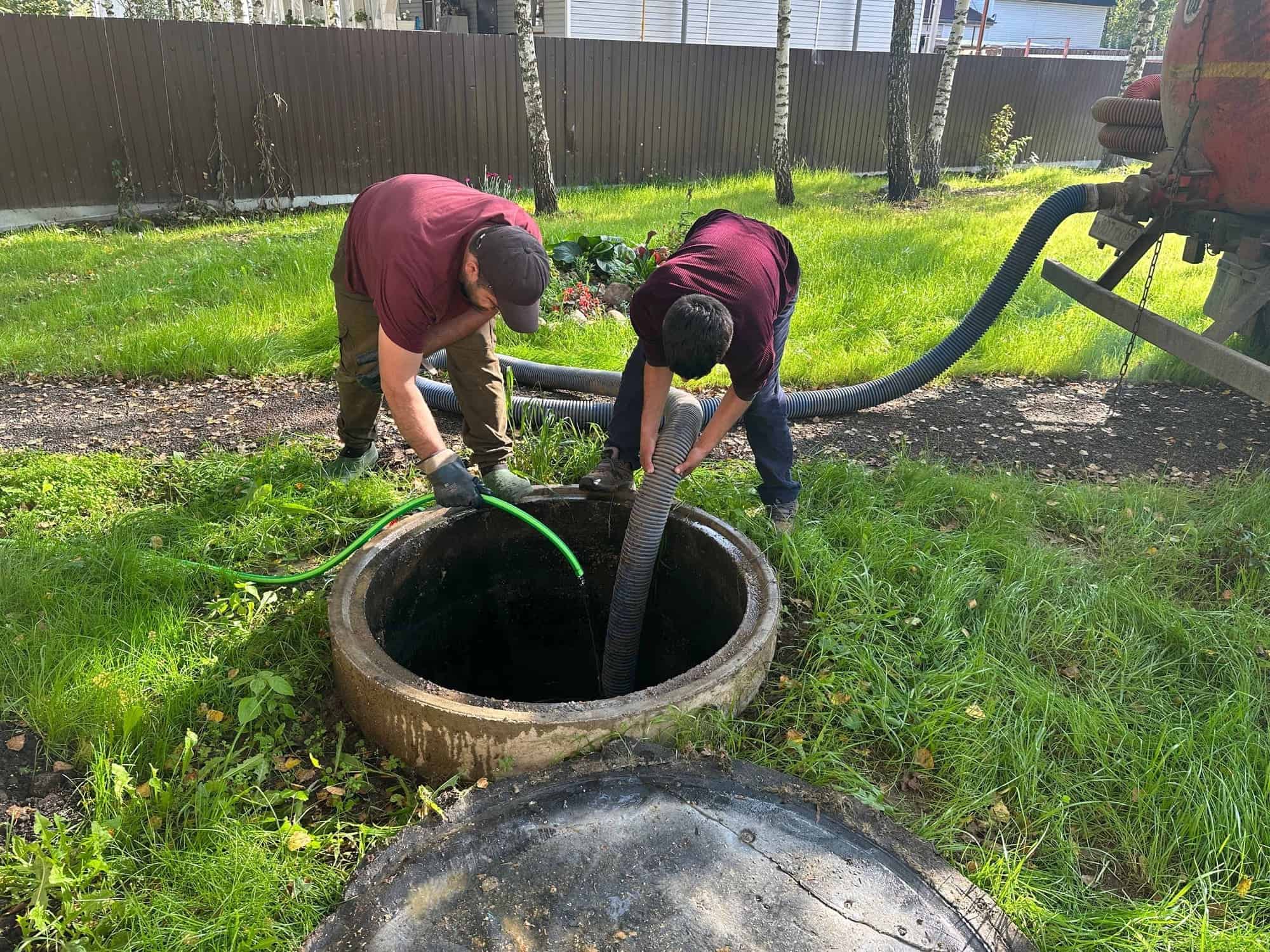
It starts with locating the tank. In Huntington Station, where a lot of the housing stock dates back to the 1950s and 1960s, original installation records are often nonexistent. Our technicians have the experience to find the system without tearing up your yardwhich matters when lots in this area tend to run on the smaller side, especially closer to the LIRR tracks.
Once the tank is accessed, the real work begins. The liquid waste gets pumped out first using a vacuum truck, but that’s not where the job ends. We scrape the walls and floor of the tank to remove compacted solids that a basic pump-out leaves behind. The tank is then backwashed to break up any stubborn deposits that have built up over time. This is the difference between a system that’s genuinely reset and one that still has months of sludge accumulation after the truck pulls away.
After the cleaning is complete, our technician inspects the tank’s baffles and structural condition and explains what was found in plain languageno pressure, no upsells, just an honest read on where your system stands. All waste is transported to a licensed disposal facility. You get written documentation before the job is closed out, including what was done, what the system looked like, and when your next service should be scheduled.

Ready to get started?
A standard pump-out removes the liquid layer and some floating solids. What we deliver is a complete cleaningliquid removal, wall scraping, bottom sludge extraction, and backwashing to break up anything that’s compacted over time. For the older cesspool-era systems that make up a large share of Huntington Station’s housing stock, that level of thoroughness isn’t optional. It’s what actually extends the life of the system.
Beyond the cleaning itself, every service includes a full inspection of the tank’s baffles and structural condition. If something needs attention, you’ll hear about itclearly, without pressure. If your system is in good shape, you’ll hear that too. We also provide written documentation after every visit, which carries real weight in Huntington Station’s active real estate market. Home values here have climbed significantly over the past two decades, and a documented service history is something buyers, lenders, and attorneys increasingly want to see at closing.
We offer emergency service 24 hours a day, seven days a week, including holidayswith trucks stationed throughout Long Island, including the Huntington area. For properties in the narrow sewer corridor along New York Avenue that will eventually connect to the new municipal system, we also handle cesspool abandonment services, which are required under Town of Huntington code before a connection can be completed. If you’re outside that corridorwhich most Huntington Station residential addresses areyour system remains your responsibility, and routine maintenance is still the most cost-effective way to manage it.
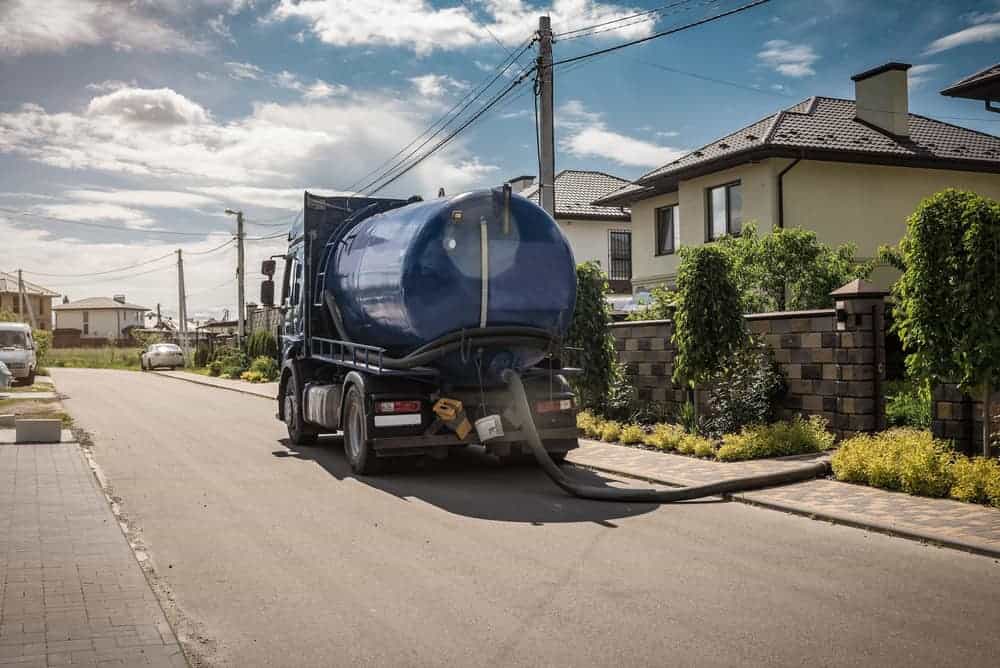
It’s a fair question, and there’s a lot of confusion about this locally. The Huntington Station Hub Sewer Infrastructure Project is a significant investmentover $66 millionbut it covers approximately 229 parcels in a narrow corridor along New York Avenue, roughly from East Second Street to East 15th Street. If you live in the residential neighborhoods east or west of Route 110, you are almost certainly not included in the current project, and your cesspool or septic system will remain your responsibility for the foreseeable future.
Even for properties that are eventually in the sewer zone, connection isn’t immediateand under Town of Huntington code, when public sewer does become available to your property, you’re required to connect within 90 days and properly abandon the cesspool as part of that process. That abandonment requires pumping out the system first. So whether you’re in the sewer corridor or not, maintaining your system now is still the right call.
For a modern septic tank, the EPA recommends cleaning every three to five years. But most homes in Huntington Station aren’t running modern septic tanksthey’re running cesspools that were installed when the home was built, often in the 1950s or 1960s. Cesspools are single-chamber systems with no secondary treatment stage, which means solids accumulate faster and the system needs service more frequentlytypically every one to three years depending on household size and usage.
The North Shore’s high water table also plays a role. During spring snowmelt and heavy rainfall, groundwater rises and can intrude into older systems in Huntington Station, accelerating how quickly the tank fills. If you don’t have a service record for your home and aren’t sure when the system was last cleaned, the honest answer is that it’s probably overdue. A straightforward inspection will tell you exactly where things stand.
Pumping removes the liquid layer and some of the floating scum from the top of the tank. It’s the most basic form of service, and it’s what a lot of companies stop at. Cleaning goes furtherit includes scraping the walls and floor of the tank to remove compacted solids that have built up over time, then backwashing the tank to break up any stubborn deposits that the scraping doesn’t dislodge.
For a system that’s been serviced regularly, pumping may be sufficient. But for older cesspool-era systemswhich describe a large portion of Huntington Station’s housing stockyears of accumulated sludge on the tank walls and bottom won’t come out with a pump alone. If a company quotes you a very low price and is in and out in under an hour, there’s a reasonable chance they pumped the liquid and left the rest behind.
A standard septic tank cleaning on Long Island typically runs between $300 and $600, depending on tank size, how accessible the tank is, and how long it’s been since the last service. That range is consistent across the area, including Huntington Station.
The more useful number to keep in mind is what deferred maintenance costs when a system fails. A repair can run $3,000 to $7,000. A full system replacement can reach $10,000 to $15,000 or moreand that’s before factoring in yard restoration, permit fees, and the disruption to your household while the work is completed. For a home in Huntington Station where values have climbed well above $600,000, a $300 to $600 cleaning every few years is one of the better maintenance decisions you can make on a cost-per-outcome basis.
The most obvious signs are slow drains throughout the housenot just one fixture, but multiplecombined with gurgling sounds in the pipes, sewage odors near drains or in the yard, and wet or unusually green patches of grass above the tank or drain field. Any one of these is worth taking seriously.
What makes Huntington Station’s older housing stock particularly worth watching is that cesspools don’t give much warning before they fail. A system can appear to function normally right up until it backs up into the basement or saturates the yard. Spring is historically the highest-risk season on the North Shorethe water table rises, older systems come under more pressure, and emergency calls spike. If your home was built before 1975 and you don’t have documentation of recent service, don’t wait for a symptom to appear before scheduling a cleaning.
Suffolk County doesn’t have a blanket county-wide requirement for pre-sale septic inspections the way Nassau County does. But that doesn’t mean you’re in the clear. Many buyers’ attorneys request a septic inspection as a condition of the purchase contract, and lendersparticularly those backing FHA or VA loansfrequently require it.
If you’re selling a home in Huntington Station and the buyer’s attorney or lender asks for documentation, not having a recent service record can slow down or complicate the closing. We offer septic certifications for real estate transactions, which documents the condition of the system and provides the kind of paper trail that buyers and lenders want to see. In a market where Huntington Station home values have risen as significantly as they have over the past two decades, having that documentation ready is a straightforward way to protect the transaction. It’s also a lot easier to arrange before the home is listed than in the middle of a closing timeline.
Other Services we provide in Huntington Station