

Hear from Our Customers
When a septic system is properly cleanednot just pumpedit works the way it’s supposed to. No slow drains. No odors creeping into the yard. No soggy patches of grass near the tank. You stop wondering if something’s quietly going wrong underneath your property and start knowing your system has real capacity left in it.
For Huntington homeowners, that peace of mind carries extra weight. About 77% of homes in Huntington Village were built before 1970, most with cesspools installed when that was simply how things were done. Those systems have been in the ground for 50, 60, sometimes 70 years. A periodic pump-out keeps them functional on the surface, but compacted sludge on the tank walls and floor builds up over time regardlessreducing effective capacity and accelerating the timeline toward a failure that nobody budgets for.
The North Shore geography adds another layer. Huntington Village sits close to the harbor, and the water table along this stretch of Long Island rises significantly in spring. When the ground is saturated after snowmelt and seasonal rain, a system that seemed fine in October can back up before April is overnot because more waste entered it, but because the surrounding soil has nowhere to send the effluent. A thoroughly cleaned system with full capacity is your best buffer against that seasonal pressure. A half-full tank going into spring is not.
We’re based in East Northporta hamlet within the Town of Huntington itself, just a few miles from Huntington Village. This isn’t a company dispatching trucks from Nassau County or the South Shore. When you call, you’re calling neighbors who work these roads every day and understand what Long Island’s North Shore conditions actually do to a septic system over time.
We’ve been running for nearly two decades and carry knowledge passed down through four generations of a family that has worked Long Island’s specific soil, water table, and regulatory environment since before most of the current homeowners moved in. That’s not a marketing angleit’s just the reality of how we were built and how we operate.
We hold the Suffolk County Liquid Waste License required under Chapter 563, Article VIIthe legal credential that separates legitimate operators from the ones you want to avoid. Every job is documented, all waste goes to licensed disposal facilities, and our pricing is upfront before any work begins. No surprises on the final bill.
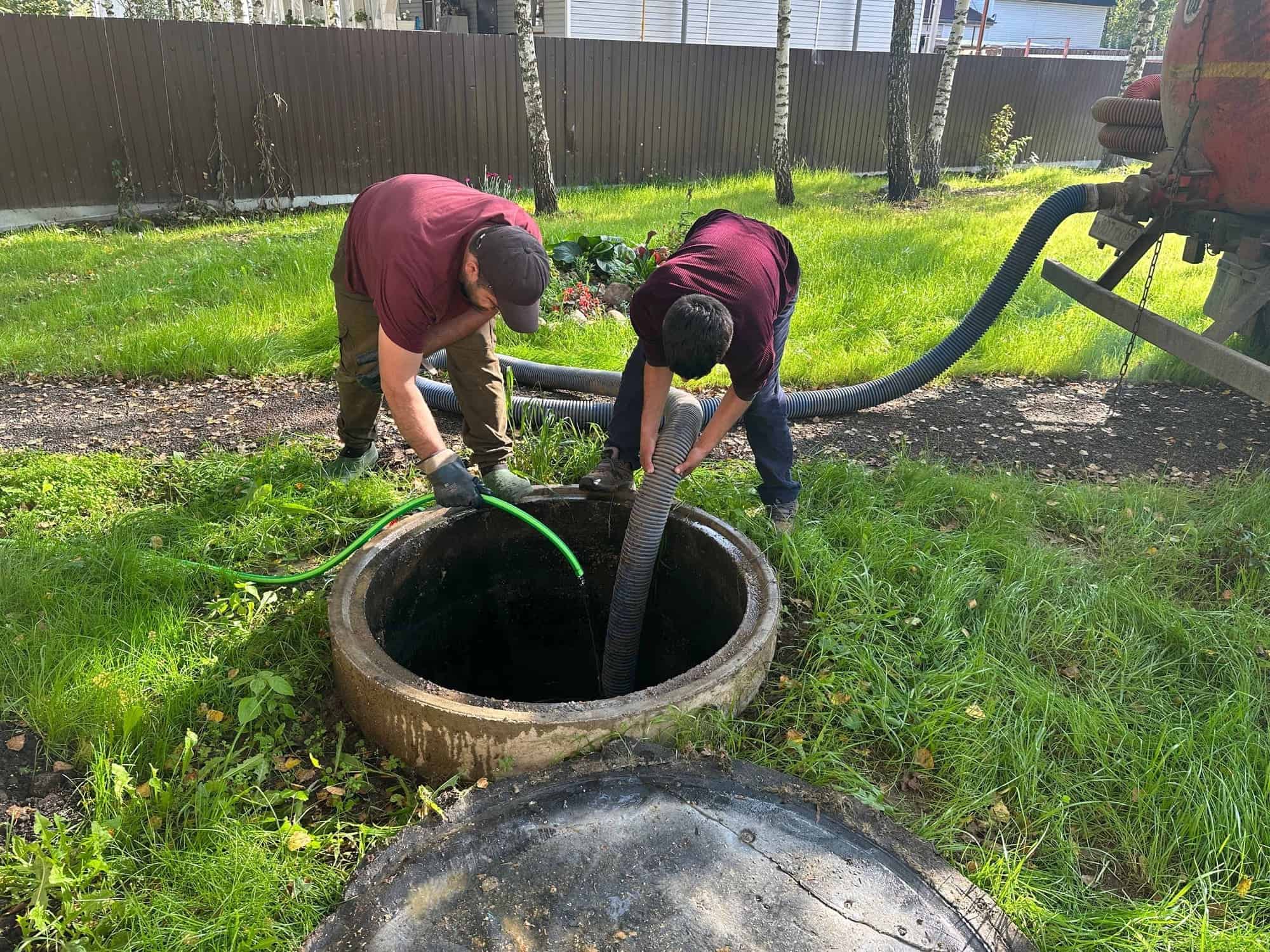
It starts with locating the tank. In Huntington’s older neighborhoodshomes built in the 1940s through 1960s along streets near Heckscher Park and Huntington Harbortanks are often buried without any accessible records of exactly where they sit. Our technicians have the experience to locate them without tearing up your yard in the process.
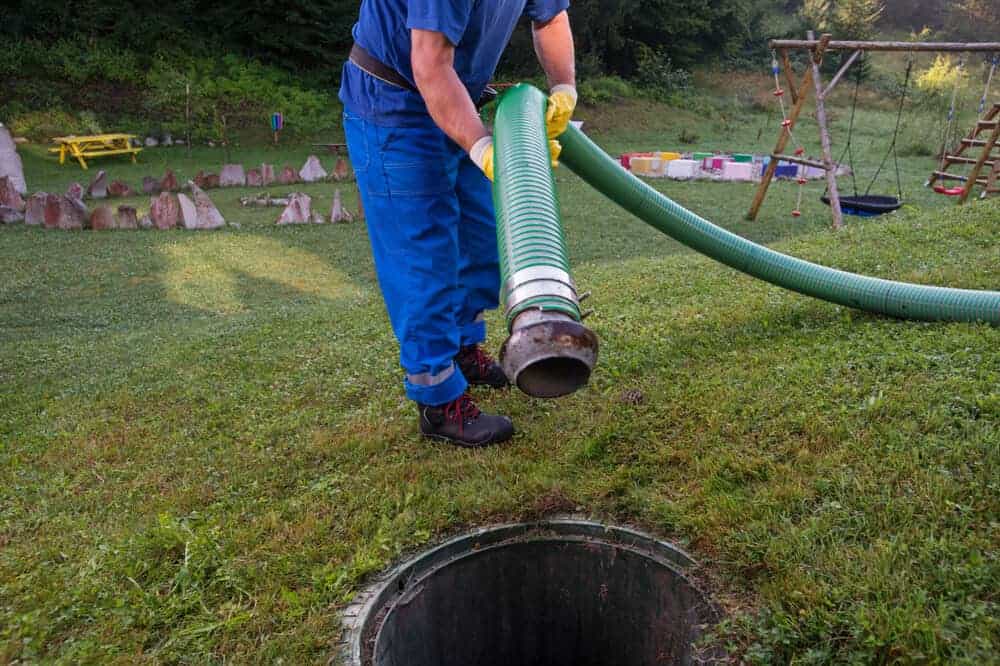
Once the tank is accessed, our vacuum truck removes the liquid waste and the surface scum layer. That part is what most people think of as “the job.” But it’s only the beginning of a proper cleaning. After the liquid is out, the technician scrapes the tank walls and works the bottom to break up compacted solidsthe sludge that a standard pump-out leaves behind. The tank is then backwashed to flush out whatever remains. This is the step that actually restores capacity, and it’s the step that separates a thorough cleaning from a basic pump-out.
After the cleaning, the technician inspects the baffles and tank structure, notes anything that warrants attention, and gives you a plain-language explanation of what was found. You get written documentation of the serviceuseful for your own records and increasingly important in Huntington’s active real estate market, where buyers and lenders ask about septic history before closing. If it’s an emergency call, we keep trucks stationed throughout Long Island and typically arrive within 30 minutes.

Ready to get started?
We handle the full range of what Huntington homeowners encounterfrom standard septic tank cleanings and cesspool pump-outs to repairs, video camera inspections for hard-to-diagnose problems, high-pressure sewer jetting, and septic certifications for real estate transactions. We serve residential and commercial properties, and no job is too small or too large.
For Huntington specifically, the cesspool work is particularly relevant. Many homes in the village and surrounding hamletsCenterport, Halesite, Cold Spring Harborwere built with cesspools that predate modern septic standards. Since Suffolk County banned new cesspool installations effective July 1, 2019, any system that fails now must be replaced with a conventional septic system or an Innovative/Alternative Onsite Wastewater Treatment System. That’s a significant expense. Regular cleaning and maintenance is the most straightforward way to extend the life of the system you already have and push that replacement date as far out as possible.
The standard cleaning interval the EPA recommends is every three to five years for a typical household. For Huntington homes near the harbor with the water table dynamics of the North Shore, that interval may need to be shorter depending on household size and system age. We’ll give you an honest read on where your system stands and what schedule actually makes sense for your propertynot a one-size-fits-all answer.
The EPA’s general recommendation is every three to five years for a standard household septic tank. For Huntington homeowners, that baseline is a starting pointnot a fixed answer. Homes near the harbor and throughout the North Shore communities deal with a seasonally elevated water table that puts additional stress on septic systems, particularly in spring. A system that’s working at reduced capacity because of accumulated sludge has less buffer when groundwater rises and the surrounding soil is already saturated.
Household size matters too. A family of four using 250 to 400 gallons of water daily will fill a tank faster than a two-person household in the same home. Older cesspoolscommon in Huntington Village’s pre-1970 housing stockhave less capacity than modern septic tanks to begin with, which pushes the cleaning interval closer to the shorter end of that range. We can assess that during a service visit and give you a realistic recommendation based on your specific system.
Pumping removes the liquid waste and the floating scum layer from the top of the tank. It’s a necessary part of maintenance, but it leaves behind the compacted solidsthe sludgethat settle on the tank walls and floor over time. That sludge doesn’t break down on its own. It builds up, gradually reducing the tank’s effective capacity until the system starts showing symptoms: slow drains, gurgling pipes, odors, or worse.
Cleaning goes further. After the liquid is removed, the technician scrapes the tank walls and bottom to dislodge compacted solids, then backwashes the tank to flush out what remains. This is what actually restores the system to full working capacity. For Huntington homeowners with older cesspools that may have only been pumpednever truly cleanedover decades of use, this distinction is significant. A system that’s been pumped regularly can still have years of compacted sludge reducing its performance. A thorough cleaning addresses what pumping alone leaves behind.
Homes built in the 1950s and 1960s in Huntington Village and the surrounding hamlets were almost universally built with cesspools. That was the standard wastewater system of the eraa single-chamber underground structure that receives both liquid and solid waste, with no separate drain field processing. Many of those original systems are still in the ground today, functioning at some level but often well past their designed lifespan.
If you don’t have records from when the home was purchased, a few things can help. Suffolk County Health Services maintains records for permitted systems, and a video camera inspection can identify what’s in the ground and its current condition. We can help with both the investigation and the service. If your home is on the older side and you’ve never had the system formally inspected, it’s worth knowing what you’re working with before it becomes an emergencyespecially given that Suffolk County now requires a conventional septic system or I/A OWTS upgrade when an existing cesspool fails and needs replacement.
A standard septic tank cleaning on Long Island typically runs between $300 and $600, depending on tank size and how accessible the tank is. Most Huntington homeowners fall within that range for a routine service on a residential system. Factors that can affect the final cost include tank size, how deep the tank is buried, whether the lid is accessible or needs to be located first, and whether there are complicating conditions like a particularly heavy sludge load from years without service.
What’s worth keeping in mind is the comparison. A $300 to $600 cleaning every three to five years is a straightforward line item. A failed system in Huntingtonwhere replacement now requires a conventional septic system or an Innovative/Alternative Onsite Wastewater Treatment System under Suffolk County’s 2019 regulationscan run $15,000 or more depending on the scope of work and what the county requires for your specific property. For a home in Huntington Village where median values have climbed past $830,000, protecting that asset with routine maintenance is one of the more obvious financial decisions a homeowner can make.
There’s no universal Suffolk County law that mandates a septic cleaning before every home sale, but the practical reality in Huntington’s real estate market is that buyers and their lenders increasingly ask about septic system history and condition as part of due diligence. A home with no service records and an uninspected system raises questions that can slow a transaction or give a buyer leverage to negotiate the price down.
Many sellers in Huntington choose to have the system cleaned and inspected before listingpartly to avoid surprises during the buyer’s inspection, and partly because documented service history is a straightforward way to demonstrate that the home has been maintained. We provide written documentation after every service, which you can include in your disclosure package. For a home in this price range, having clean records on a critical system is worth far more than the cost of the service itself.
The most important credential to verify is the Suffolk County Liquid Waste License, issued under Chapter 563, Article VII of Suffolk County law. This is a legal requirementnot optionalfor any company performing cesspool pumping, cleaning, or maintenance in Huntington and throughout Suffolk County. A company that can’t confirm this license is one you should pass on, regardless of how low their quote is.
Beyond licensing, the patterns that signal a trustworthy company are fairly consistent: upfront pricing before any work starts, written documentation after the job is done, and a technician who explains what they found in plain language without pushing you toward repairs or treatments you didn’t ask about. The septic industry has a documented problem with bait-and-switch pricinga low number gets you to book, and then “discovered” problems inflate the final bill. A company that gives you a clear estimate before touching anything and sticks to it is worth paying attention to. We’re based in East Northport, within the Town of Huntington, and have operated on Long Island for nearly two decadesthe kind of track record that matters when you’re choosing who to trust with something buried under your yard.
Other Services we provide in Huntington