
Hear from Our Customers
You’re dealing with slow drains, sewage backing up into your house, or wet spots in your yard that smell like a nightmare. That’s not a cleaning issue anymore. That’s a failed line.
When your main waste line collapses, cracks, or shifts out of proper pitch and slope, pumping your cesspool won’t fix it. Neither will snaking the drain. You need the line dug up, evaluated, and replaced with the right materials at the right grade.
A proper line change means your waste flows where it’s supposed to—downhill, into your cesspool or septic system, without pooling, backing up, or leaking into your soil. You’re not patching problems every six months. You’re done with it.
That’s what this service does. It removes the damaged section, installs new pipe with correct slope, connects it back to your cesspool, and gets your system working like it should. No more calling someone out every time it rains.
We’ve been handling cesspool and septic work in Commack and across Long Island for almost two decades. Four generations of family experience means we’ve seen every type of failure, every soil condition, and every property layout this area throws at us.
We’re not a call center. We’re not flipping crews every season. You’re working with licensed professionals who know Suffolk County’s regulations, understand how Long Island’s water table affects your system, and won’t leave your yard looking like a war zone.
When your waste line fails in Commack, you need someone who shows up, digs smart, and gets it done without the runaround. That’s what we do.
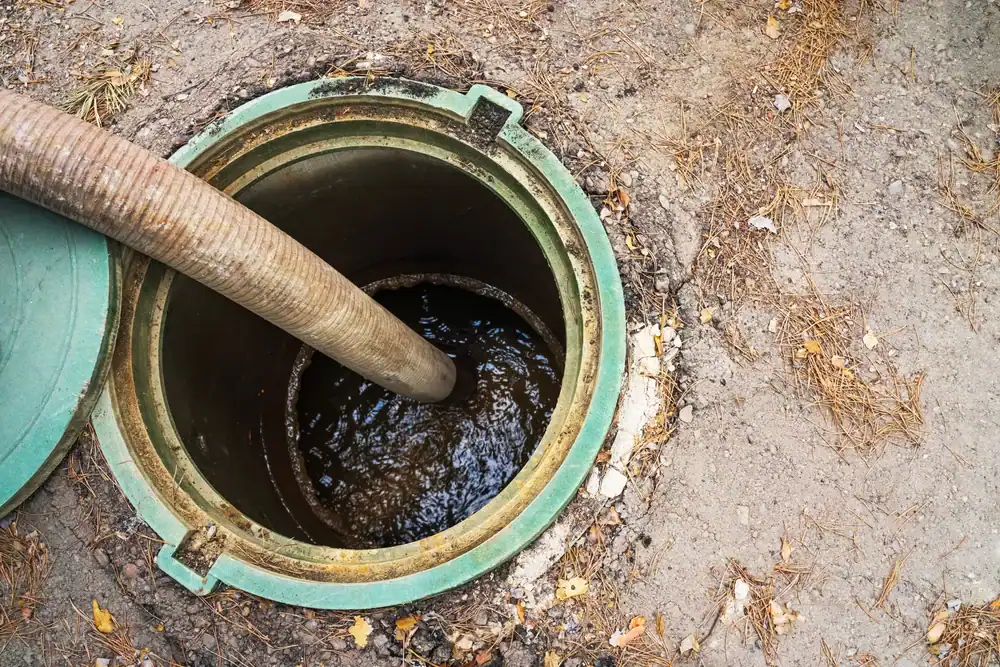
First, we locate the problem. That usually means a camera inspection to see where the line collapsed, cracked, or separated. If you’re already seeing backups or standing water, we know we’re dealing with a full failure.
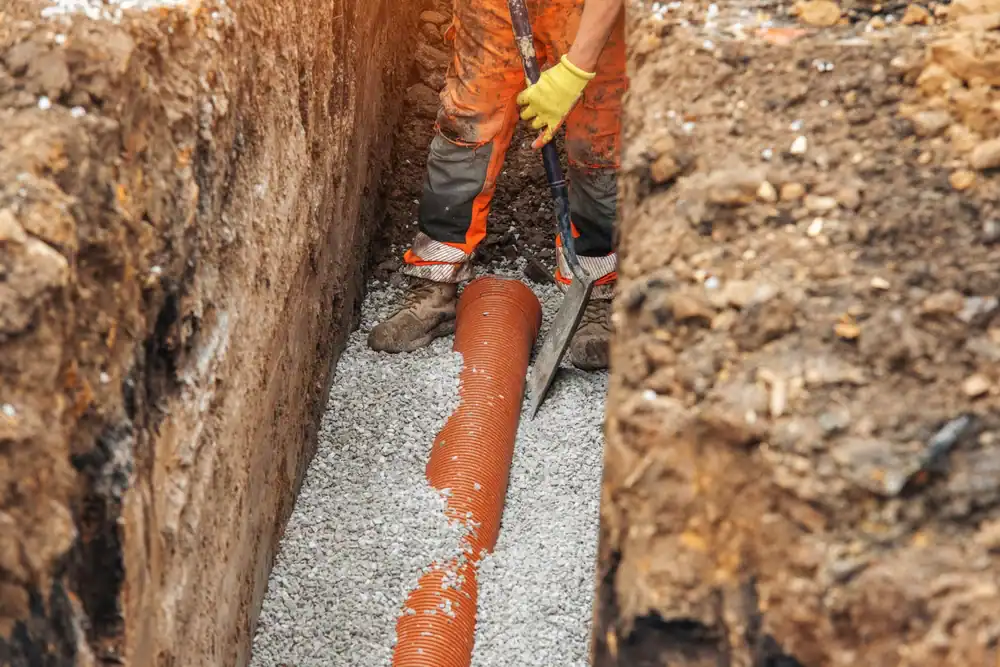
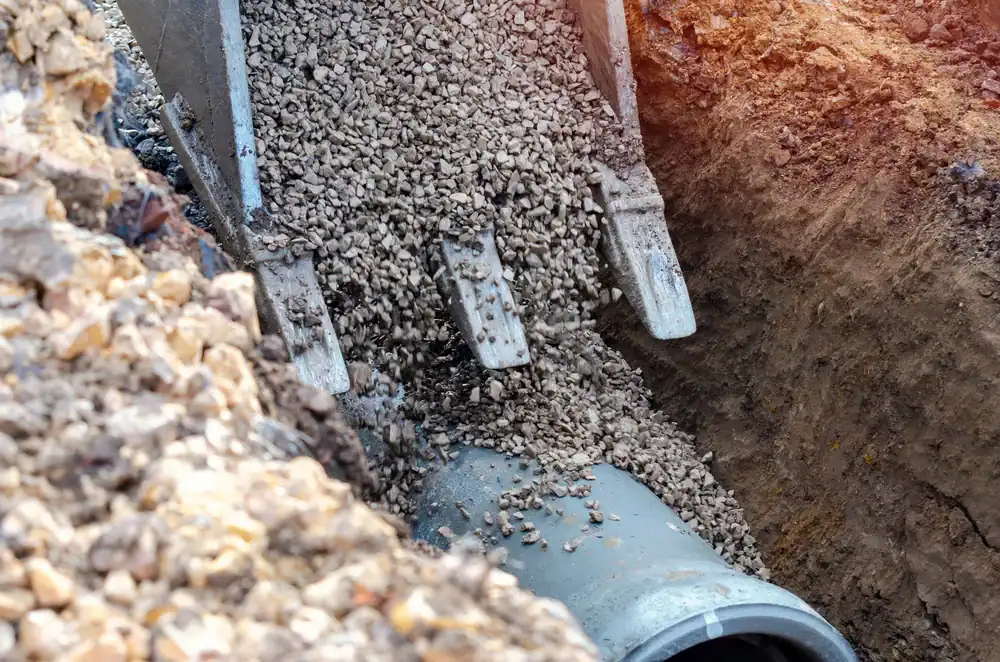
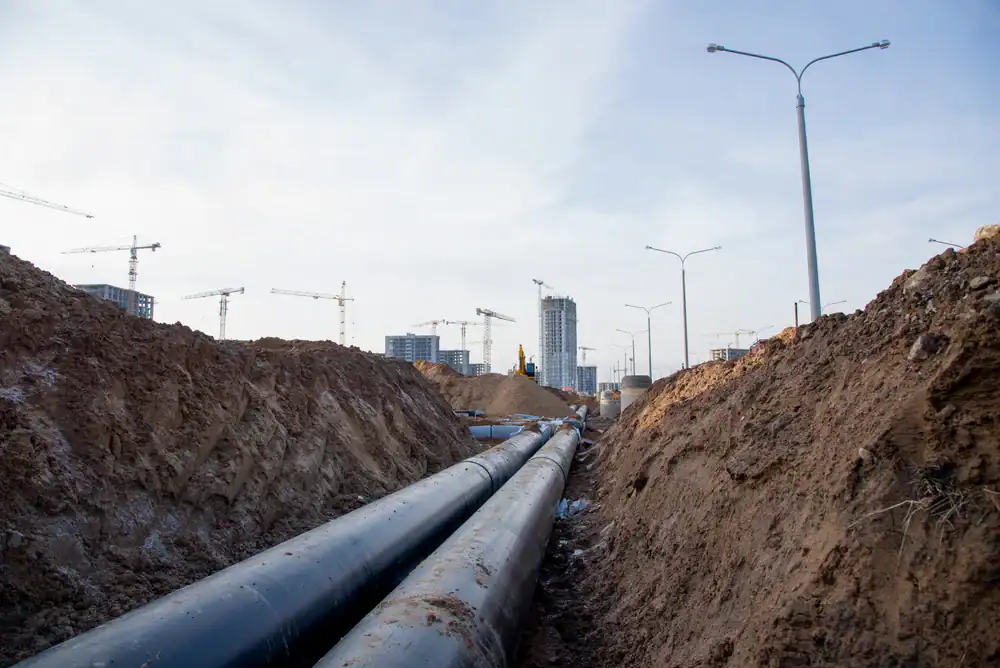
Next comes trenching and excavation. We dig down to expose the damaged section of your main waste line, whether that’s 3 feet or 6 feet deep. We remove the old pipe—usually cast iron, clay, or deteriorated PVC—and check the surrounding soil and base.
Then we install new pipe with proper pitch and slope. Waste needs gravity to move, so every foot of pipe has to drop at least a quarter inch. If the grade’s wrong, you’ll have problems again in a year. We make sure it’s right the first time.
Finally, we connect the new line back to your cesspool or septic tank inlet, backfill the trench, compact the soil, and restore your yard as close to original as possible. You’ll know it was dug, but you won’t have a ditch running through your property for months.
Ready to get started?
You’re getting a full line replacement from your house connection to your cesspool or septic tank. That includes excavation, removal of the failed pipe, installation of new schedule 40 PVC or approved material, proper bedding and backfill, and grading to restore drainage.
We also handle any necessary permits. Suffolk County requires permits for this type of work, and we pull them so you’re not dealing with the town yourself. If your system needs upgrades to meet current code—like switching to an advanced nitrogen-reducing system—we’ll walk you through what’s required and what grants are available.
In Commack and across Long Island, soil conditions vary. Some properties have sandy soil that drains fast. Others have clay or high water tables that make excavation trickier. We adjust our approach based on what we find, not what we assumed before we started digging.
If tree roots caused the failure, we’ll route the new line away from them or install root barriers. If the old line was too shallow or pitched wrong, we’ll correct it. You’re not getting a band-aid. You’re getting a line that works.
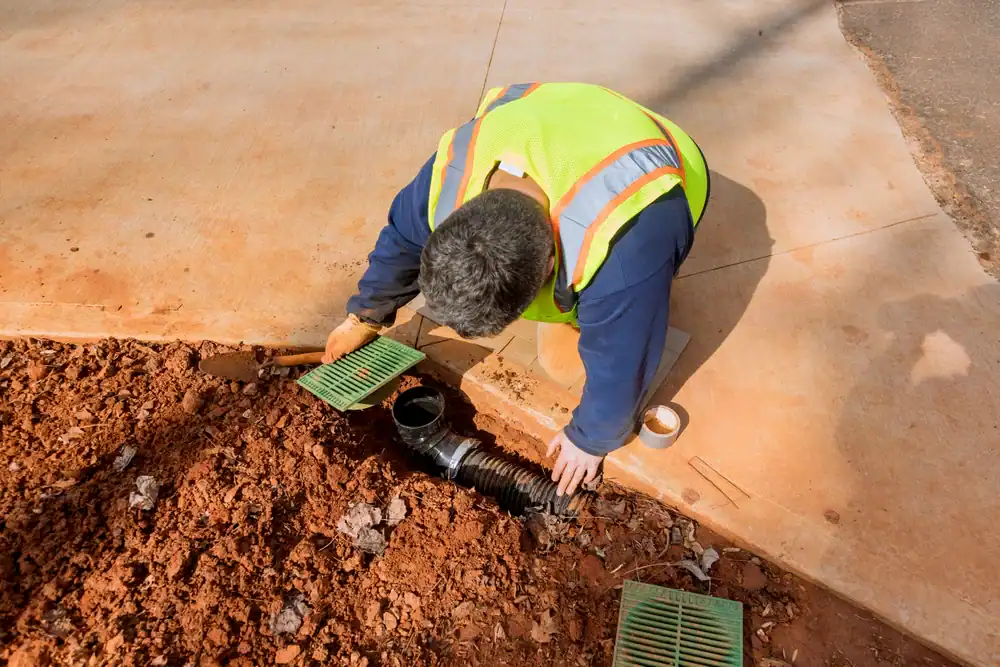
If your line has a single crack or small separation and the rest of the pipe is solid, a spot repair might work. But if the pipe is old cast iron or clay that’s deteriorating in multiple places, or if the line has shifted and lost its slope, you’re better off replacing the whole run.
Here’s the reality: a spot repair on a 40-year-old clay line might buy you a year or two, but you’ll likely be digging again soon. If the pipe is failing in one spot, the rest isn’t far behind. A full line change costs more upfront, but it’s the last time you’re dealing with it for decades.
We’ll camera the line and show you what we’re seeing. If it’s patchable, we’ll tell you. If it’s not, we’ll explain why and give you a straight answer on cost.
Age is the biggest factor. Cast iron corrodes from the inside out. Clay pipes crack and separate at the joints as soil shifts. Even older PVC can fail if it wasn’t installed with proper bedding or if heavy equipment drove over it.
Tree roots are another common culprit, especially on Long Island where older properties have mature oaks and maples. Roots grow into any crack or joint looking for water, and once they’re in, they expand and break the pipe apart.
Ground settlement, freeze-thaw cycles, and improper slope during the original installation all contribute too. If your house was built in the 60s or 70s and the line has never been touched, you’re on borrowed time. Most residential waste lines weren’t built to last 50+ years, but plenty are still in the ground.
Most residential line changes in Commack take one to three days depending on the distance from your house to the cesspool, how deep we need to dig, and what we run into underground.
If it’s a straightforward replacement with good access and no surprises, we can usually excavate, replace the line, and backfill in a day. If we hit ledge rock, need to work around utilities, or have to reroute around obstacles, it takes longer.
Weather matters too. We can work in light rain, but if the trench is filling with water or the soil is too saturated to compact properly, we’ll pause until conditions improve. Rushing a backfill job just means settling and sinkholes later, and nobody wants that.
We dig a trench from your house to your cesspool, so yes, there will be excavation. But we’re not tearing up more property than necessary. We dig the trench, stage the soil to the side, and restore it when we’re done.
If your cesspool is 50 feet from the house, you’ll have a 50-foot trench that’s typically 2 to 3 feet wide. We’ll work around landscaping where we can, but if the line runs under a garden bed or patio, we’ll need to go through it.
After the new pipe is in and backfilled, we’ll grade the area so water drains properly and you’re not left with a ditch. Grass will take a season to fill back in, but the soil will be stable. If you’ve got sprinkler lines or landscape lighting in the way, let us know upfront so we can work around it or help you relocate it.
Not automatically, but it depends on your system and what Suffolk County requires. If your cesspool is still functional and meets current setback distances from your house, well, and property lines, you can usually just replace the line and reconnect.
But if your cesspool is failing too, or if it’s located too close to your house or water source, the county may require you to upgrade to a septic system or install an advanced nitrogen-reducing system. That’s especially true if you’re doing major work that triggers a permit review.
The good news: there are grants available. Suffolk County offers up to $10,000, with an additional $5,000 for low-to-moderate income homeowners. Nassau County offers up to $20,000. Those grants can cover most of the upgrade cost if you’re required to switch systems. We’ll walk you through what applies to your property and help you figure out the next step.
We’ll stop, show you what we found, and explain what it means before we do anything else. If the cesspool inlet is crumbling or the tank itself is cracked, that’s something you need to know about before we connect a new line to it.
Same goes for unexpected ledge rock, underground utilities we didn’t know about, or soil conditions that require different materials or methods. We’re not going to make those calls without talking to you first.
Most line changes go as planned because we do our homework upfront. But if something changes once we’re in the ground, you’ll get a straight explanation of what it is, what it costs to address, and whether it’s something that can wait or needs to be handled now. No surprises on the final bill.
Other Services we provide in Commack