
Hear from Our Customers
You’re dealing with slow drains or sewage backing up into your house. That’s not a minor inconvenience—it’s a health hazard and a property damage risk that gets worse every day you wait.
The right line changes fix the root problem. Proper pipe pitch at 1/4 inch per foot means waste flows the way it should. No more standing water in your lines. No more backups during heavy use. No more wondering if today’s the day your system fails completely.
Most cesspool line failures in Amagansett happen because the original installation didn’t account for settling, or because old clay pipes finally gave out. You’re looking at targeted repairs that cost a fraction of full system replacement—usually $500 to $3,000 depending on length and access. That’s done in a day, not weeks. And when it’s done right, you’re not calling someone back in six months because the problem returned.
We handle line changes across Amagansett and the broader East Hampton area. We’re local, which means we understand how Long Island’s sandy soil and high water table affect your cesspool system differently than inland properties.
Suffolk County regulations changed in 2019, banning traditional cesspool installations. Existing systems still need maintenance, and when your lines fail, they need to meet current code for materials, slope, and setback requirements. We know those specs cold—6-inch minimum for house connections, 8-inch for mainlines, proper distance from wells and property lines.
You’re not getting a crew that learned cesspools last month. You’re getting technicians who’ve diagnosed hundreds of line failures and know the difference between a problem you can fix and one that needs a full replacement.
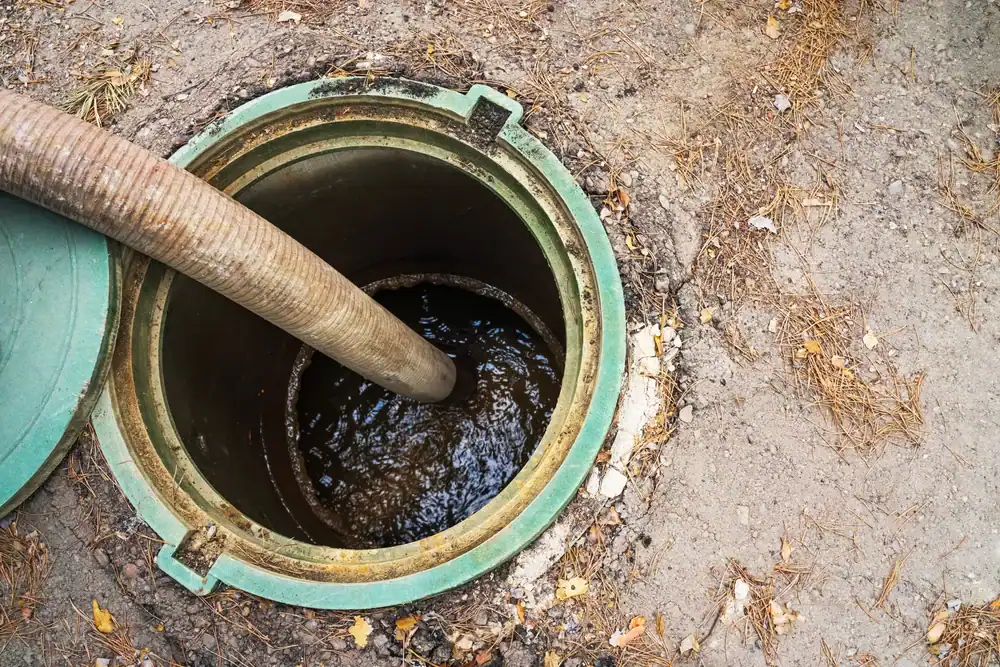
First, we run a video inspection with a foot counter. That tells us exactly where your line failed, how much needs replacing, and whether the problem is a broken pipe, root intrusion, or improper slope. No guessing. No tearing up your entire yard to find the issue.
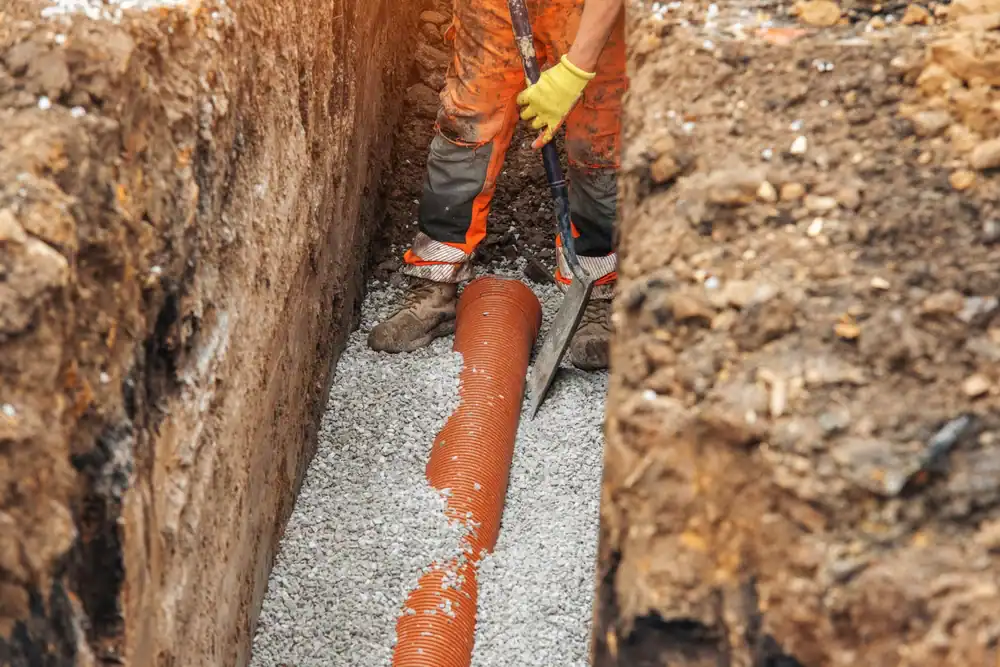
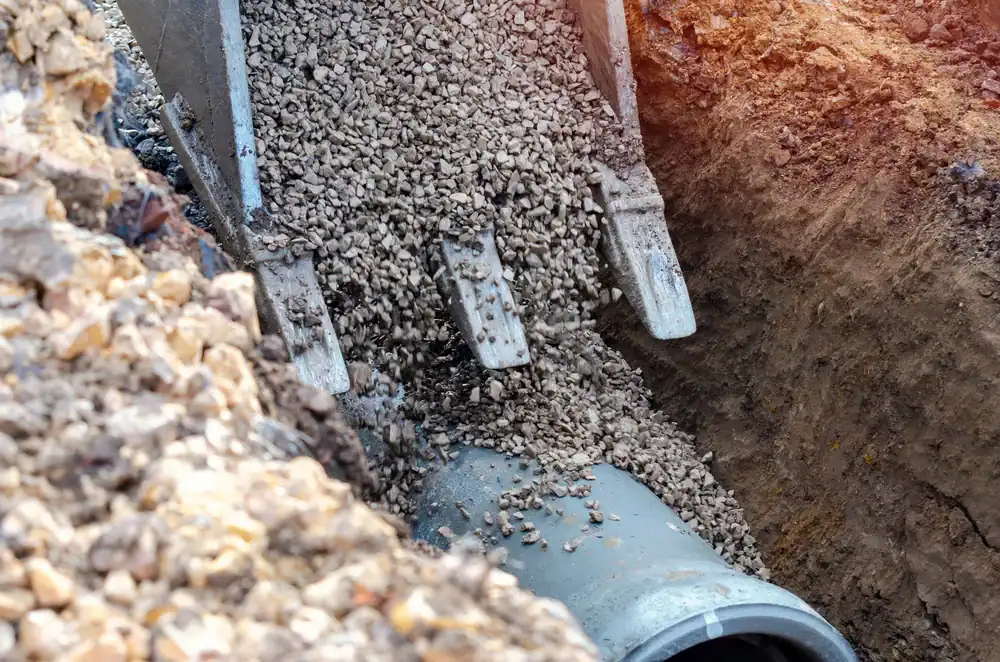
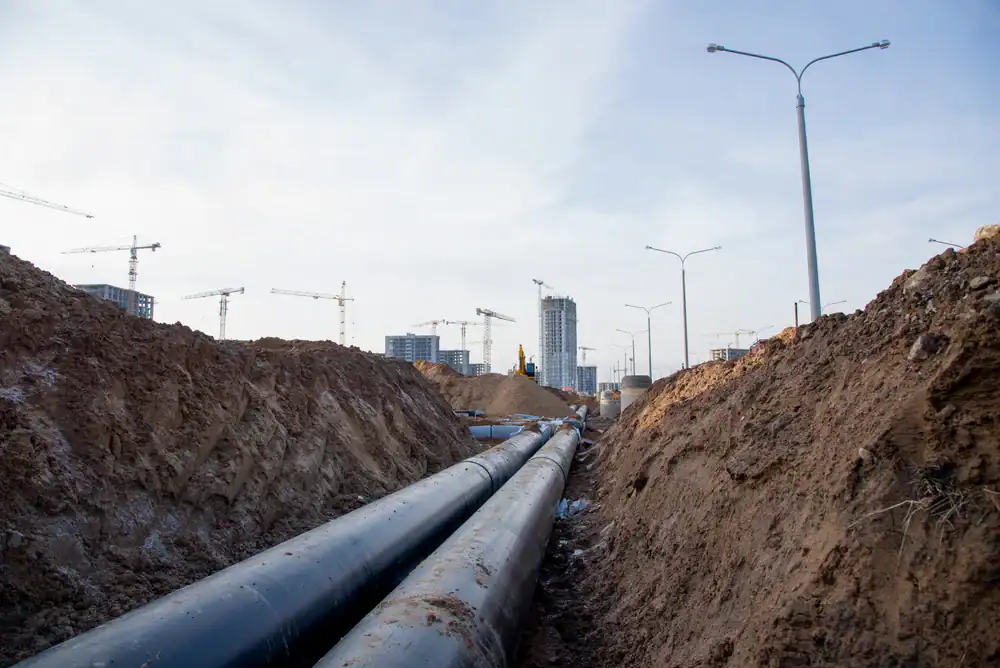
Once we’ve identified the problem section, we handle the trenching and excavation. For most residential jobs in Amagansett, that’s $5 to $12 per linear foot depending on depth and soil conditions. We excavate only what’s necessary, remove the failed section, and install new pipe with the correct 1/4 inch per foot downward slope toward your cesspool.
After the new line is in, we verify the pitch with a level, test the flow, and backfill the trench. You’ll see water and waste moving through your system the way it should—no pooling, no slow drainage, no backups. The whole process typically takes one day for standard residential line changes, and you’re back to normal use immediately after.
Ready to get started?
You’re getting proper trenching and excavation that accounts for Amagansett’s specific soil conditions. Long Island’s sandy soil drains well, but it also shifts and settles. That’s why correct pipe slope matters so much here—if your line doesn’t maintain that 1/4 inch per foot grade, waste stops flowing and you get backups.
We handle the full scope: locating your existing cesspool and connection points, calculating the exact drop needed over your pipe run, excavating to the right depth, installing code-compliant materials, and verifying everything meets Suffolk County standards. For a typical 40-foot run from your house to the cesspool, that means a 10-inch total drop to maintain proper flow velocity.
Suffolk County requires specific setbacks—100 feet from water wells, 20 feet from property lines. In Amagansett, where properties often sit close to neighbors and many homes have private wells, those measurements matter. We verify compliance before we dig, so you’re not dealing with violations or having to redo work later. You’re also getting documentation of the work, which protects your property value and gives you proof of proper maintenance if you ever sell.
If your cesspool itself is still structurally sound and the problem is isolated to the pipes connecting your house to the cesspool, you need line changes. If the cesspool walls are collapsing or the system is undersized for your household, you’re looking at replacement.
The video inspection tells the story. We can see exactly where pipes have broken, separated, or lost their slope. We can see if roots have invaded the line or if it’s just old clay pipe that finally deteriorated. Most line failures happen at connection points or where the pipe runs under driveways and settled unevenly.
A full cesspool replacement in Amagansett runs $25,000 or more, especially with Suffolk County’s new I/A OWTS requirements for failed systems. Line changes cost a fraction of that—typically $500 to $3,000 depending on how much pipe needs replacing and how accessible it is. If we can fix your problem with targeted line work, that’s what we’ll recommend. We’re not in the business of selling you more than you need.
The most common culprit is improper slope from the start. Many older Amagansett homes were built before current standards, and the original installation didn’t maintain that critical 1/4 inch per foot grade. Over time, even properly sloped lines can settle unevenly in Long Island’s sandy soil.
Old clay pipes are the second major cause. They crack, separate at joints, or get crushed by ground movement. Tree roots find those cracks and grow into the line, creating blockages that cause backups. Once roots are in, the problem only gets worse until you replace that section.
Heavy vehicle traffic over your line—like repeatedly driving over the same spot—can compress the soil and break pipes. Freezing and thawing cycles affect shallow lines. And sometimes it’s just age. A cesspool system installed in the 1960s or 1970s has been moving waste for 50+ years. Materials fail. When they do, you’re looking at line changes to restore proper function.
Most residential line changes in Amagansett take one day from start to finish. That includes excavation, removing the old pipe, installing the new line with proper slope, testing the system, and backfilling the trench.
The timeline depends on length and access. If we’re replacing 30 feet of line in an open yard, that’s straightforward. If we’re working around landscaping, under a driveway, or in a tight space between buildings, it takes longer. Weather matters too—heavy rain makes excavation harder and we won’t backfill a trench that’s full of water.
You can use your plumbing again as soon as we’ve tested the new line and verified it’s flowing correctly. There’s no curing time or waiting period. We’re not pouring concrete or doing anything that needs to set. Once the new pipe is in and the connections are solid, your system is back in service. The only limitation is avoiding heavy traffic over the backfilled trench for a few days while the soil settles.
Your drain lines need to slope at 1/4 inch per foot toward the cesspool. That’s the standard that ensures waste flows by gravity without pooling in the pipe. Too flat and waste sits in the line. Too steep and liquid runs ahead of solids, leaving debris behind.
Here’s how that math works: if your house is 40 feet from your cesspool, you need a 10-inch total drop from the house connection to the cesspool inlet. For an 80-foot run, you need 20 inches of drop. We measure the distance, calculate the required drop, and verify the slope with a level as we install the new pipe.
Suffolk County code requires minimum 6-inch diameter pipe for house connections and 8-inch for main lines. Larger diameter helps, but it doesn’t fix slope problems. You can have an 8-inch pipe that still backs up if it’s not pitched correctly. The slope is what moves waste through the system. Everything else is secondary to getting that grade right.
We excavate only the section that needs replacing. The video inspection shows us exactly where the problem is—maybe it’s 15 feet of broken pipe near the house, or a collapsed section under your driveway. We’re not digging up your entire yard to find it.
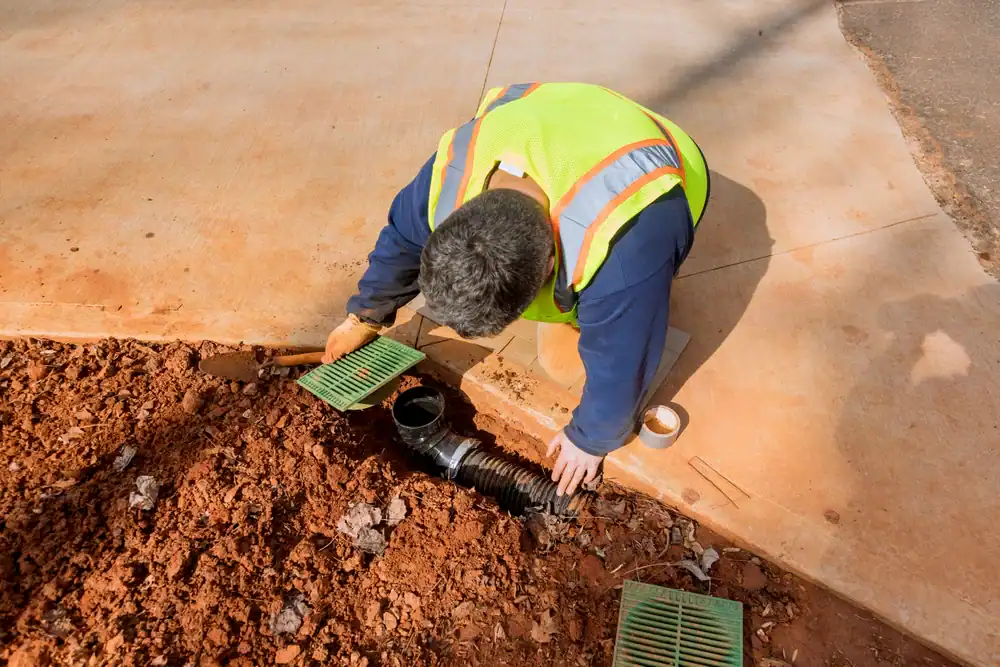
Trenching width is typically 12 to 18 inches, just wide enough to work. Depth depends on where your line runs, usually 18 to 36 inches for residential systems in Amagansett. We mark utilities before we dig, work carefully around landscaping where possible, and stockpile your topsoil separately so it goes back on top when we backfill.
Your yard will have a trench that needs to settle and re-seed, but we’re not tearing up everything. Most homeowners are surprised how minimal the disruption is compared to what they expected. The key is accurate diagnosis up front. When we know exactly where to dig, we’re not exploring or making multiple access points. One trench, targeted repair, done.
Suffolk County requires permits for new cesspool installations and major system work, but requirements for line repairs vary based on scope. Replacing a section of damaged pipe typically doesn’t trigger the same permitting as installing a new system, but you still need to meet code for materials and installation.
We handle the compliance side. That means using approved pipe materials, maintaining proper setbacks from wells and property lines, and ensuring your new line meets current standards for diameter and slope. If your job does require permits—like if you’re replacing a significant portion of your system or connecting to a different cesspool—we’ll tell you up front and handle the paperwork.
Suffolk County’s regulations changed significantly in 2019 and 2021, especially around nitrogen reduction and I/A OWTS requirements for new installations. Existing systems are grandfathered until they fail, but when you do work on your cesspool, it needs to meet current code. That’s where local expertise matters. We know what Suffolk County inspectors look for, and we make sure your line changes pass inspection the first time.
Other Services we provide in Amagansett