
Hear from Our Customers
Your drains clear fast. Your toilets flush without hesitation. You stop worrying every time someone takes a shower or runs the dishwasher.
That’s what a properly installed main waste line does. It handles your household’s wastewater without drama, without backups, and without that sinking feeling every time you hear gurgling from the pipes.
Most line problems in Massapequa Park come from the same issues: old pipes installed decades ago, clay soil that doesn’t drain like it should, and improper pitch that lets waste settle instead of flow. You can pump and clean all you want, but if the line itself is failing, you’re just buying time.
A main waste line replacement fixes the root problem. New pipe. Correct slope. Proper connection to your cesspool. The kind of work that lasts decades instead of limping along for another year.
We’ve handled line changes across Nassau County for nearly two decades. Four generations of the same family, working on the same types of systems you have in your home.
We know Massapequa Park. We know the clay soil that makes drainage tricky. We know the older cesspool systems built in the ’40s, ’50s, and ’60s that are still running in half the homes around here.
That local knowledge matters when you’re trenching through your yard and connecting new pipe to an old cesspool. There’s a right way to handle the pitch, the backfill, and the connection—and there’s the way that causes problems three years later.
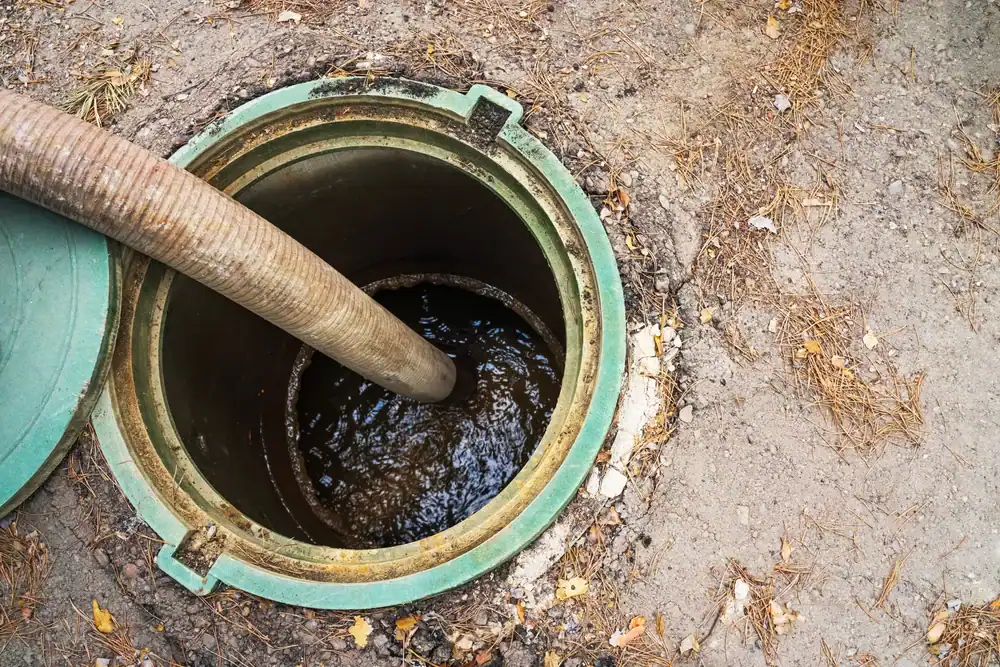
First, we locate your existing cesspool and map the current line. Camera inspection shows us what’s actually happening underground—cracks, bellies in the pipe, root intrusion, whatever’s causing your problems.
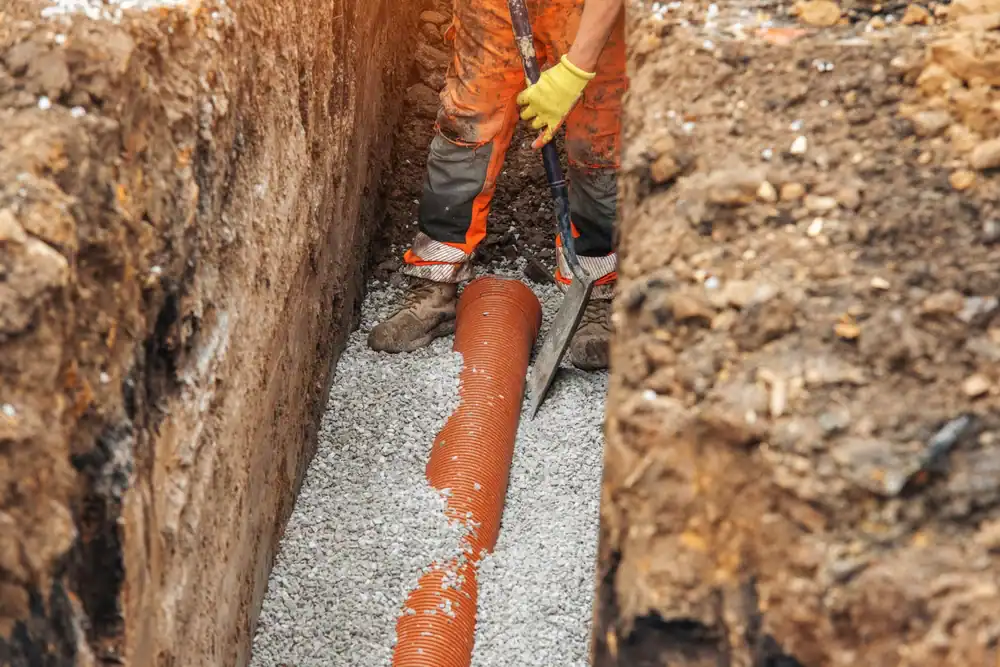
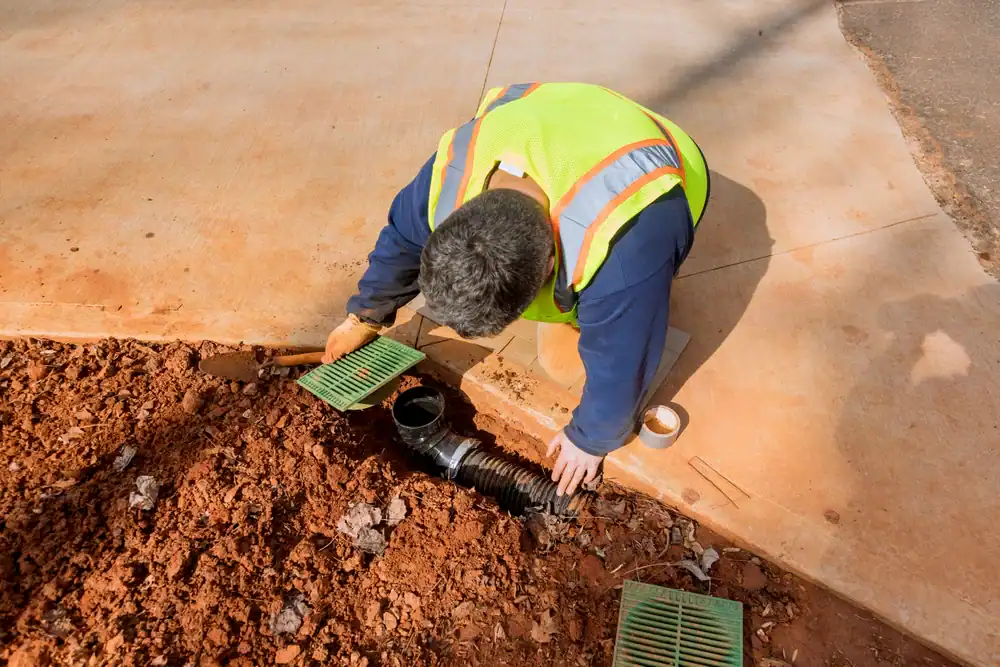
Then comes excavation. We trench from your house to the cesspool, removing the old pipe and prepping for the new line. The depth and path matter here because proper pitch is everything. Minimum slope is a quarter inch per foot, but we adjust based on your specific setup and soil conditions.
New pipe goes in with the correct grade. We’re checking slope as we go, making sure wastewater will flow naturally without settling or creating slow spots. The connection to your cesspool gets sealed properly—no shortcuts that leak later.
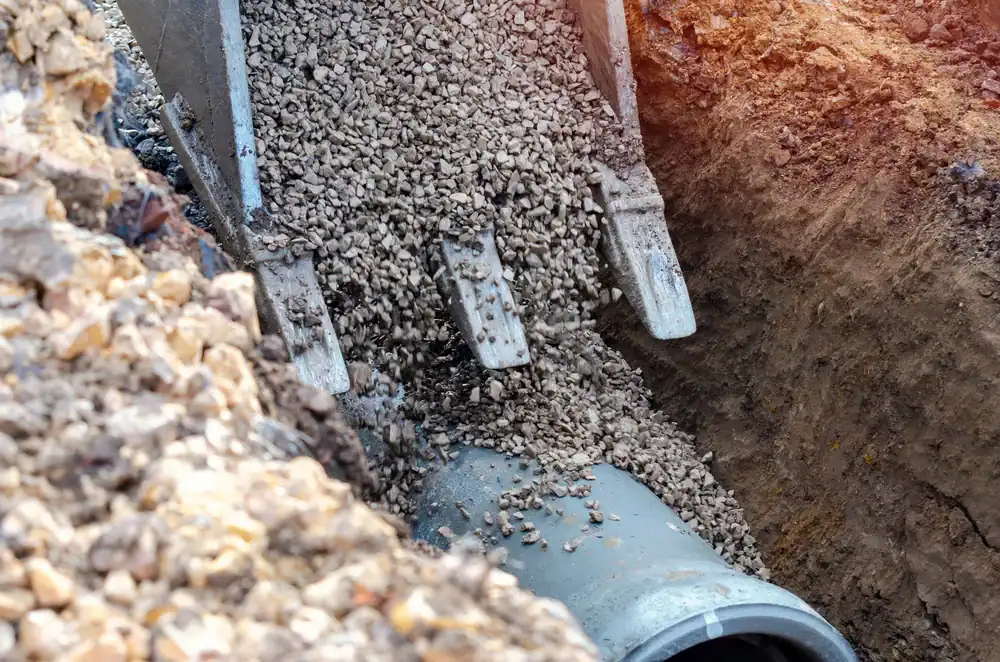
Backfill happens in layers, compacted right so you don’t end up with a trench that sinks every time it rains. Then we restore your yard as close to original as possible. The whole process typically takes one to three days depending on distance and site conditions.
Ready to get started?
You get complete trenching and excavation from your home’s main drain to your cesspool. That includes removing old pipe, installing new line with proper pitch and slope, and connecting everything so it actually works.
Camera inspection before and after shows you exactly what we found and what we fixed. No guessing about whether the problem’s really solved.
Massapequa Park’s clay soil creates specific challenges. Clay doesn’t absorb water quickly, which means your cesspool works harder than systems in sandy soil areas. That puts extra pressure on your main waste line. We account for that during installation, making sure the pitch moves wastewater efficiently even when your cesspool’s working at capacity during heavy use or wet weather.
The connection between your sewer line and cesspool matters more than most people realize. A poor seal or improper angle causes backups even when everything else is perfect. We handle that connection like it’s the most important part—because it is.
If you’re dealing with recurring backups even after pumping your cesspool, that’s usually your line. Same thing if you’ve got slow drains throughout the house or sewage odors near your cesspool area.
Camera inspection gives you the real answer. We can see cracks, bellies in the pipe where waste settles, root intrusion, or sections that have collapsed. Small cracks might be patchable. But if you’ve got multiple problem areas or the pipe’s old cast iron or clay tile from decades ago, replacement makes more sense than trying to band-aid it.
Here’s the practical reality: repairs buy you time, maybe a few years. Replacement fixes it for decades. If your line’s already 40-50 years old and showing problems, you’re likely looking at more issues soon anyway. Most homeowners in Massapequa Park who try to patch old lines end up replacing them within three years anyway—after spending money on repairs that didn’t last.
Pitch is the slope of your pipe. Minimum standard is a quarter inch of drop for every foot of horizontal run. So if your cesspool is 40 feet from your house, the pipe needs to drop at least 10 inches from one end to the other.
That slope lets gravity do the work. Wastewater flows naturally toward your cesspool instead of sitting in the pipe. Too flat and waste settles, creating clogs and backups. Too steep and liquids run ahead of solids, which causes different problems.
Clay soil in Massapequa Park makes correct pitch even more important. Your cesspool’s already working harder to discharge through clay, so your main line needs to deliver wastewater efficiently. We measure and verify pitch during installation because getting it wrong means problems you’ll deal with for years. A proper slope means your system works the way it’s supposed to—waste moves out, nothing backs up, and you’re not calling for emergency service every few months.
Most residential line changes in Massapequa Park take one to three days. Distance from your house to your cesspool is the biggest factor. A 30-foot run goes faster than 80 feet.
Soil conditions matter too. Clay soil takes longer to excavate than sand, and we hit clay pretty regularly around here. If we run into unexpected obstacles—old concrete, large rocks, other utility lines—that adds time.
You can use your plumbing during the work with some limitations. We’ll let you know exactly when water use needs to stop, usually just during the actual connection work. Most of the job happens outside while your household keeps running normally. We’re not tearing up your house or leaving you without working bathrooms for days. The goal is to get your new line in and working while disrupting your daily routine as little as possible.
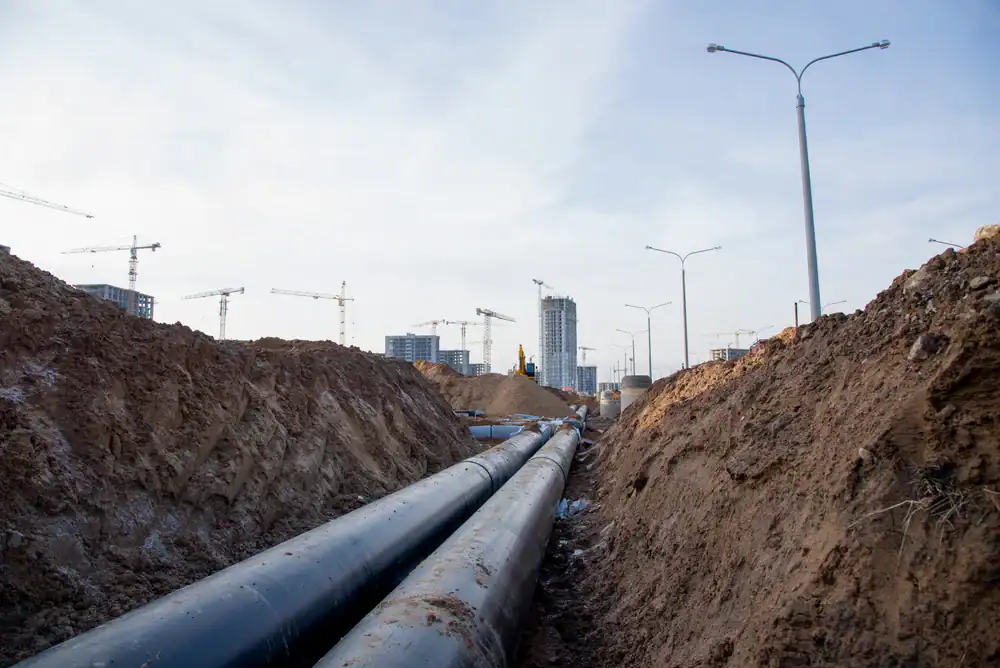
We trench a path from your house to your cesspool—that’s it. Not your whole yard, just the route the pipe needs to follow. Width of the trench is typically 18-24 inches, enough to work but not wider than necessary.
The path depends on where your cesspool sits and where your main drain exits the house. We choose the most direct route that avoids obstacles and maintains proper slope. Sometimes that means going around a tree or patio rather than through it.
After the new line’s installed and backfilled, we restore the surface. Grass gets seeded, and we’ll work with you on any landscaping that needs attention. You’ll see the trench path for a while as grass grows back, but we’re not leaving a mud pit across your property. Most homeowners are surprised how contained the work area actually is compared to what they imagined.
Age is the biggest factor. Many homes around here were built in the ’40s through ’60s with cast iron or clay tile pipe. Those materials break down over time—cast iron rusts through, clay cracks and separates at joints.
Tree roots find any crack or joint in your sewer line. They grow into the pipe searching for water and nutrients, eventually blocking flow or breaking the pipe completely. Even small root intrusion gets worse every year.
Clay soil creates its own problems. It doesn’t drain quickly, which puts pressure on your cesspool and your line. During heavy rain or high water use, that pressure can crack pipes that are already weakened by age. Ground settling is common in clay soil too, which can create bellies in your pipe—low spots where waste collects instead of flowing to your cesspool. Once you’ve got a belly, you’ve got recurring backups until the line gets replaced with correct pitch.
Honest answer: it depends on what we’re actually replacing. A 30-foot run costs less than 80 feet. Straightforward excavation costs less than working around obstacles or through difficult soil.
Most residential main waste line replacements in this area run between $3,000 and $8,000. That’s for complete trenching and excavation, new pipe with proper pitch and slope, connection to your cesspool, backfill, and surface restoration.
We give you an upfront estimate after we assess your specific situation. No hidden fees or surprise charges after the work’s done. You’ll know the cost before we start digging. That number includes everything—labor, materials, equipment, cleanup. The goal is a fixed price you can plan around, not a moving target that keeps growing as the job goes on.
Other Services we provide in Massapequa Park