Summary:
Why Waiting for Problems Costs More Than Prevention
Here’s what most Long Island homeowners don’t realize: your cesspool is constantly filling up, even when everything seems normal. Every flush, every shower, every load of laundry adds to the accumulated waste that settles at the bottom of your system.
When you wait until you see warning signs like slow drains or sewage odors, your cesspool has already reached a critical point. At this stage, the waste has compacted and hardened, making pumping more difficult, time-consuming, and expensive.
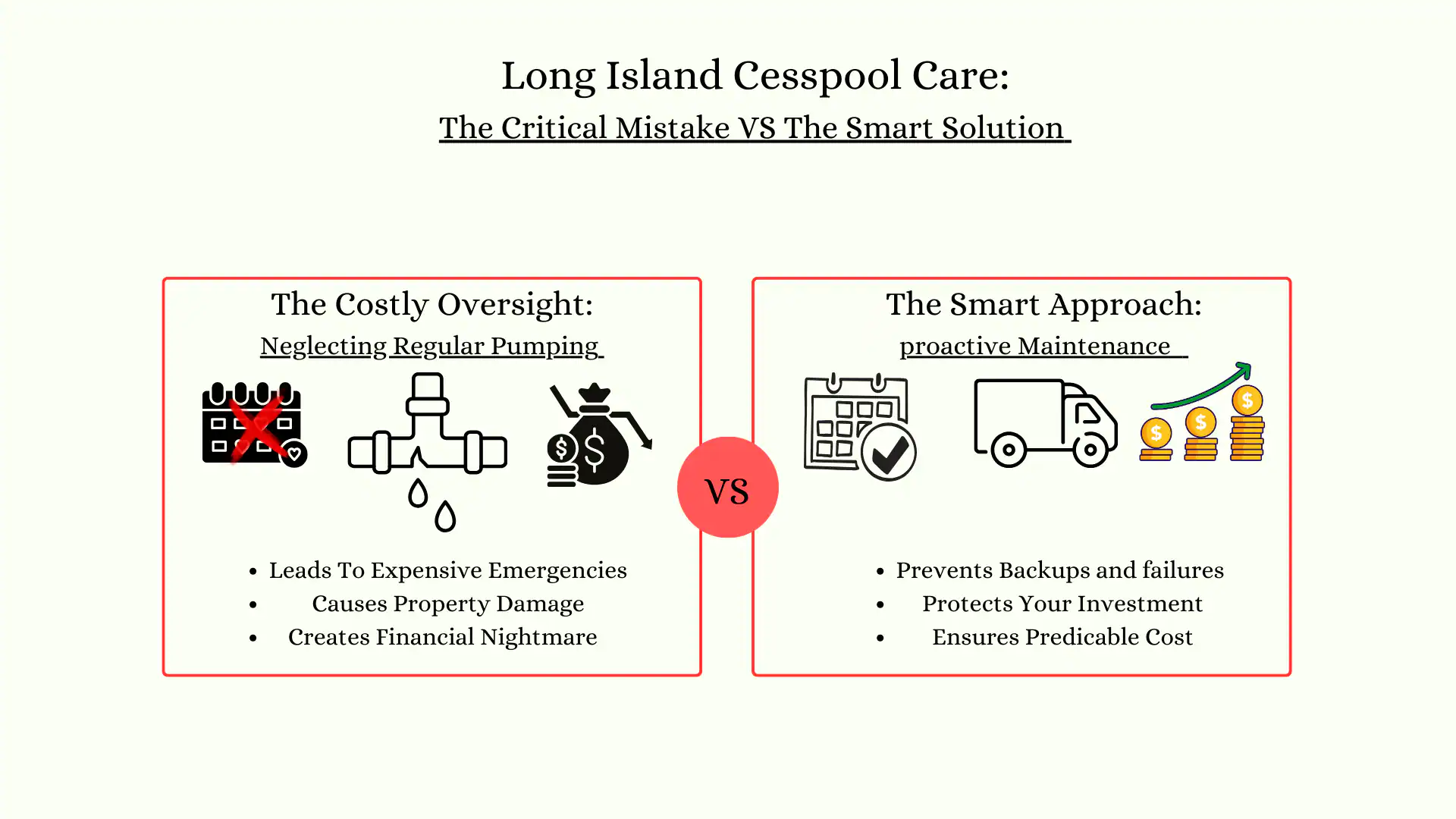
The difference in cost between preventive pumping and emergency service can be substantial. Regular maintenance pumping typically costs a few hundred dollars, while emergency calls often cost significantly more due to the urgency and additional labor required.
The Hidden Costs of Delayed Cesspool Maintenance
When homeowners delay cesspool pumping , they’re not just risking higher service fees. The real financial damage comes from what happens when an overloaded system starts to fail.
First, there’s the immediate mess. Sewage backing up into your home creates a health hazard that requires professional cleanup, often costing thousands before you even address the cesspool problem itself. Your floors, walls, and belongings may need replacement, and insurance doesn’t always cover sewage-related damage.
Then there’s the system damage. An overloaded cesspool can cause pipes to crack, distribution lines to clog, and the cesspool structure itself to deteriorate. What started as a simple pumping need becomes a complex repair job involving excavation, pipe replacement, and potentially complete system reconstruction.
Long Island’s regulations add another layer of cost. Suffolk and Nassau counties require proper documentation of cesspool maintenance, and failing to maintain records can result in fines ranging from $250 to $2,000. When you’re selling your home, inadequate maintenance records can delay or derail the entire transaction.
The environmental impact can also hit your wallet. If your failing cesspool contaminates groundwater or neighboring properties, you could face liability for cleanup costs and legal fees. Given Long Island’s focus on water quality protection, environmental violations are taken seriously and penalized accordingly.
How Long Island's Unique Conditions Accelerate Problems
Long Island’s high water table and sandy soil create unique challenges that make regular cesspool maintenance even more critical than in other areas. The proximity to groundwater means that failing systems can quickly contaminate drinking water sources, leading to strict enforcement of maintenance requirements.
The island’s soil composition affects how quickly cesspools fill up and how efficiently they drain. In some areas, poor drainage means more frequent pumping is necessary to prevent backups. In others, rapid drainage can cause environmental concerns if the system isn’t properly maintained.
Weather patterns also play a role. Heavy rains and storm surge can overwhelm already full cesspools, causing immediate backups and system failures. Homeowners who stay current with pumping schedules have systems that can better handle these weather events.
Nassau and Suffolk counties have different regulations and requirements, but both are becoming increasingly strict about cesspool maintenance and documentation. New regulations require registration of existing systems and mandate specific maintenance schedules based on household size and usage patterns.
The shift toward nitrogen-reducing systems means that traditional cesspools are being phased out in many areas. While existing systems can remain in place, any major repairs or replacements must meet current standards, which can cost $15,000 to $30,000 or more. Regular maintenance extends the life of your current system and delays this major expense.
The Right Way to Approach Cesspool Pumping
Proper cesspool maintenance isn’t complicated, but it does require a proactive approach. The key is understanding your system’s capacity and usage patterns to develop an appropriate maintenance schedule.
Most Long Island cesspools need pumping every 1-3 years, depending on household size and water usage. A single-person household might go 3-4 years between pumpings, while a family of four typically needs service every 1-2 years. Homes with garbage disposals, large laundry loads, or frequent entertaining need more frequent attention.
The smart approach is to work with a professional who can assess your specific situation and recommend a customized maintenance schedule. This takes the guesswork out of timing and helps you budget for regular service rather than dealing with surprise emergencies.
Warning Signs That Require Immediate Attention
Even with regular maintenance, you should know the warning signs that indicate your cesspool needs immediate professional attention. Recognizing these early can prevent minor issues from becoming major disasters.
Slow draining fixtures throughout your home often indicate that your cesspool is approaching capacity. If multiple drains are backing up or draining slowly, don’t wait to see if the problem resolves itself. This is typically the first sign that pumping is overdue.
Sewage odors around your property, especially near the cesspool location, indicate that waste is not being contained properly. These odors can also appear inside your home, particularly in basement areas or near plumbing fixtures. Any sewage smell should be investigated immediately.
Gurgling sounds from drains, toilets, or other plumbing fixtures suggest that your system is struggling to handle the waste load. This often occurs when the cesspool is full and can’t accept additional waste efficiently.
Standing water or unusually lush grass growth near your cesspool location indicates that waste is escaping from the system. This creates both health hazards and environmental concerns that require immediate professional intervention.
Any sewage backup into your home is a clear emergency that needs immediate attention. Don’t attempt to use plumbing fixtures until the system has been professionally evaluated and repaired. The health risks from sewage exposure are serious, and the longer you wait, the more extensive the cleanup and repair costs become.
Choosing Professional Service vs. DIY Approaches
Some homeowners consider DIY cesspool maintenance to save money, but this approach often backfires and creates more expensive problems. Cesspool pumping requires specialized equipment, safety protocols, and proper waste disposal permits that aren’t available to homeowners.
Professional cesspool service includes more than just pumping. Experienced technicians inspect the system during service, identifying potential problems before they become emergencies. We can spot structural damage, distribution line issues, and other concerns that untrained eyes might miss.
Safety is another critical factor. Cesspools produce toxic gases that can be deadly in enclosed spaces. Professional technicians have the training and equipment to work safely around these hazards. We also understand how to properly dispose of waste according to environmental regulations.
Documentation is increasingly important for Long Island homeowners. Professional service provides the records you need for regulatory compliance and property transfers. Many real estate transactions now require proof of proper cesspool maintenance, and professional documentation carries more weight than DIY records.
The cost difference between professional service and DIY attempts often disappears when you factor in equipment rental, disposal fees, and the risk of missing problems that lead to expensive repairs. Professional service also typically includes guarantees and insurance protection that DIY approaches can’t match.
Working with local professionals who understand Long Island’s specific conditions and regulations ensures that your system receives appropriate care. We know which maintenance approaches work best in different soil conditions and can advise you on regulatory requirements that affect your property.
Protecting Your Investment with Smart Cesspool Care
The mistake that costs Long Island homeowners thousands isn’t just delaying cesspool pumping—it’s treating cesspool maintenance as an expense rather than an investment in your property. Regular, professional maintenance protects your home’s value, prevents health hazards, and keeps you compliant with local regulations.
Smart cesspool care means working with experienced professionals who understand your system and your local conditions. It means staying ahead of problems rather than reacting to emergencies. Most importantly, it means recognizing that a few hundred dollars in regular maintenance can save you thousands in repairs, cleanup, and system replacement.
Don’t let the costly mistake of delayed maintenance catch you off guard. We’ve been helping Long Island families avoid these expensive surprises for four generations, providing the expertise and reliability that keeps your system running smoothly and your costs predictable.