Summary:
You need a septic system installed. Maybe you’re building new, or your old cesspool finally gave out, or Suffolk County regulations are forcing an upgrade. Whatever brought you here, you’re probably wondering what actually happens during installation, how long it takes, and what it’s going to cost you.
The process isn’t complicated, but it does involve specific steps that have to happen in order. Skip one, rush another, or hire someone who doesn’t understand Long Island’s soil conditions, and you’re looking at problems that cost thousands to fix.
This guide walks you through the entire septic tank installation process, step by step, so you know exactly what to expect from the first phone call to the final inspection.
What Happens Before the First Shovel Hits the Ground
Installation doesn’t start with excavation. It starts with paperwork, testing, and planning that determines whether your property can even support a septic system.
First comes the site evaluation. A professional assesses your property’s soil type, slope, and groundwater level. This isn’t optional. Suffolk County won’t issue permits without it, and for good reason. Long Island’s sandy soil and high water tables create conditions that affect how your system performs.
Next is the percolation test, or perc test. This measures how quickly water drains through your soil. The results determine what type of system you need and where it can go on your property. Poor drainage means you might need an engineered system with pumps, which costs more but works better for challenging conditions.
Septic System Installation Permits and Design Requirements
Once testing confirms your property works, you need permits. Suffolk County Health Department requires detailed plans before any digging starts. These plans show tank size, location, depth, and drain field layout.
Tank sizing isn’t guesswork. Suffolk County requires minimum 1,000 gallons for homes with three bedrooms or less. Each additional bedroom adds 250 gallons to that requirement. A four-bedroom home needs 1,250 gallons. Five bedrooms require 1,500 gallons. The math is straightforward, but it’s based on how many people the home can house, not how many currently live there.
Your plans also need to show setback distances. The tank must sit at least 10 feet from your house, 50 feet from wells, and 100 feet from water bodies. The drain field needs even more space. These aren’t suggestions. They’re code requirements that protect groundwater quality.
Permit costs typically run $250 to $650 in Suffolk County, depending on system complexity. The application process takes time. You’re looking at several weeks for review and approval, sometimes longer if plans need revisions. This is why installation timelines stretch to 2-4 months from start to finish, even though actual installation only takes a few days.
The design phase also addresses Suffolk County’s nitrogen-reduction requirements. Since July 2021, certain projects require innovative and alternative onsite wastewater treatment systems, or I/A OWTS. These advanced systems reduce nitrogen pollution by up to 70%. If your project triggers these requirements, your design must include approved nitrogen-reducing technology.
Choosing Your Septic Tank Material and Size
You’ve got three material options: concrete, plastic, or fiberglass. Each has trade-offs that affect cost, installation, and longevity.
Concrete tanks last 40-50 years with proper maintenance. They’re heavy, which prevents flotation in high water table areas. That weight is actually an advantage in Long Island’s conditions. But heavy also means more expensive installation. You need larger equipment to move and place them, and access matters. If your property has narrow driveways or limited space for machinery, concrete creates challenges.
Plastic tanks cost less upfront and install easier. They’re lighter, so smaller equipment works fine. Installation happens faster with no waiting for curing or concerns about cracking during transport. But that lighter weight becomes a problem in areas with high water tables. Plastic tanks can float if groundwater rises above them. Some Suffolk County municipalities restrict plastic tank use for this reason. You need to verify local approval before choosing plastic.
Fiberglass tanks fall between concrete and plastic on both price and weight. They resist corrosion better than concrete in acidic soil conditions, and they’re lighter than concrete but heavier than plastic. They’re durable and don’t crack easily, but they cost more than both concrete and plastic options.
Size depends on your home’s bedroom count, as mentioned earlier. But there’s another factor: garbage disposals. If you have one, Suffolk County requires an additional 250 gallons of tank capacity plus 75 square feet of leaching area. Most professionals discourage garbage disposals with septic systems because they add solid waste that fills tanks faster and stresses the entire system.
The Actual Installation Process From Excavation to Backfill
Installation day means heavy equipment shows up at your property. Excavators dig holes for both the tank and drain field. The hole for your tank needs to be about two feet larger than the tank itself, measured at the bottom, not the top. This extra space allows for proper positioning and backfill.
Depth depends on the slope of your inlet pipe. That pipe runs from your house to the septic tank with a minimum slope of 1/4 inch per foot. The drop in this pipe determines how deep the tank sits. We calculate this carefully because getting it wrong means wastewater won’t flow properly.
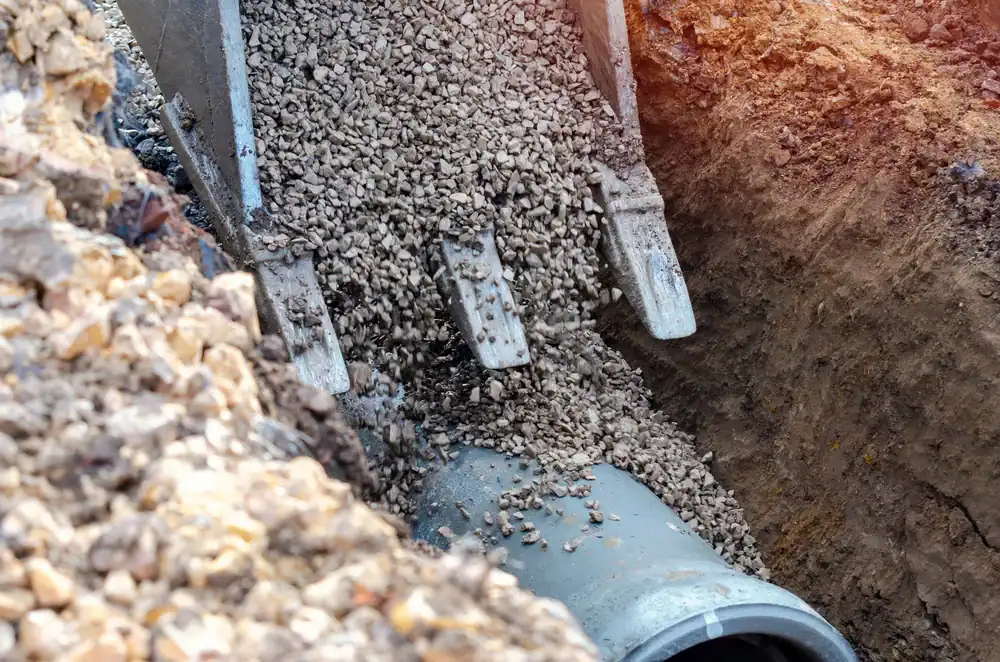
Once the hole is ready, the tank goes in. For concrete tanks, this requires specialized lifting equipment. The tank must sit level on stable ground. We check this with laser levels, adjusting the gravel bed beneath until everything is perfectly horizontal. A tank that’s not level won’t function correctly.
Septic Installation Connections and Testing
After the tank is positioned, we connect the inlet pipe from your house and the outlet pipe to the drain field. These connections must be watertight. Depending on your tank, this means either neoprene collars that seal around the pipes or large holes that get sealed with grout, mortar, or mastic after pipe insertion.
The inlet and outlet pipes have tees or baffles inside the tank. These prevent solids from flowing out with the liquid effluent. They’re critical components that keep your drain field from clogging. We verify these are properly positioned and secured.
Before backfilling, many jurisdictions require hydraulic testing. This involves filling the tank with water and measuring water loss over 24 hours. A properly sealed concrete tank shouldn’t lose more than an inch of water in that time. This test catches leaks before the tank is buried, when fixes are still simple and cheap.
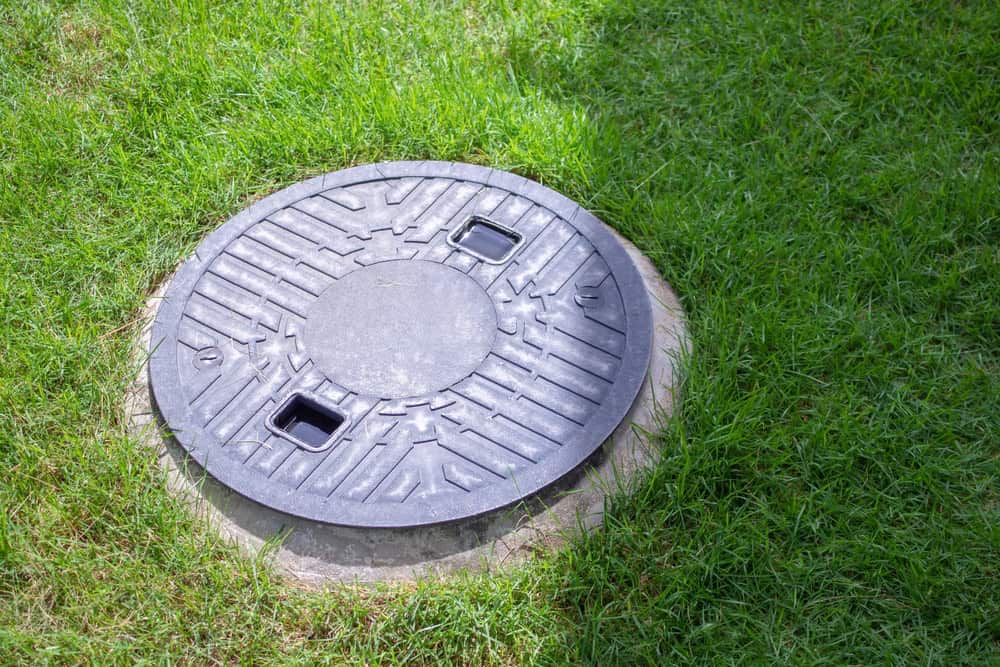
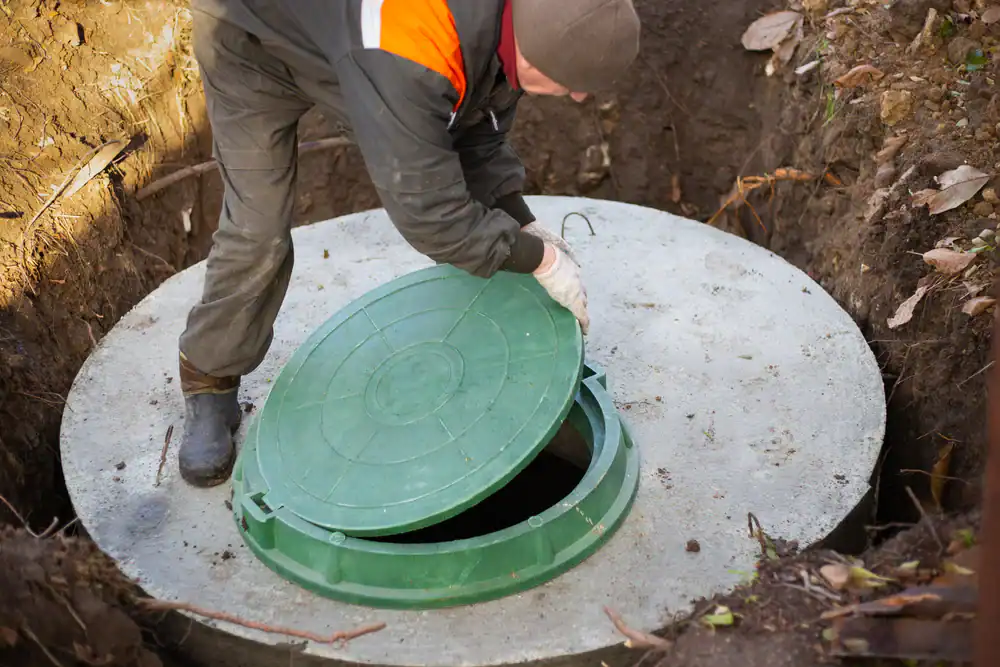
Risers and access covers get installed at this point. These extend from the tank up to ground level, making future maintenance much easier. You want these. Digging down to your tank every time it needs pumping adds hundreds of dollars in labor costs. Risers typically cost $300-$600 but pay for themselves quickly.
Then comes backfilling. Soil goes back in layers of 6-8 inches, with each layer compacted to prevent settling. Proper compaction matters. If the soil settles unevenly, it can stress tank walls or shift the tank position. The backfill is crowned slightly over the tank, about 6 inches high, to allow for settling while directing water away from the tank.
Cost to Install Septic Tank and Leach Field Components
The drain field, also called the leach field, is where treated wastewater goes after leaving your tank. Installation involves digging trenches according to the approved design, typically with perforated pipes surrounded by gravel or specialized plastic chambers.
Conventional gravity systems use perforated pipes laid in gravel-filled trenches. Wastewater flows from the tank through these pipes and seeps into the surrounding soil. The soil provides final treatment through natural filtration. These systems work well in areas with good drainage and adequate space. They’re the most affordable option, which is why they’re common in Suffolk County.
If your property has challenging conditions—high water table, poor soil drainage, limited space—you might need an alternative system. Mound systems pump wastewater into an engineered sand mound built above ground level. These cost significantly more, sometimes reaching $20,000, because they require extensive site preparation and pumping equipment. But they work where conventional systems can’t.
The distribution box sits between your tank and drain field. It evenly distributes effluent across all drain field lines. Proper distribution prevents one section from becoming overloaded while others sit idle. This component is small but important for system longevity.
Total costs for septic tank installation including the drain field typically range from $4,500 to $20,000 in Suffolk County. That’s a wide range because it depends on system type, property conditions, and tank material. A straightforward installation with a concrete tank and conventional drain field on easy-access property might come in around $8,000-$12,000. Challenging sites requiring engineered systems, extensive excavation, or difficult access can push costs to $20,000 or beyond.
Here’s the breakdown: The tank itself costs $800-$2,500 depending on material and size. Excavation runs $100-$300 per hour. Drain field installation adds $3,000-$15,000. Permits cost $250-$650. Perc testing adds $600-$2,000. Labor typically represents 60% or more of total costs.
But there’s good news. Suffolk County offers grants up to $11,000 for qualifying installations, with additional state funding potentially bringing total assistance to $30,000. Nassau County provides up to $20,000 through their SEPTIC program. These programs target nitrogen-reducing systems in priority areas near waterbodies. Eligibility depends on your location and system condition, but it’s worth investigating before you write a check for the full amount.
What to Expect After Installation Is Complete
After everything is installed and backfilled, inspection happens. Suffolk County Health Department reviews the work to confirm it matches approved plans and meets code requirements. This typically involves checking tank placement, connections, drain field layout, and proper backfilling. Only after this inspection passes can you start using your system.
Your new septic tank needs water to function. The tank should be filled before use, and we do this as part of the hydraulic testing process. A full tank is actually how the system is designed to operate. The water level should sit just below the inlet and outlet tees.
Maintenance starts immediately, even though you won’t need pumping for a few years. Understanding what can and can’t go down your drains matters from day one. Only human waste and toilet paper belong in the system. Everything else—wipes, feminine products, grease, harsh chemicals—causes problems. Long Island’s sandy soil already makes systems work harder than in other areas. Don’t add unnecessary stress.
Most Suffolk County systems need pumping every 3-5 years, but local conditions often require more frequent service. The sandy soil that defines Long Island means solids can escape your tank and reach the drain field faster than in areas with clay-heavy soil. We recommend 2-3 year intervals here. Your household size and water usage also affect timing. Larger families or high water use means more frequent pumping.
We’ve been handling septic tank installations across Long Island for almost two decades. Four generations of family business means we’ve seen every soil condition, water table challenge, and regulatory requirement Suffolk County can throw at an installation. We handle everything from initial permits through final inspection, and we’re available 24/7 if issues come up after your system is running.