Summary:
You’re comparing septic tank quotes that don’t line up. One contractor insists concrete is the only choice. Another says plastic saves you thousands. The numbers don’t match, the advice conflicts, and you’re about to drop more money than you spent on your first car—on something you’ll never actually see.
Here’s what actually matters: the material you choose determines whether your tank lasts 30 years or 60. It affects how often you’ll pump it, whether it survives Suffolk County’s high water table during nor’easters, and if you’ll face a costly replacement before you planned. This isn’t about which material wins on paper. It’s about which one works for your specific property conditions, budget, and how long you’re staying. Let’s cut through the sales pitches.
Why Concrete Septic Tanks Dominate Suffolk County
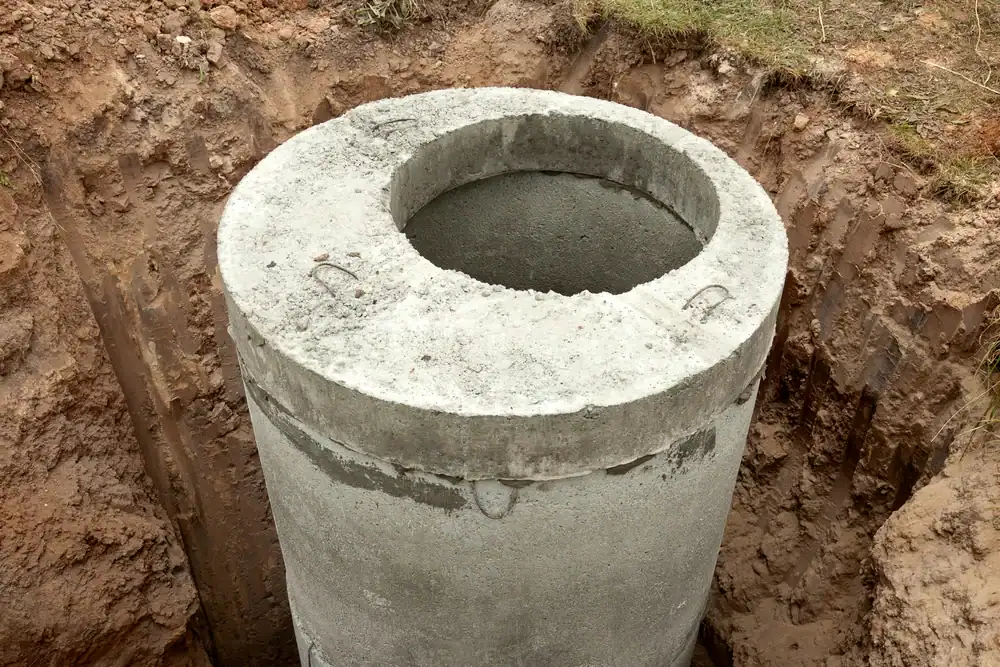
Concrete septic tanks have been the workhorse of Long Island wastewater systems for decades. They’re heavy—several thousand pounds—which means they stay exactly where you install them, even when groundwater levels spike during heavy storms. That weight is the reason they work in areas where plastic tanks would float to the surface.
If your property sits near the coast, in a low-lying area, or anywhere the water table fluctuates seasonally, concrete’s stability isn’t just a nice feature. It’s essential. Plastic tanks require anchoring in these conditions, and if that anchoring fails, you’re looking at an emergency repair when the tank shifts.
Concrete also handles pressure from above. Driveways, parking areas, even occasional vehicle traffic over the tank location—concrete absorbs that load without structural damage. Plastic will crush. That single factor eliminates plastic from consideration for some Suffolk County properties before you even compare costs.
How Long Concrete Septic Tanks Actually Last
A properly installed concrete septic tank in Suffolk County lasts 40 to 60 years with regular maintenance. Some exceed that range if soil conditions are favorable and the installation was done correctly. That’s not a theoretical number—it’s what we see in the field when tanks are pumped every few years and the system isn’t abused.
Lifespan depends heavily on soil chemistry. Highly acidic soil gradually breaks down concrete, shortening the tank’s useful life to 30 years or less in some cases. Suffolk County’s soil varies widely from sandy coastal areas to clay-heavy inland zones, and acidity levels change with it. A simple soil test before installation tells you whether acidity will be a factor. If your soil pH is below 6.0, you’re looking at accelerated concrete degradation unless the tank is treated with protective coatings.
Ground settling and shifting also affect longevity. Long Island’s soil composition means some areas experience more movement than others, especially after heavy rains or freeze-thaw cycles. Proper installation includes leveling the tank precisely and using clean backfill material—sand or gravel, not rocky soil that can create pressure points. Installers who rush this step see premature cracking within 10 to 15 years.
Tree roots present another challenge. Concrete’s porosity means roots can infiltrate through small cracks or seams over time, especially if large trees are planted near the leach field. This doesn’t cause immediate failure, but roots can clog outlet pipes and create structural weak points. Camera inspections catch root intrusion before it becomes expensive.
Modern concrete tanks built from the mid-1990s onward use PVC pipe baffles instead of the concrete or cast iron versions that degraded faster in older systems. If you’re replacing a tank installed before 1990, you’re getting significantly better engineering. Those older concrete baffles would erode or fall off, allowing solids to flow into the leach field and clog it. PVC baffles don’t degrade, which is why newer concrete tanks outlast their predecessors.
Maintenance is the difference between a 40-year tank and a 60-year tank. Pumping every 3 to 5 years prevents solids from building up and putting pressure on tank walls. Homeowners who skip pumping for a decade don’t just risk backups—they shorten the tank’s structural life by allowing excessive pressure and corrosive gases to accumulate.
What Concrete Tank Installation Actually Costs
Concrete septic tanks cost $700 to $2,000 for the tank itself, which looks similar to plastic pricing until you account for installation labor. That’s where the real cost difference appears. Moving a multi-thousand-pound concrete tank requires a boom truck, crane, or specialized lifting equipment. You’re not handling this with a pickup truck and a few workers.
Installation labor runs higher because the job takes more time and requires crews experienced with heavy equipment operation. If your property has narrow driveways, mature landscaping, overhead power lines, or limited maneuvering space, those access challenges add to the bill. Some properties physically can’t accommodate the equipment needed for concrete installation without removing fences, trees, or other obstacles.
The installation process involves several steps. The old tank gets pumped completely, disconnected from plumbing lines, and excavated. The new concrete tank is lowered into the prepared hole using a crane, leveled within an inch of variation, connected to inlet and outlet pipes, and backfilled carefully with sand or gravel to prevent settling. The entire process typically takes 2 to 4 days depending on site conditions, weather, and whether you’re also replacing the leach field.
Suffolk County requires permits for all septic tank replacements as of July 1, 2019. We handle the permitting paperwork, but it adds 1 to 2 weeks to the timeline before work can start. If you’re applying for grants through Suffolk County’s Reclaim Our Water program—which provides up to $20,000 for nitrogen-reducing systems—expect additional documentation requirements and processing time. Grant applications can take 4 to 8 weeks, so if you’re dealing with an emergency system failure, you might not have time to wait for funding approval before proceeding.
One advantage of concrete that affects permitting: it’s approved everywhere in Suffolk County without material-based restrictions. Plastic tanks face limitations in some areas near high water tables due to floating and contamination risks. Concrete doesn’t encounter those permitting roadblocks, which can simplify and speed up the approval process.
Total installed cost for a concrete tank typically runs $3,000 to $8,000 depending on tank size, site access, and labor rates. That’s higher than plastic’s $2,500 to $6,000 installed cost, but you’re paying for a system that lasts longer, requires less frequent pumping due to larger capacity options, and handles Long Island’s challenging soil and water conditions without the limitations plastic faces.
Where Plastic Septic Tanks Make Sense
Plastic septic tanks—made from high-density polyethylene (HDPE)—weigh a few hundred pounds instead of several thousand. That weight difference completely changes the installation equation. You don’t need boom trucks, cranes, or heavy equipment. A standard truck and a smaller crew handle the job, which directly reduces labor costs by 30% to 50% compared to concrete.
Installation happens faster, too. There’s no curing time, no concerns about cracking during transport, and significantly less property disruption. For homeowners who need to minimize the installation timeline or have properties where heavy equipment access is difficult or impossible, plastic solves real logistical problems.
The material itself resists corrosion better than concrete. Acidic soil that would gradually degrade concrete over 20 to 30 years doesn’t affect plastic the same way. If soil testing shows high acidity (pH below 6.0), plastic eliminates that degradation concern entirely. The tanks are also molded in one piece rather than assembled from sections, which means fewer seams where leaks or root infiltration could develop over time.
When Plastic Tanks Work Better Than Concrete
Plastic septic tanks solve specific problems that concrete can’t address as well. Properties with difficult access top that list. If your septic tank location requires navigating narrow driveways, passing between mature trees you don’t want to remove, working around existing structures, or maneuvering in tight spaces, plastic’s lighter weight makes installation possible without major property alterations. Concrete installation in these situations might require removing fences, cutting down trees, or tearing up landscaping that would cost thousands to replace.
Highly acidic soil makes plastic the smarter long-term choice. Suffolk County’s soil acidity varies significantly by location, with some inland areas showing pH levels between 5.0 and 6.0. Concrete tanks in these conditions degrade faster, potentially reducing their lifespan to 25 to 30 years instead of the expected 40+. Plastic doesn’t react to soil acidity, which means you get the full expected lifespan regardless of pH levels. A soil test costs $50 to $150 and tells you definitively whether acidity is a factor worth considering.
Budget constraints make plastic appealing when you’re paying out of pocket. The tank itself costs $500 to $2,000 (similar to concrete), but installation labor runs $1,500 to $4,000 compared to $2,500 to $6,000 for concrete. If you don’t qualify for Suffolk County’s grant programs or you’re dealing with an emergency replacement that can’t wait for grant approval, that $1,000 to $2,000 savings matters.
The material’s flexibility provides an advantage in certain soil conditions. Plastic tanks flex slightly rather than cracking when minor ground shifts or settling occur. In areas with unstable or sandy soil that experiences seasonal movement, this flexibility can prevent the hairline cracks that sometimes develop in concrete tanks during the first few years after installation.
Plastic also installs at shallower depths—typically 4 feet below ground surface—which reduces excavation costs and complexity. Concrete tanks often require deeper installation to ensure stability, which means more digging, more backfill material, and more labor hours.
However, plastic’s lighter weight creates real limitations you can’t engineer around. In coastal Suffolk County areas with high water tables, plastic tanks can float when the soil becomes saturated during heavy rains or spring thaw. Proper installation includes anchoring the tank to a concrete pad or using straps to prevent flotation, but this adds $500 to $1,500 to the installation cost and introduces a potential failure point if the anchoring system degrades over time.
Plastic can’t handle heavy loads. If there’s any possibility of vehicles driving over your tank area—whether it’s a driveway, parking area, or just a spot where delivery trucks occasionally cross—plastic isn’t an option. The material will crush under vehicle weight, leading to structural failure that requires full tank replacement.
Some Suffolk County municipalities restrict plastic tank use in specific zones, particularly near water bodies or in areas with documented high water tables. These restrictions exist because floating tanks can shift, potentially causing sewage leaks that contaminate groundwater. We always verify local code compliance before recommending plastic for your property.
Plastic Tank Durability and Maintenance Reality
Plastic septic tanks typically last 30+ years when installed correctly and maintained on schedule. That’s a solid lifespan, though 10 to 30 years shorter than concrete’s expected range. The difference might not matter if you’re not planning to stay in your home for multiple decades, but it affects property value calculations and long-term cost comparisons.
The material doesn’t corrode, rust, or degrade from chemical exposure the way older steel tanks did or the way concrete can in acidic conditions. This eliminates some common failure modes and means the tank’s condition at year 25 looks similar to year 5, assuming no physical damage occurred.
Tree roots are less likely to penetrate plastic tanks because the material is non-porous and single-piece construction minimizes seams or joints where roots typically enter. This is a genuine advantage in areas with mature trees near the septic system, though it doesn’t eliminate the need to avoid planting new trees within 30 feet of the tank or leach field.
Maintenance requirements mirror concrete—pumping every 3 to 5 years based on household size and water usage. However, plastic tanks typically max out at smaller capacity options than concrete. A 4-bedroom home might require a 1,500-gallon concrete tank that needs pumping every 4 to 5 years, while the equivalent plastic tank might be 1,200 gallons and require pumping every 3 to 4 years. That extra pumping adds $300 to $600 to your costs every few years, which accumulates over the tank’s 30-year lifespan.
One concern specific to plastic: the tanks can be damaged during installation if the crew isn’t careful. Improper backfilling with rocky soil instead of sand or gravel can create pressure points that crack the tank. Rough handling during placement can cause structural damage that doesn’t show up until months later when the tank settles. This is why choosing an installer with specific experience in plastic tank installation matters more than it does with concrete.
Plastic tanks are also more vulnerable to accidental damage from future excavation work. If you’re installing a pool, doing major landscaping, or any project involving digging near your septic system years after the tank was installed, it’s easier to accidentally puncture plastic than concrete. This isn’t a dealbreaker, but it’s worth flagging your septic system location clearly on property maps to prevent future contractors from digging in the wrong spot.
In high water table areas, proper anchoring is essential and adds complexity to installation. If the anchoring system fails or wasn’t installed correctly, you could face a floating tank during heavy spring rains or nor’easters—a problem that requires immediate professional intervention and can cost $2,000 to $5,000 to correct.
Overall, plastic tanks deliver reliable performance when matched to the right property conditions. They’re not universally better or worse than concrete; they’re better suited to specific situations where their advantages outweigh their limitations.
Aerobic Septic System Compatibility With Tank Materials
Aerobic septic systems use oxygen injection to enhance bacterial activity and improve wastewater treatment compared to conventional anaerobic systems. Suffolk County increasingly requires these nitrogen-reducing systems for new construction and major renovations as part of water quality protection efforts. Both concrete and plastic tanks can be used with aerobic treatment units, but there are considerations for each material.
Aerobic systems require additional components—an aeration chamber, air pump, chlorine dispenser, and often a pump tank—which means more complexity than conventional septic systems. The septic tank itself functions as the primary settling chamber before wastewater moves to the aerobic treatment unit. Material choice for that primary tank follows the same logic as conventional systems: concrete for maximum durability and stability, plastic for easier installation and lower upfront cost.
One factor specific to aerobic systems: they require electricity to run the air pump continuously. This adds $15 to $30 per month to your electric bill and means the system stops working during power outages. The tank material doesn’t affect this, but it’s worth knowing if you’re comparing conventional versus aerobic systems as part of your decision process.
Installation costs for aerobic systems run $20,000 to $40,000 total, significantly higher than conventional systems’ $8,000 to $25,000 range. Suffolk County’s Reclaim Our Water program offers up to $20,000 in grants specifically for nitrogen-reducing aerobic systems, which can offset much of that cost difference if you qualify and have time to wait for grant approval.